
Vacuum Pump Troubleshooting
With the construction and development of industry, many industries such as metallurgy, electronics, and coating have put forward higher requirements for the extraction of gas or particles from equipment. The large demand for industrial production and the rapid development of technology have made the production process of vacuum pumps continue to improve. Gradually occupy a larger market share in industrial production. With the continuous improvement of the level of vacuum pump manufacturing technology, the structural design of vacuum pumps is more refined, and different equipment structures also enable vacuum pumps to work in different industrial environments. Different types of vacuum pumps are driving the industry with a rapid growth momentum. The following form is a brief list of common problems and maintenance methods.
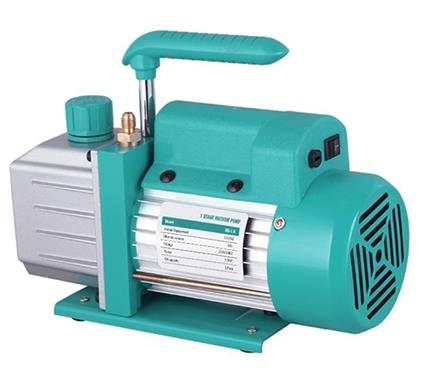
| Issue | Reasons | Check & Repair |
| oil has been found in vacuum pipes or inhaled container | Oil comes from vacuum system | Check vacuum system |
| Failure of anti-reflow valve | Clean and wash anti-reflow valve | |
| Sealing surface of anti-reflow vavle is worn or dirty | Clean or repair air inlet and anti-reflow vavle | |
| Oil is too much | Drain the excess pump oil | |
| Pump oil is turbid and emulsified | gas condensation | Degas the oil or change the oil and wash pump chamber Prevention: Open gas ballast valv |
| Pump is making noisy | The oil is too less (the oil is no longer visible in the observation window) | Charge the oil |
| Silencer hole is blocked | Clean or change silencer parts | |
| Inlet pressure is too high | Reduce inlet pressure | |
| internal oil mist filter is blocked | Clean and change the oil mist filter | |
| Abrasion of esilient coupling | Change to a new esilient coupling | |
| Damaged blade or bearing | Repair the pump | |
| The speed of pumping is too low | Air inlet or air inlet pipe is blocked | Clean air inlet pipe (prevention: or install a debris filter outside the air inlet |
| Exhaust filter is blocked | Change the filter | |
| The diameter of the connecting vacuum pipe or the pipe is too long | Use the pipe has suitable diameter or shorter connecting pipe | |
| After the pump stops, the pressure in the pumped container rises too fast | Leakage in vacuum system | Check the system |
| Failure of anti-reflow valve | Repair the anti-reflow vavle | |
| The temperature of the operating pump is too high | The air required by the cooling pump is blocked | Install it properly (should be leaving enough space after the motor) |
| The temperature of working place is too high | Reduce the temperature, the maximum allowable temperature is 40 degrees | |
| The temperature of absorbed gas is too high | Change method | |
| Oil is too less | Charge the oil | |
| Oil is not suitable | Change the oil | |
| Pump oil circulation is blocked | Clean or wash the inlet nozzle | |
| Exhaust filter or tube is blocked | Change the filter core、Clean exhaust filter and tube | |
| Failure of exhaust valve | Repair the exhaust valve | |
| Abrasion of pump chamber | Replace pump chamber parts | |
| Pump cannot be started up | The power cord is incorrectly connected | Check and fix power cable |
| The power supply voltage to the motor does not match the click | Change the motor | |
| Motor failure | Change the motor | |
| The temperature of pump oil is lower than 10 degrees | Heat pump and pump oil up or use other types pump oil | |
| Pump oil is too sticky | Change the oil | |
| Exhaust filter or tube is blocked | Clean exhaust filter and tube | |
| Pump is blocked | Repair the pump | |
| The pump cannot reach the ultimate pressure | Measurement method or gauge head is not suitable | Use the correct measuring method and gauge/measure the vacuum directly outside the pump inlet |
| external leakage | — | |
| Failure of anti-reflow valve | Repair the anti-reflow valve | |
| Issue of exhaust valve | Repair exhaust valve | |
| Pump oil is not suitable | Change the oil (degas the oil if necessary) | |
| Air inlet is polluted | Clean absorbing pipe | |
| The pumping speed is too low | Confirm the system parameters and change the pump if necessary |