
Potential Transformers Buying Guide
The core of purchasing a voltage transformer lies in balancing measurement accuracy, load capacity and safety standards. This guide aims to assist purchasers in clarifying the key parameters and insulation types, deeply analyzing global market entry certifications and system scalability, ensuring that your power monitoring solution not only meets current needs but also adapts to future upgrades.
Contents
- What a potential transformer is and why it is used
- The 4 Golden Parameters for Your Potential Transformer
- Choose Your Potential Transformer Based on Installation Environment
- Verify Potential Transformer Certifications for Export
What a potential transformer is and why it is used
In industrial automation, the signals from the high-voltage grid cannot be directly read by instruments. The Potential Transformer acts as a "translator":
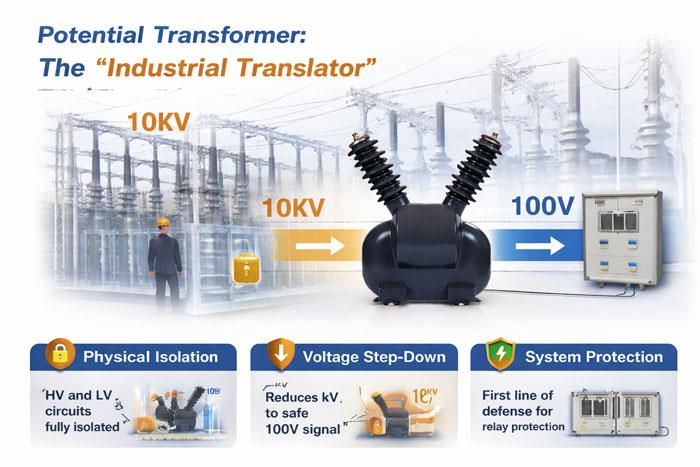
- Physical isolation: Completely isolates the high-voltage primary circuit from the low-voltage secondary control circuit, ensuring personnel safety.
- Signal reduction: Converts kV-level voltage linearly to a standard signal of 100V or 110V.
- System protection: Provides voltage sampling for relay protection devices, serving as the first line of defense against equipment burnout.
The 4 Golden Parameters for Your Potential Transformer
Before you even contact a supplier, lock down these four numbers.
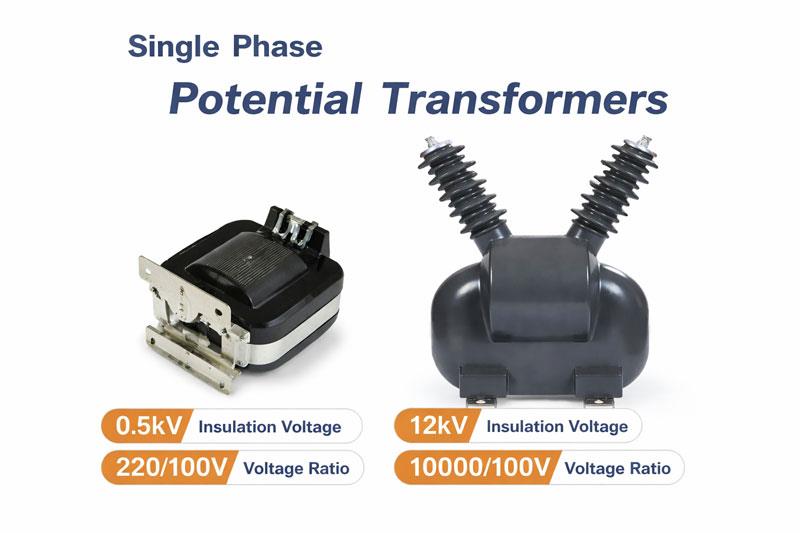
Rated Voltage Ratio of a Potential Transformer
This tells you how much the Potential transformer reduces voltage. It must match your system’s phase or line voltage.
- Low-voltage systems: 220V/380V to 100V (0.5kV level Potential Transformer)
- Medium-voltage systems: 10000/100V (12kV level Potential Transformer)
Common ratio examples:
- 10000/100V (for 10kV or 12kV grids)
- 10000/220V (optional for some control circuits)
Accuracy Class of a Potential Transformer
Accuracy determines how true the output voltage is compared to the primary voltage.
| Class | Application | Why It Matters |
| 0.2 / 0.5 | Energy metering & billing | Prevents revenue loss |
| 3P / 6P | Relay protection | No saturation during faults – ensures protection trips correctly |
Pro tip: For billing-grade metering, never use a 3P class PT. For protection, never use a 0.2 class. It may saturate under fault current.
Rated Output (Load) of a Potential Transformer
Your Potential transformer must supply enough power to all connected devices (meters, transducers, relays).
The rule: Total power consumption of instruments should be between 25% and 100% of the PT’s rated load.
- Too low (<25%): The Potential Transformer might be overloaded by the secondary burden. Volt the secondary circuit.
- Too high (>100%): Accuracy drops, and the PT may overheat.
Insulation Level of a Potential Transformer
This is your PT’s armor against lightning strikes and switching surges. Select based on the system’s highest operating voltage, not just nominal voltage.
Common insulation levels:
- 12 kV / 28 kV / 75 kV (for 12kV systems)
- Higher levels for 24kV, 36kV, or 42kV grids
Why it matters: A Potential Transformer with insufficient insulation can flash over during a storm, damaging your whole panel.
Reference Table: ATO-JDZW-10R (12kV Single-Phase Potential Transformer)
| Item | Specification |
| Model | ATO-JDZW-10R |
| Phase | Single Phase |
| Rated Voltage Ratio | 10000/100V,10000/220V(optional) |
| Rated Insulation Level | 12kV |
| Accuracy | 0.2(30VA, Rated secondary output) |
| 0.5(50VA, Rated secondary output) | |
| Max Output | 500VA |
| Rated Frequency | 50Hz |
| Net Weight | 40kg |
This model is widely used in switchgear, RMUs, and substation metering panels.
Choose Your Potential Transformer Based on Installation Environment
Where you install the Potential transformer changes its construction, housing, and even cooling type.
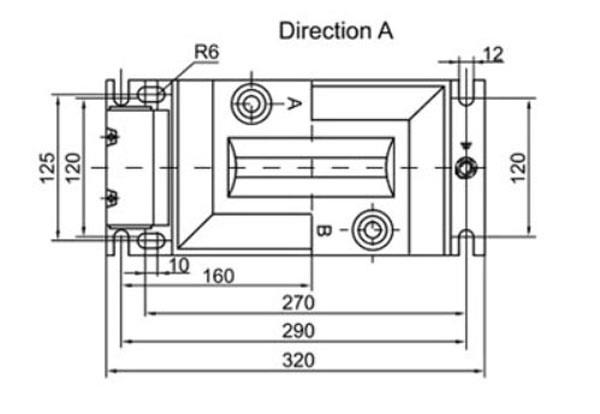
Indoor Potential Transformers
- Construction: Epoxy resin vacuum cast
- Key quality indicator: Partial discharge < 10 pC (lower is better)
- Advantage: Compact, lightweight, easy to mount in panels
Example: A 25kV integrated Potential Transformer – accuracy better than 0.5 grade, compact design, easy to install inside MV switchgear.
Outdoor Potential Transformers
- Requirements: UV resistance, corrosion protection, higher IP rating (usually IP54 or higher)
- Common type: Oil-immersed or dry-type with weather-proof housing
Special Conditions for Potential Transformer Installation
Potential transformers (PTs) are critical for voltage measurement, protection, and metering in power systems. Beyond standard installation requirements, certain special conditions demand extra attention to ensure accuracy, safety, and reliability.
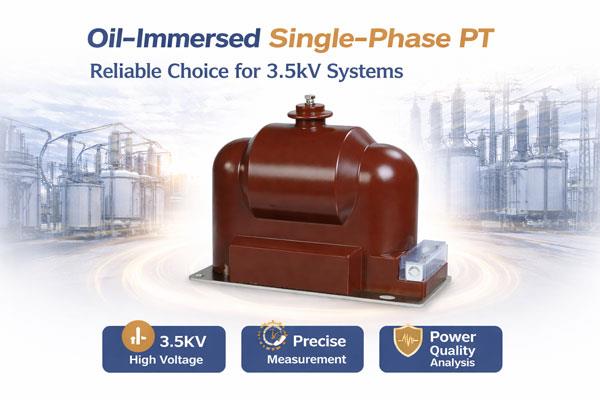
3.5kV special systems: Oil-immersed single-phase Potential transformer gives reliable power quality analysis.
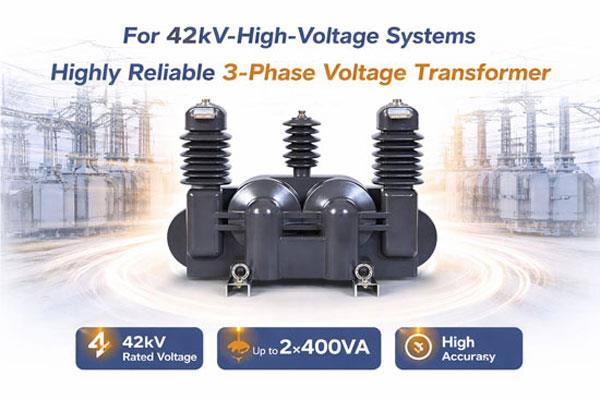
42kV high-voltage systems: Three-phase Potential transformer supports up to 2 x 400VA output.
Verify Potential Transformer Certifications for Export
For export products, certificates are your passport. Without them, your Potential transformers can be held at the border or rejected by local utilities.
General International Standards for Potential Transformers
| Standard | Market | Scope |
| IEC 61869-1/3 | Europe, Asia, and Africa | Most widely accepted global standard |
| IEEE C57.13 | North America (USA, Canada) | Mandatory for utility and industrial projects |
Key Safety Certificates for Potential Transformers
- CE Marking: Required for the European Single Market. Proves compliance with health, safety, and environmental protection.
- UL / CSA Certification: North America’s gold standard. Extremely strict on insulation, flame retardancy, and thermal performance.
- Third-party test reports (KEMA, ASTA, etc.): These go beyond self-declaration. They show your PT has passed rigorous type tests (short-circuit, temperature rise, impulse voltage).
Insider tip: Even if your PT has IEC testing, some countries still require local approval (SNI in Indonesia, PSE in Japan). Always ask your supplier for a full list of available certificates.
Do you need professional selection support?
Consider future expansion needs for potential transformer systems. If you anticipate needing to add more sensors or integrate the system into a larger monitoring system, choose a voltage transformer product that supports scalability. If you are not sure how to select a suitable voltage transformer, it is recommended to seek the advice of a professional engineer or power system expert. The ATO store can provide helpful advice and guidance based on your specific needs.