
How to Choose Static Eliminator?
A static eliminator is an industrial device that neutralizes electrical charges on surfaces by producing a balanced cloud of positive and negative ions. When looking to buy for a static eliminator, identifying the right equipment isn't just an operational preference—it's a critical step toward eliminating material misalignment, contamination defects, and costly equipment downtime. Use this guide from ATO shop to choose the right static eliminator.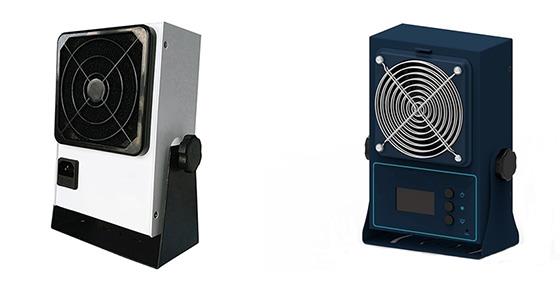
AC vs DC Static Eliminators
Choosing between AC and DC static eliminators depends on your process requirements.
| Feature | AC static eliminators | DC static eliminators |
| Power | Alternating Current | Direct Current |
| Ion Output | Alternating positive and negative ions | Continuous positive and negative ions |
| Working Distance | Short (30–100 mm) | Medium to long (0.3–1.5 m) |
| Typical Applications | Printing, packaging, paper | Plastic film, high-speed lines, large surfaces |
| Advantages | Low cost, simple installation | Long-range, high output, suitable for high-speed lines |
| Disadvantages | Not ideal for high-speed or large surfaces | Higher cost, slightly more complex maintenance |
Selection Guidelines:
- Small, low-speed lines → AC static eliminators
- High-speed, thick material, large surfaces → DC static eliminators
Difference Between Active And Passive Static Eliminators
When selecting a static control system, the most fundamental technology split lies between passive and active elimination methods. Understanding this division allows you to align your specific budget limits with your process capability requirements.
| Feature / Dimension | Passive Static Eliminators | Active Static Eliminators |
| Common Form Factors | Static brushes, tinsel, cords, and conductive fiber strips. | Ionizing bars, blowers, nozzles, and high-voltage guns. |
| Operating Principle | Relies on the material's own high charge field to ionize air and bleed voltage to the ground. | High-Voltage Ionization: Uses external electrical power to split air molecules into massive clouds of positive and negative ions. |
| External Power Supply | Not Required (Zero power consumption; no electrical wiring needed). | required (Must be connected to a high-voltage power pack or a 24V DC input). |
| Residual Voltage Limit | Can only lower charges down to a threshold of roughly 2,000V. Ionization stops below this point. | Can neutralize static completely down to near 0V (often within single-digit volts). |
| Line Speed Adaptability | Slow. Often struggles to keep up with high-speed automated lines exceeding 200 m/min. | Very high. Highly capable of neutralizing fast-moving materials on rapid automation lines. |
| Sensitive Component Safety | Potential for localized micro-sparking; not recommended for protecting highly sensitive electronics. | Controlled ion balance (often closed-loop); highly safe for Electrostatic Discharge (ESD) sensitive parts. |
| Maintenance Requirements | Minimal. Needs only occasional cleaning from dust and inspections for structural wear or breakage. | Moderate. Emitter pins require routine cleaning and periodic balance calibration to sustain peak decay rates. |
| Initial Capital Investment | Very Low. An exceptionally cost-effective entry point for basic static reduction. | Higher. Requires budgeting for ionizing hardware, specialized cables, and control units. |
Key Factors To Consider Before Buying Static Eliminator
Here is a more concise version of the key factors to evaluate before purchasing a static eliminator:
Installation Distance
Proper installation distance is critical for effective static elimination.
| Type | Recommended Distance | Notes |
| AC Ion Bar | 30–100 mm | Too close may hit the material; too far reduces effectiveness |
| DC Ion Bar | 150–1500 mm | Adjust based on material thickness and speed |
| Ion Fan | 0.5–2 m | Fan airflow and ion balance affect coverage |
| Ion Air Gun | 50–200 mm | Localized elimination; can use compressed air |
Tips:
- Measure material voltage before and after installation to ensure static drops below 100V.
- Keep the ionizer in free air, away from metal or conductive objects.
Material Speed
Material speed affects ion output requirements.
| Static Eliminators Line Speed | Recommended Type | Notes |
| 0–50 m/min | AC Ion Bar / Ion Fan | Low speed; AC sufficient |
| 50–200 m/min | DC Ion Bar | Medium-high speed; requires continuous ion output |
| >200 m/min | DC Ion Bar + Compressed Air | High-speed films or rolls; ensures rapid neutralization |
Tip: The faster the material moves, the stronger the ion output must be. Installation distance can be adjusted accordingly.
Material Shape & Thickness
Flat Surfaces: Linear ionizing bars offer uniform coverage for continuous films, sheets, or webs.
3D/Complex Parts: Molded plastics or recessed parts require blowers or compressed air nozzles to force ions into deep cavities.
Thick Materials (>5mm): Static can trap separate charges on both sides, often requiring double-sided (top and bottom) ionizer configurations.
Operating Environment
Hazardous Zones: Processes involving volatile solvents, inks, or combustible dust require certified explosion-proof (ATEX/UL-listed) hardware to prevent ignition sparks.
Cleanrooms: Electronics or medical packaging lines require specialized silicon or tungsten emitter pins to prevent microscopic particle shedding.
Air Availability
Air-Assisted (Nozzles/Guns): Use compressed air to simultaneously neutralize static and physically blow away dust. They require a clean, dry air supply.
Dead-Air (Bars/Blowers): Rely on natural ion migration or electric fans. They are quieter and more cost-effective to run, but lack heavy dust-blowing power.
Application Of The Static Eliminator
| Application Scenario Type | Technical Rationale | Recommended Static Eliminator |
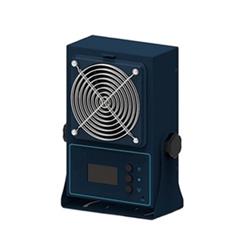
| Electronics & Semiconductor(PCB Assembly / Single Bench) | Precision Ion Balance Control: Features a tight ion balance of 0 ± 5 V and discharges 1KV down to <100V in less than 1s. Ideal for a single technician bench to protect ultra-sensitive micro-components from ESD damage. |
|
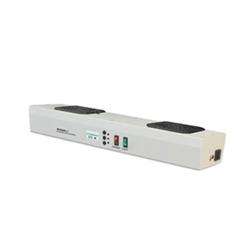
| Packaging & Labeling(Dual-Lane / Parallel Product Tracks) | Dual Outlets & High Volume: Packs a high airflow velocity of 5.0m³/min across two air outlets. Perfect for multi-lane food or medical packaging lines to simultaneously treat parallel tracks, ensuring fine powders do not cling to thermal seals. |
|
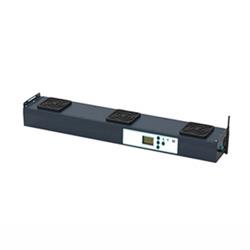
| Plastics & Injection Molding(Molded Parts Drop Bins / Baskets) | High-Volume Dispersal: Provides a heavy-duty 145 CFM airflow through dual outlets. While its ion balance is slightly wider (0±15V), it is highly effective for plastics, forcing ions deep into parts bins so molded cups or caps do not clump or stick to walls. |
|
Static Elimination Key Selection Parameters
| Parameter | Recommended Range | Notes |
| Output Voltage | 5–10 kV | Adjust according to material thickness and speed |
| Neutralization Time | <2 seconds | Especially important for high-speed lines |
| Ion Balance | ±50 V | Prevents recharging the material |
| Operating Temperature | 0–50℃ | Use high-temperature models if required |
| Relative Humidity | 20–80% | RH Low humidity increases static; increase ion output if needed |
| Power Supply | AC 220V / DC 24V | Choose according to factory conditions |
| Maintenance Interval | 1–3 months | Depends on dust, powder, and material type |
FAQ
Q: Where should a static eliminator be installed?
A: The ideal location is usually after the material leaves a roller and enters free air, allowing ions to reach the charged surface effectively.
Q: How often should a static eliminator be maintained?
A: Emitter points should be inspected and cleaned regularly. Maintenance frequency depends on environmental conditions and contamination levels.
Q: Which static eliminator is best for plastic film production?
A: DC ion bars are commonly recommended because they can neutralize high static charges on fast-moving film surfaces.
Q: Can static eliminators remove dust?
A: Static eliminators reduce dust attraction by neutralizing electrostatic charges. Ionizing air guns can additionally remove dust from surfaces.
conclusion
To choose the right static eliminator, you must match the device's technology to your operational line speed, target distance, and the physical shape of the material. Additionally, evaluate whether your workspace demands specialized hardware, such as explosion-proof certifications for hazardous environments or fan-driven units if plant compressed air is unavailable. Finally, prioritize modular systems with replaceable emitter pins to ensure easy maintenance and long-term performance reliability.