
The piezo accelerometer sensor is designed for accurate vibration and dynamic acceleration measurement in industrial equipment. With a 0-5V analog output, the accelerometer sensor can connect easily to PLCs, data acquisition systems, and vibration monitoring equipment. Multiple measurement ranges make the sensor suitable for different vibration monitoring and condition monitoring requirements.
Specification
| Model | ATO-KT-11 | ATO-KT-10 | ATO-KT-14 | ATO-KT-13 | |
| Dynamic Performance | Measurement Range | 0–1g | 0–10g | ±1g | ±10g |
| Sensitivity | ~5000mV/g | ~500mV/g | ~2500mV/g | ~250mV/g | |
| Mounted Resonance Frequency | 8 kHz | 10 kHz | 8 kHz | 10 kHz | |
| Frequency Response | 1–2000 Hz (±3dB) | ||||
| Output Range | 0–5V | ||||
| Non-linearity | ≤1% | ||||
| Transverse Sensitivity | ≤5% | ||||
| Environmental Specification | Shock Limit | 1000g | 2000g | 1000g | 2000g |
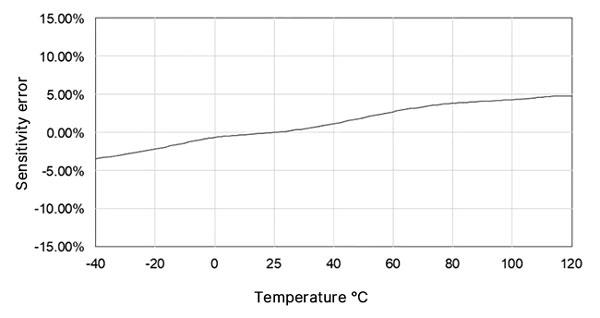
| Operating Temperature | -40–85℃ | ||||
| Sealing Performance | Laser Welding | ||||
| Electrical Specification | Bias Voltage (Midpoint) | / | / | 2.5V | 2.5V |
| Supply Voltage | 18–36 VDC | ||||
| Insulation Resistance to Ground | ≥108Ω | ||||
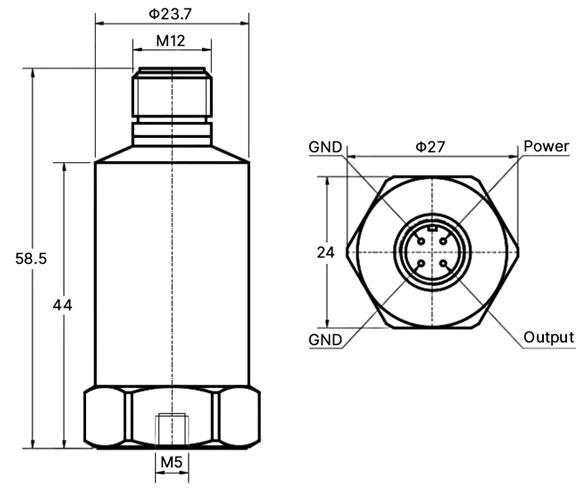
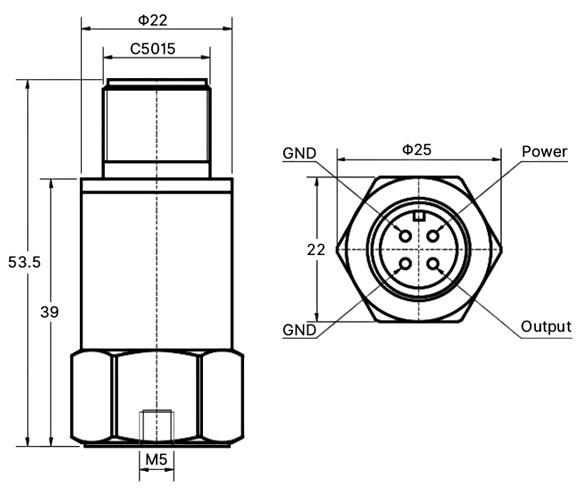
| Structure | Output Connector | M12 4-Pin | C5015 4-pin | M12 4-Pin | C5015 4-pin |
| Weight | 130 g | 82 g | 130 g | 82g | |
| Housing Material | Stainless Steel | ||||
| Sensing Element | Piezoelectric Ceramic | ||||
| Element Structure | Shear Type | ||||
| Mounting Type | M5 | ||||
Feature
- 0-5V Analog Output: The piezo accelerometer sensor delivers a stable voltage signal for PLCs, data acquisition systems, and vibration monitoring equipment.
- Multiple Measurement Ranges: Available in 0-1g, 0-10g, ±1g, and ±10g to suit different acceleration measurement requirements.
- Wide Frequency Response: The piezoelectric accelerometer sensor covers 1-2000Hz (±3dB) for reliable detection of a broad range of vibration signals.
- Piezoelectric Sensing Element: Uses a piezoelectric ceramic element for dynamic acceleration and vibration measurement.
- High Shock Resistance: The accelerometer sensor supports shock limits up to 1000g or 2000g, depending on the selected model.
- Durable Stainless Steel Housing: Provides robust protection for demanding industrial measurement environments.
- Flexible Installation: Features M5 threaded mounting and supports M12 4-Pin or C5015 4-Pin connector options.
Size(unit: mm)
ATO-KT-11 ATO-KT-14
ATO-KT-10 ATO-KT-13
Temperature Chart
Tips: How often should an accelerometer sensor be checked?
The accelerometer sensor should be inspected regularly to ensure stable vibration measurement and reliable signal transmission. Check the sensor body, mounting connection, cable, and connector for looseness, wear, contamination, or physical damage. For equipment operating continuously under high vibration, shock, dust, or temperature changes, more frequent inspections are recommended. Periodic checks of the sensor output can also help identify abnormal readings or installation issues before they affect vibration monitoring results.

3 Axis Accelerometer Sensor, RS232 Output, ±2g to ±40g

3 Axis Accelerometer Sensor, 0–5V Output, ±2g to ±40g

3 Axis Accelerometer Sensor, 4–20mA Output, ±2g to ±40g

Three Axis Capacitive Accelerometer Sensor, ±1g/±50g
