3 Axis Accelerometer Sensor, 0–5V Output, ±2g to ±40g

$1,289.60
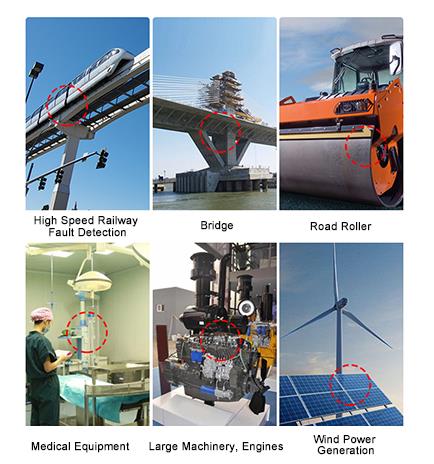
Cheap price 3 axis accelerometer sensor with 0-5V voltage output, working temperature -40°C ~ 85°C, 20g Rms, 20-2000 Hz Vibration. Triaxial accelerometer sensor is used in crash record, wind power generation, traffic system monitoring, roadbed analysis and high-speed railway fault detection, bridge.
SKU: ATO-AS-AKF390
*
*
Free Shipping
Delivery date: 8-12 days

Three axis accelerometer sensor with cross-axis sensitivity 1%/ 2%, ±2g to ±40g measuring range can be chosen. It has advantages of strong structure, low power consumption and excellent deviation stability, which guarantees outstanding output reliability.

Parameters

ModelATO-AKF390
Measuring Range±2g±4g±8g±10g±20g±40g
Sensitivity1250±10% (mA/g)625±10% (mA/g)312.5±10% (mA/g)250±10% (mA/g)125±10% (mA/g)62.5±10% (mA/g)
Nonlinearity<0.5% FS (highest)<0.5% FS (highest)<0.8% FS (highest)<1% FS (highest)<1% FS (highest)<1% FS (highest)
Lateral Vibration Sensitivity Ratio1%1%2%5%5%5%
Deviation Temperature Coefficient0.01%/°C (typical value)0.01%/°C (typical value)0.01%/°C (typical value)0.05%/°C (typical value)0.05%/°C (typical value)0.05%/°C (typical value)
Cross-axis Sensitivity1%1%1%2%2%2%
Resonance Frequency2.4kHz2.4kHz2.4kHz5.5kHz5.5kHz5.5kHz
Noise Density21μg/Hz21μg/Hz21μg/Hz86.6μg/Hz86.6μg/Hz86.6μg/Hz
0g Output 2.5V<0.01mV<0.01mV<0.01mV<0.008mV<0.008mV<0.008mV
Bandwidth1000 (3Db) (Hz)
Resolution/Threshold<1@1Hz (mg) (highest)
Deviation Calibration<1mg (max)
Measuring AxisX, Y, Z
Up/Off Power Repeatability<2mg (max)
ReliabilityMIL-HDBK-217, Grade 2
Shock Resistance100g@11ms, Triaxial and Identical (Half Sine Wave)
Recovery Time<1ms (1000g, 1/2 Sin 1ms, Shock Acting On The i Axis)
Vibration20g Rms, 20-2000Hz (Random Noise, o, p, i Per Axis For Action 30 Minutes )
Input9-36 VDC (Vdd_Vss)
Current Consumption<60mA @ 12 VDC
ConnectorIndustrial standard M12 connector
Weight73.5g
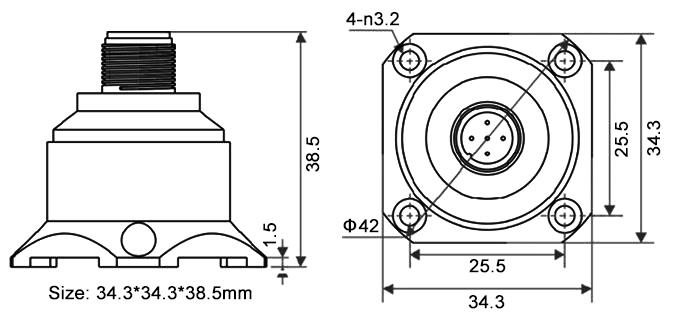
Dimension34.3*34.3*38.5mm
CertificateCE
Warranty12 months


Dimension (unit: mm)

Dimension of 3 axis accelerometer sensor

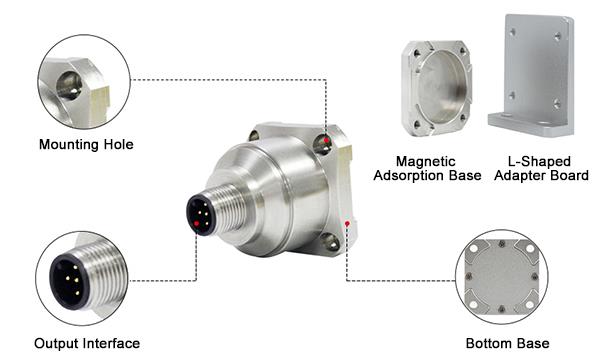
Details

3 axis accelerometer sensor details

Dimension of Mounting Fittings (unit: mm)
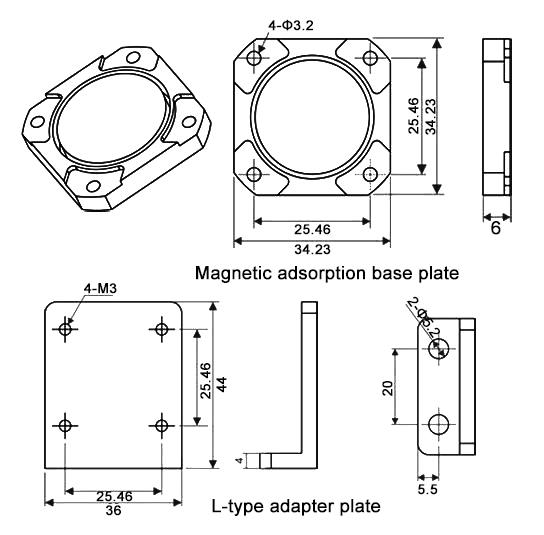
Mounting dimension of 3 axis accelerometer sensor

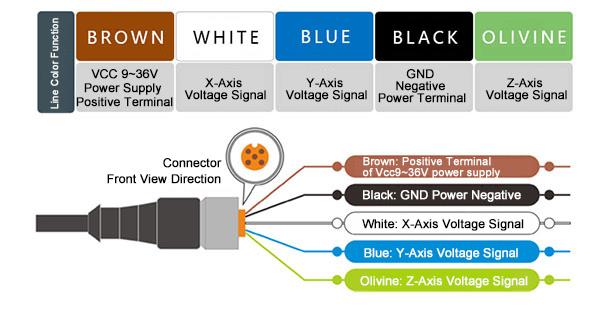
Electrical Connection

Electrical connection of 3 axis acceleromrter sensor

Applications

3 axis accelerometer sensor applications

Tips: Selection Guide of Triaxial Accelerometer Sensor.

1. Output type

This is the first thing to consider. This depends on the interface between your system and the accelerometer. Generally, the voltage and acceleration of the analog output are proportional, for example, 2.5V corresponds to an acceleration of 0g, and 2.6V corresponds to an acceleration of 0.5g. Digital output generally uses pulse width modulation (PWM) signals.

If you use a microcontroller with only digital inputs, such as BASIC Stamp, then you can only choose a digital output accelerometer, but the problem is that you have to take up an extra clock unit to process the PWM signal, and it is also for the processor. A big burden.

If the microcontroller you are using has an analog input port, such as PIC/AVR/OOPIC, you can easily use an acceleration sensor with an analog interface, all you need is to add a command similar to "acceleration=read_adc()" in the program , And the speed of processing this instruction is only a few microseconds.

2. Number of measuring axes

For most projects, the two-axis acceleration sensor can already meet most applications. For some special applications, such as UAV and ROV control, a three-axis acceleration sensor may be suitable.

3. Maximum measured value

If you only need to measure the inclination angle of the robot relative to the ground, a ±1.5g acceleration sensor is sufficient. But if you need to measure the dynamic performance of the robot, ±2g should also be sufficient. If your robot will suddenly start or stop, then you need a ±5g sensor.

Product reviews
I like this accelerometer very much
5
Lilshopper
Avatar
12/20/2021 8:10 PM
I like this accelerometer very much. It is very powerful and can be used in many fields. It is recommended to buy it.
Was this review helpful? Yes No (0/0)
Accurate Measurement and Voltage Output
5
Anlexa
Avatar
9/19/2023 7:30 PM
The sensor provides precise measurements of acceleration in three orthogonal axes (X, Y and Z), which allows for highly accurate data collection. In addition, the voltage output simplifies signal processing and integration into existing systems. It can be easily interfaced with common data acquisition systems, microcontrollers and control units.
Was this review helpful? Yes No (0/0)
About triaxial accelerometer sensor
4
Chloe
Avatar
5/13/2024 12:51 AM
Can this triaxial accelerometer sensor go to a d-sub 15 connector? How are the 3 channels of data separated?
Was this review helpful? Yes No (0/0)
ATO Responded
1. Yes, the accelerometer sensor itself comes with a 2-meter long connector plug cable.
2. The XYZ three-axis data is separated and isolated. The data for each axis is connected to its respective cable. These three axes are wired independently.
Magnetic Mount
5
Heller
Avatar
11/4/2025 6:54 PM
I'd like to know more about the ATO-AKF390  /- 40g. Do you have a magnetic mount and connection software?
Was this review helpful? Yes No (0/0)
ATO Responded
This sensor is configurable with a magnetic mount, but configuration software is not included.
Write your review
  • Only registered users can write reviews
*
*
  • Bad
  • Excellent
*
*
*
*

Three axis accelerometer sensor with cross-axis sensitivity 1%/ 2%, ±2g to ±40g measuring range can be chosen. It has advantages of strong structure, low power consumption and excellent deviation stability, which guarantees outstanding output reliability.

Parameters

ModelATO-AKF390
Measuring Range±2g±4g±8g±10g±20g±40g
Sensitivity1250±10% (mA/g)625±10% (mA/g)312.5±10% (mA/g)250±10% (mA/g)125±10% (mA/g)62.5±10% (mA/g)
Nonlinearity<0.5% FS (highest)<0.5% FS (highest)<0.8% FS (highest)<1% FS (highest)<1% FS (highest)<1% FS (highest)
Lateral Vibration Sensitivity Ratio1%1%2%5%5%5%
Deviation Temperature Coefficient0.01%/°C (typical value)0.01%/°C (typical value)0.01%/°C (typical value)0.05%/°C (typical value)0.05%/°C (typical value)0.05%/°C (typical value)
Cross-axis Sensitivity1%1%1%2%2%2%
Resonance Frequency2.4kHz2.4kHz2.4kHz5.5kHz5.5kHz5.5kHz
Noise Density21μg/Hz21μg/Hz21μg/Hz86.6μg/Hz86.6μg/Hz86.6μg/Hz
0g Output 2.5V<0.01mV<0.01mV<0.01mV<0.008mV<0.008mV<0.008mV
Bandwidth1000 (3Db) (Hz)
Resolution/Threshold<1@1Hz (mg) (highest)
Deviation Calibration<1mg (max)
Measuring AxisX, Y, Z
Up/Off Power Repeatability<2mg (max)
ReliabilityMIL-HDBK-217, Grade 2
Shock Resistance100g@11ms, Triaxial and Identical (Half Sine Wave)
Recovery Time<1ms (1000g, 1/2 Sin 1ms, Shock Acting On The i Axis)
Vibration20g Rms, 20-2000Hz (Random Noise, o, p, i Per Axis For Action 30 Minutes )
Input9-36 VDC (Vdd_Vss)
Current Consumption<60mA @ 12 VDC
ConnectorIndustrial standard M12 connector
Weight73.5g
Dimension34.3*34.3*38.5mm
CertificateCE
Warranty12 months


Dimension (unit: mm)

Dimension of 3 axis accelerometer sensor

Details

3 axis accelerometer sensor details

Dimension of Mounting Fittings (unit: mm)

Mounting dimension of 3 axis accelerometer sensor

Electrical Connection

Electrical connection of 3 axis acceleromrter sensor

Applications

3 axis accelerometer sensor applications

Tips: Selection Guide of Triaxial Accelerometer Sensor.

1. Output type

This is the first thing to consider. This depends on the interface between your system and the accelerometer. Generally, the voltage and acceleration of the analog output are proportional, for example, 2.5V corresponds to an acceleration of 0g, and 2.6V corresponds to an acceleration of 0.5g. Digital output generally uses pulse width modulation (PWM) signals.

If you use a microcontroller with only digital inputs, such as BASIC Stamp, then you can only choose a digital output accelerometer, but the problem is that you have to take up an extra clock unit to process the PWM signal, and it is also for the processor. A big burden.

If the microcontroller you are using has an analog input port, such as PIC/AVR/OOPIC, you can easily use an acceleration sensor with an analog interface, all you need is to add a command similar to "acceleration=read_adc()" in the program , And the speed of processing this instruction is only a few microseconds.

2. Number of measuring axes

For most projects, the two-axis acceleration sensor can already meet most applications. For some special applications, such as UAV and ROV control, a three-axis acceleration sensor may be suitable.

3. Maximum measured value

If you only need to measure the inclination angle of the robot relative to the ground, a ±1.5g acceleration sensor is sufficient. But if you need to measure the dynamic performance of the robot, ±2g should also be sufficient. If your robot will suddenly start or stop, then you need a ±5g sensor.

Product reviews
I like this accelerometer very much
5
Lilshopper
Avatar
12/20/2021 8:10 PM
I like this accelerometer very much. It is very powerful and can be used in many fields. It is recommended to buy it.
Was this review helpful? Yes No (0/0)
Accurate Measurement and Voltage Output
5
Anlexa
Avatar
9/19/2023 7:30 PM
The sensor provides precise measurements of acceleration in three orthogonal axes (X, Y and Z), which allows for highly accurate data collection. In addition, the voltage output simplifies signal processing and integration into existing systems. It can be easily interfaced with common data acquisition systems, microcontrollers and control units.
Was this review helpful? Yes No (0/0)
About triaxial accelerometer sensor
4
Chloe
Avatar
5/13/2024 12:51 AM
Can this triaxial accelerometer sensor go to a d-sub 15 connector? How are the 3 channels of data separated?
Was this review helpful? Yes No (0/0)
ATO Responded
1. Yes, the accelerometer sensor itself comes with a 2-meter long connector plug cable.
2. The XYZ three-axis data is separated and isolated. The data for each axis is connected to its respective cable. These three axes are wired independently.
Magnetic Mount
5
Heller
Avatar
11/4/2025 6:54 PM
I'd like to know more about the ATO-AKF390  /- 40g. Do you have a magnetic mount and connection software?
Was this review helpful? Yes No (0/0)
ATO Responded
This sensor is configurable with a magnetic mount, but configuration software is not included.
Only registered users can write reviews