
The industrial torque sensor with RS485 and LAN communication, designed for industrial torque, speed, and power measurement. Suitable for engineers and equipment manufacturers requiring high-precision dynamic testing. High-speed sampling, real-time data output, and high overload protection ensure stable and accurate performance in demanding industrial environments.
Specification
| Model | ATO-DYN-200PRO |
| Measuring range | 0.1–20,000 N·m |
| Speed range | <18,000 rpm |
| Speed signal | 60 pulses/rev |
| Torque signal | RS485, Ethernet |
| Zero output | ±0.2% F.S. |
| Non-linearity | 0.1% F.S. |
| Hysteresis | 0.05% F.S. |
| Repeatability | 0.05% F.S. |
| Creep (30 min) | 0.03% F.S. |
| Temperature sensitivity drift | 0.1% F.S./10°C |
| Zero temperature drift | 0.1% F.S./10°C |
| Response time | 0.6 ms (50% response) |
| Response frequency | 1 kHz |
| Maximum torsional angle | 2.60×10 rad (0.149°) |
| Inertial torque | 0.38 kg·cm |
| Rotor natural frequency | 19.4 kHz |
| Torque constant | 3.85×10 N·m/rad |
| Material | Stainless steel |
| Annual stability | 0.3%/year |
| Load resistance | >2kΩ |
| Operating voltage | DC 24V / ±15V |
| Current consumption | <0.2A |
| Operating environment | -10–50℃, 0–85%RH |
| Safe overload | 150% |
| Cable specification | φ5x3m |
| Maximum cable tensile force | 10kg |
Feature
- Industrial Communication Interface: The high speed dynamic torque sensor features RS485 and Ethernet (LAN) outputs with MODBUS-RTU and MODBUS-TCP support, ensuring seamless integration into industrial automation systems.
- Real-Time Torque Monitoring: Provides fast and stable real-time feedback with continuous torque and speed updates for dynamic applications.
- High-Speed Data Acquisition: Built-in high-resolution 24-bit AD converter supports high-frequency sampling, ensuring precise torque measurement under rapidly changing conditions.
- Multi-Parameter Power Analysis: The dynamic torque sensor automatically calculates torque, speed, and power, offering comprehensive performance analysis in one system.
- Enhanced Overload Protection: Designed with high overload capacity to safeguard the sensor from sudden torque spikes and ensure operational safety.
- Integrated OLED Display: Features a clear OLED interface for on-site monitoring, zero adjustment, calibration, and parameter configuration.
- High-Speed Operation Capability: The high speed torque sensor supports high rotational speeds, making it suitable for demanding high-speed machinery applications.
- High Accuracy: Offers excellent measurement accuracy with low drift and strong zero stability for reliable long-term operation.
- Fast Response: Combines rapid response performance with a durable stainless steel housing, ideal for harsh industrial environments.
Size (unit: mm)
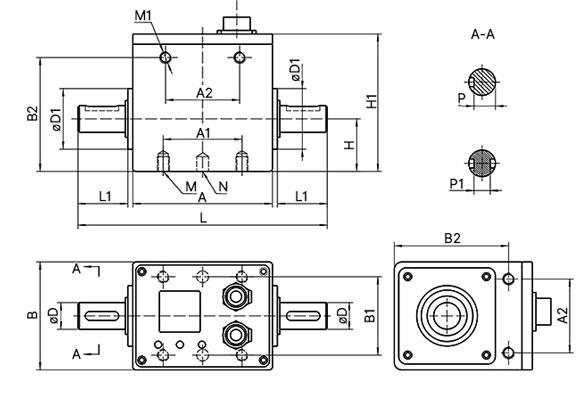
| Specification (N.m) | Φdh7 | A | B | L | L1 | H | H1 | A1 | A2 | B1 | B2 | D1 | M | M1 | Key (Width×Length) | P | P1 |
| 0.1~5 | Φ10 | 94 | 73 | 148 | 23.6 | 35.5 | 93 | 53 | 50 | 53 | 77 | Φ41 | 4-M8 depth 10 | 8-M8 depth 6 | Single key 3×10 | 8.2 | / |
| 10~100 | Φ18 | 94 | 73 | 168 | 33.6 | 35.5 | 93 | 53 | 50 | 53 | 77 | Φ41 | 4-M8 depth 10 | 8-M8 depth 6 | Single key 6×22 | 14.5 | / |
| 200~300 | Φ28 | 94 | 73 | 208 | 53.5 | 35.5 | 93 | 53 | 50 | 53 | 77 | Φ51 | 4-M8 depth 10 | 8-M8 depth 6 | Single key 10×50 | 24 | / |
| 500~800 | Φ38 | 100 | 90 | 238 | 65.5 | 44 | 107.5 | 60 | 60 | 60 | 91 | Φ61 | 4-M8 depth 12 | 8-M8 depth 12 | Double key 10×45 | / | 28 |
| 1000~5000 | Φ60 | 100 | 120 | 258 | 75.5 | 60 | 138.5 | 60 | 70 | 75 | 122.5 | Φ93 | 4-M10 depth 15 | 8-M8 depth 15 | Double key 18×60 | / | 46 |
| 10000~20000 | Φ98 | 145 | 160 | 356 | 100.5 | 80 | 191.6 | 80 | 80 | 120 | 157 | Φ129 | 4-M12 depth 25 | 8-M12 depth 25 | Double key 28×90 | / | 78 |
Wiring
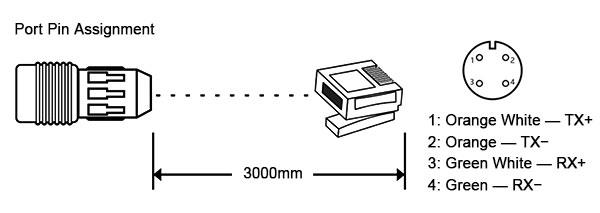
4-Core Cable
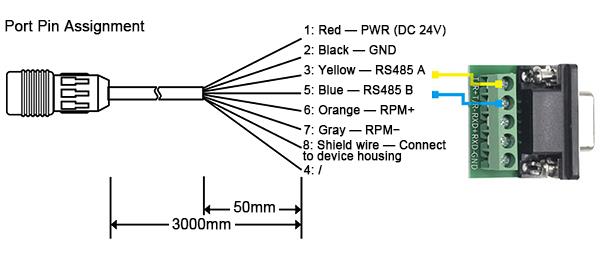
8-Core Cable
Tips: How to maintain the high speed dynamic torque sensor?
The high speed dynamic torque sensor should be kept clean and free from dust, oil, and moisture to ensure stable performance and accurate measurement. Regular maintenance includes inspecting the sensor housing, connectors, and cable condition of the torque sensor to prevent looseness, wear, or signal interruption.
Proper cable management is important for the high speed torque sensor, avoiding excessive bending or mechanical stress to maintain reliable signal transmission. Periodic zero calibration of the dynamic torque sensor is recommended to maintain high accuracy and reduce measurement drift during long-term industrial use.


Reaction Torque Sensor, Dual Flange, 20 Nm/100 Nm/5000 Nm to 10000 Nm

Reaction Torque Sensor for Torque Wrench Calibration, 5-200 Nm

Reaction Torque Sensor, Flange to Square Drive, 2/10/30/50/100/200 Nm

Micro Reaction Torque Sensor for Static Torque, 0.5-150 Nm
