
300A DC reversing contactor is an electromechanical device typically used in applications where the direction of a DC motor needs to be changed, such as in electric vehicles, conveyor systems, or other machinery that requires forward and reverse operation.
Specification
| Model | ATO-ADC300-I | |
| Coil Rated Voltage (Optional) | 12V/24V/48V | |
| Rated Current | 12A | |
| Contact Form (Optional) | 2NO, 2NC | |
| Pole | 2 Pole | |
| Contact Resistance | ≤30mΩ | |
| Contact Voltage Drop | ≤80mV (at 80A) | |
| Insulation Resistance | ≥50mΩ | |
| Overload Current | ≤4le, >1s | |
| Pull-in Voltage | ≤70%Us | |
| Release Voltage | 5%-40%Us | |
| Load Terminal Type | M6 External Thread | |
| Working Style | short term | |
| Load Endurance (Resistive) α | ≥20000 Times | |
| Load Wiring Torque | 3-6N.m | |
| Coil Wiring Torque | 0.5-0.8N.m | |
| Vibration | 3.5g, 10~200Hz, 1/2 Sine Wave (Energized) | |
| Temperature | -40℃~85℃ | |
| Humidity | 5%~95%RH | |
| Contact Bounce Time | ≤5ms | |
| Pick-up Time | ≤30ms | |
| Release Time | ≤30ms | |
| Medium Pressure Resistance | Between Main Contact | 50Hz/60Hz, 1500VAC/1min |
| Between Main Contact and Coil | 50Hz/60Hz, 1500VAC/1min | |
| Insulation Resistance | Initial State | 100mΩ, 1min |
| After Electrical Life | 50mΩ, 1min | |
| Impact | Stability | 20g (power on) |
| Strength | 50g | |
| Mechanical Durability | ≥1000000 Times | |
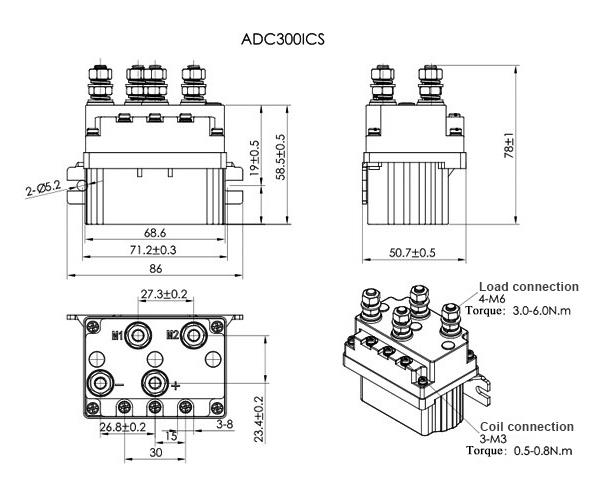
| Dimension | 86mm*5Imm*78mm | |
Coil Parameter
| Coil Voltage | Pull-in Voltage | Release Voltage | Coil Resistance | Coil Power Consumption |
| 12V | ≤70%Us | 5%-40%Us | 6Ω±10% | 24W±10% |
| 24V | ≤70%Us | 5%-40%Us | 24Ω±10% | 24W±10% |
| 36V | ≤70%Us | 5%-40%Us | 54Ω±10% | 24W±10% |
| 48V | ≤70%Us | 5%-40%Us | 96Ω±10% | 24W±10% |
| 60V | ≤70%Us | 5%-40%Us | 150Ω±10% | 24W±10% |
| 72V | ≤70%Us | 5%-40%Us | 216Ω±10% | 24W±10% |
Dimension (Unit: mm)
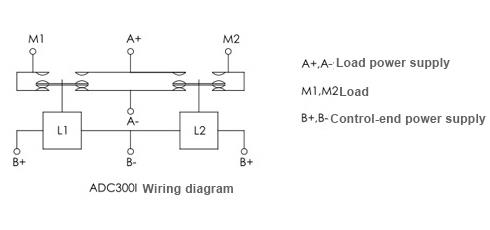
Wiring Diagram
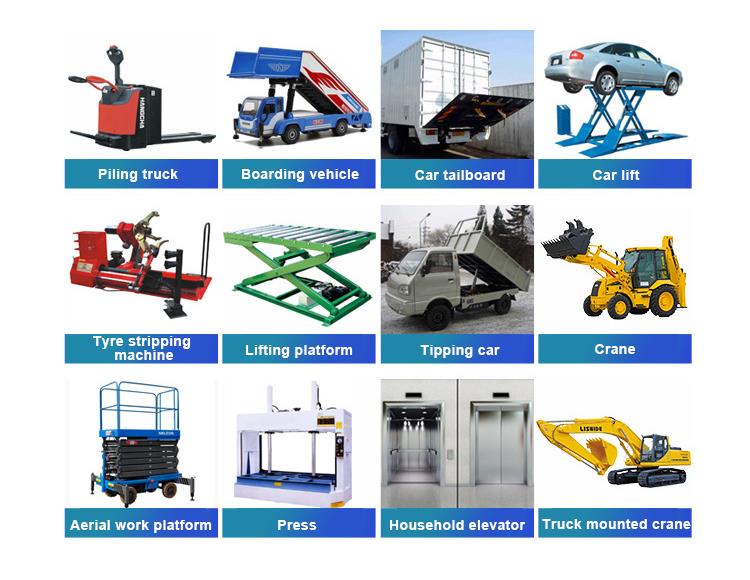
Applications
Tips: What are the control methods of DC reversing contactor?
The control methods of DC commutation contactors mainly include the following. These control methods make DC commutation contactors flexible and adaptable in various application scenarios.
- Manual control: Direct operation of the contactor via a mechanical switch or push button. This method is suitable for simple situations and is intuitive to operate, but it is not suitable for complex or automated needs.
- Electrical control: Use an electromagnetic coil to control the on and off of the contactor, activate the coil through a low voltage signal, and change the state of the contactor. This method is commonly used in remote or automated control systems.
- PLC control: Control signals are sent through a programmable logic controller (PLC) to achieve precise control of the contactor. It is suitable for complex automation systems and provides programming flexibility and high integration.
- Wireless control: Use wireless communication technology (such as Wi-Fi, Bluetooth) to achieve remote control, suitable for situations where long distances are required or wiring is difficult.
- Intelligent control: Combined with sensors and control algorithms, it automatically adjusts the contactor status to improve system response speed and efficiency. It is often used in intelligent industrial applications.
Only registered users can write reviews
Related products

125A DC Reversing Contactor, 2 pole, 12V/24V/48V
ATO-DCCON-R125
$132.41
Excellent conductivity reversing contacor is designed for demanding forward/reverse control of the motors. 2 pole DC contactor with 12V/24V/48V coil, 2NO and 2NC contact form, and is available with two optional auxiliary contacts.

200A DC Reversing Contactor, 2 pole, 12V/24V/48V
ATO-DCCON-R200
$164.46
Contact circuit rated current 200 amps, 2 pole DC contactor with 12V/24V/48V coil for choice, DPST-NO, DPST-NC contact form, two interlocked contacts are designed to prevent the motor from running forwards and backwards simultaneously.

400A DC Reversing Contactor, 2 pole, 12V/24V/48V
ATO-DCCON-R400
$257.08
2 pole reversing contactor has been designed for direct current load, 2NO and 2NC ( DPST-NO, DPST-NC) contact form, rated load current is 400A. IP 50 protection, easy and quick installation, manufacturer direct sale.

500A DC Reversing Contactor, 2 pole, 12V/24V/48V
ATO-DCCON-R500
$153.19
2 pole DC reversing contactor with 500 amps rated load current, 2NO and 2NC contact form, coil rated voltage with 12V/24V/48V DC available. This economical price DC reversing contactor prevents the motor from running forward and backward simultaneously.

50A DC Reversing Contactor, 2 pole, 12V/24V/48V
ATO-DCCON-R50
$74.31
Two pole DC reversing contacor with 2 sets of switching contacts, 2NO and 2NC form, 50 amps rated load current of contact circuit, coil rated voltage with 12V/24V/48V DC for selection. Cheap price and manufacturer direct sale.