Static Torque Sensor, Disc Type, 0-10 Nm

$330.61
High quality and reasonable price static torque sensor with a variety of ranges. This torque transducer has a disc structure. The bridge voltage of electronic torque sensor is 5-12VDC. Static torque sensors provide precise and accurate measurements of torque. This is essential for ensuring product quality and performance.
SKU: ATO-TQS-NJY65
*
Free Shipping
Delivery date: 5-7 days

In many cases, static torque sensors can be more cost-effective than dynamic torque sensors. Their simpler design and lower maintenance needs contribute to a more economical solution for torque measurement.

Specification

ModelATO-LZ-NJY65
Sensitivity1.5-2.0 mV/V
MaterialStainless steel
Non-Linearity≤±0.5% F. S
Repeatabilit≤±0.5% F. S
Creep≤±0.3% F. S/30 min
Zero Temperature Drift≤±0.05% F. S/10°C
Sensitivity Temperature Drift≤±0.05% F. S/10°C
Working Temperature-20°C~60°C
Input Impedance380±30Ω/730±30Ω
Output Impedance350±2Ω/700±3Ω
Insulation Resistance≥5000MΩ/100VDC
Safety Overload120% F. S
Bridge Voltage5-12VDC


Feature

  • Compact size, stainless steel material, with high precision and good stability.
  • Strong anti-interference capability and easy installation.
  • Low Maintenance. Static torque sensors generally have fewer moving parts compared to dynamic torque sensors.
  • Durability. These sensors are designed to withstand harsh conditions, making them durable in demanding environments.

Dimension: (Unit: mm)
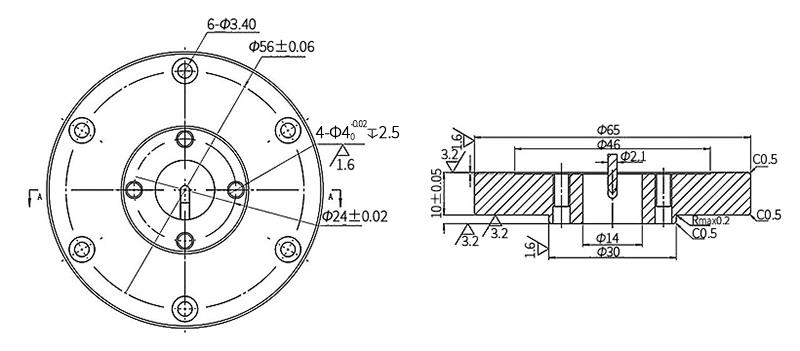
Disc type static torque sensor dimension

Wiring Method

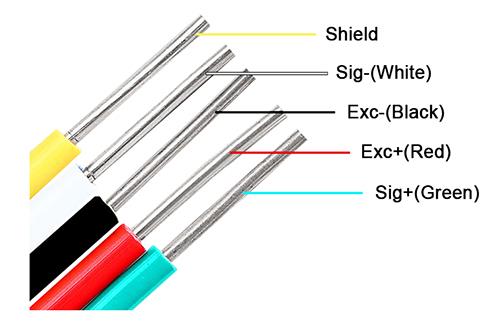
Disc type static torque sensor wiring methods

Application

Disc type static torque sensor application

Tips: How Does Static Torque Sensor Work?

Static torque sensors operate based on strain gauge technology. These sensors are designed to measure the deformation or strain that occurs in a shaft or other torque-transmitting element when torque is applied. The sensor typically consists of a shaft with strain gauges attached to it. When torque is applied to the shaft, it undergoes deformation, causing a change in the electrical resistance of the strain gauges.

This change is then converted into an electrical signal proportional to the applied torque. The sensor's output is calibrated to provide an accurate measurement of the torque applied, making it a reliable tool for applications where a stationary or non-rotating torque needs to be measured. Static torque sensors find applications in various industries, including automotive, aerospace, and industrial manufacturing, where precise torque measurements are essential for quality control and performance optimization.

Product reviews
Output signal
3
Jose
Avatar
5/28/2024 4:54 PM
Does this require an amplifier to read the output signal?
Was this review helpful? Yes No (0/0)
ATO Responded
Yes, generally it is. The sensitivity of this Static Torque Sensor is 1.5-2.0 mV/V, and we have transmitters or amplifiers to power it and transmit torque signal into standard 4-20mA, 0-5V, 0-10V, or RS485 signals. See on SKU: ATO-LCTR-OA or SKU: ATO-LCTR-OAR.
If you have more requirements regarding transmitter or amplifier, feel free to contact us!
Some questions
5
Zackn
Avatar
7/15/2024 2:56 AM
We're calibrating a torque sensor using a differential amplifier. After calibrating with a 45Nm weight, the amplifier output stalls at 3.5V when measuring higher torques, with only a 7mV difference between the sensor outputs. We're concerned about possible sensor damage, but the sensor still shows varying output when torque is applied. How can we determine if the sensor is still functional?
Was this review helpful? Yes No (0/0)
ATO Responded
1. From your description, the amplifier gain adjustment does not change to a certain extent, and the range is exceeded. Generally, the signal between the amplifier and the sensor is changed by adding or subtracting resistance.
2. How to judge whether the sensor is normal: Under power supply (5-12V constant voltage value), red and black are power supply, and the green and white lines are measured with a multimeter. The multimeter is adjusted to the DC 200mV gear. When the voltage changes with the torque force, it proves that there is no problem with the sensor. If it is 50NM and the sensitivity is 1.0mv/v, then under 5V power supply, 50NM corresponds to the green and white line output of 5Vmv; and if 10V power supply, 50NM corresponds to the output of 10mV.
Some questions
5
Keske
Avatar
7/2/2026 12:26 AM
I am interested in the ATO-TQS-NJY65 static torque sensor. Does the total length of the mounting hole exceed 4 mm? Is there a thread inside the mounting hole? If so, what type of thread?
Was this review helpful? Yes No (0/0)
ATO Responded
Yes, Φ4 is the hole diameter, 4 mm. The mounting hole is threaded, M4 thread.
Write your review
  • Only registered users can write reviews
*
*
  • Bad
  • Excellent
*
*
*
*

In many cases, static torque sensors can be more cost-effective than dynamic torque sensors. Their simpler design and lower maintenance needs contribute to a more economical solution for torque measurement.

Specification

ModelATO-LZ-NJY65
Sensitivity1.5-2.0 mV/V
MaterialStainless steel
Non-Linearity≤±0.5% F. S
Repeatabilit≤±0.5% F. S
Creep≤±0.3% F. S/30 min
Zero Temperature Drift≤±0.05% F. S/10°C
Sensitivity Temperature Drift≤±0.05% F. S/10°C
Working Temperature-20°C~60°C
Input Impedance380±30Ω/730±30Ω
Output Impedance350±2Ω/700±3Ω
Insulation Resistance≥5000MΩ/100VDC
Safety Overload120% F. S
Bridge Voltage5-12VDC


Feature

  • Compact size, stainless steel material, with high precision and good stability.
  • Strong anti-interference capability and easy installation.
  • Low Maintenance. Static torque sensors generally have fewer moving parts compared to dynamic torque sensors.
  • Durability. These sensors are designed to withstand harsh conditions, making them durable in demanding environments.

Dimension: (Unit: mm)

Disc type static torque sensor dimension

Wiring Method

Disc type static torque sensor wiring methods

Application

Disc type static torque sensor application

Tips: How Does Static Torque Sensor Work?

Static torque sensors operate based on strain gauge technology. These sensors are designed to measure the deformation or strain that occurs in a shaft or other torque-transmitting element when torque is applied. The sensor typically consists of a shaft with strain gauges attached to it. When torque is applied to the shaft, it undergoes deformation, causing a change in the electrical resistance of the strain gauges.

This change is then converted into an electrical signal proportional to the applied torque. The sensor's output is calibrated to provide an accurate measurement of the torque applied, making it a reliable tool for applications where a stationary or non-rotating torque needs to be measured. Static torque sensors find applications in various industries, including automotive, aerospace, and industrial manufacturing, where precise torque measurements are essential for quality control and performance optimization.

Product reviews
Output signal
3
Jose
Avatar
5/28/2024 4:54 PM
Does this require an amplifier to read the output signal?
Was this review helpful? Yes No (0/0)
ATO Responded
Yes, generally it is. The sensitivity of this Static Torque Sensor is 1.5-2.0 mV/V, and we have transmitters or amplifiers to power it and transmit torque signal into standard 4-20mA, 0-5V, 0-10V, or RS485 signals. See on SKU: ATO-LCTR-OA or SKU: ATO-LCTR-OAR.
If you have more requirements regarding transmitter or amplifier, feel free to contact us!
Some questions
5
Zackn
Avatar
7/15/2024 2:56 AM
We're calibrating a torque sensor using a differential amplifier. After calibrating with a 45Nm weight, the amplifier output stalls at 3.5V when measuring higher torques, with only a 7mV difference between the sensor outputs. We're concerned about possible sensor damage, but the sensor still shows varying output when torque is applied. How can we determine if the sensor is still functional?
Was this review helpful? Yes No (0/0)
ATO Responded
1. From your description, the amplifier gain adjustment does not change to a certain extent, and the range is exceeded. Generally, the signal between the amplifier and the sensor is changed by adding or subtracting resistance.
2. How to judge whether the sensor is normal: Under power supply (5-12V constant voltage value), red and black are power supply, and the green and white lines are measured with a multimeter. The multimeter is adjusted to the DC 200mV gear. When the voltage changes with the torque force, it proves that there is no problem with the sensor. If it is 50NM and the sensitivity is 1.0mv/v, then under 5V power supply, 50NM corresponds to the green and white line output of 5Vmv; and if 10V power supply, 50NM corresponds to the output of 10mV.
Some questions
5
Keske
Avatar
7/2/2026 12:26 AM
I am interested in the ATO-TQS-NJY65 static torque sensor. Does the total length of the mounting hole exceed 4 mm? Is there a thread inside the mounting hole? If so, what type of thread?
Was this review helpful? Yes No (0/0)
ATO Responded
Yes, Φ4 is the hole diameter, 4 mm. The mounting hole is threaded, M4 thread.
Only registered users can write reviews
Customers who bought this item also bought

Tension and Compression Load Cell, 1 kg - 500 kg

ATO-LC-TC01
$137.98
Tension and compression load cell can bear both tension and pressure, with good anti-eccentric load performance, low height, all sealed structure and complete specifications. Miniature load cell with optional capacity 1 kg/ 100kg/ 200 kg/ 300kg/ 500 kg is suited to use in restricted spaces, such as using in vehicle/test instrument/laminator measurement and control.

Digital Load Cell Amplifier, Output 4-20mA/0-10V/RS485

ATO-LCTR-OAR
$109.85
High precision load cell amplifier has a 6 digit LED display, output signal 4-20mA/ 0-5V/ 0-10V/ RS485. There are 3 keys for parameter settings. Digital load cell amplifier can be calibrated on-line by its 3 keys. The setting parameters include zero, capacity, communication rate, division value, decimal digits, etc.

Digital Rotary Torque Sensor, 0.1/5/300/1000 Nm to 10000 Nm

ATO-TQS-D03
$939.15
Digital rotary torque sensor with LCD display has the capacity range from 0.1 Nm/0.3 Nm/1 Nm/5 Nm/10 Nm/300 Nm/1000 Nm to 10000 Nm. LCD display can show torque, speed and power value at the same time. Dynamic torque sensor adopts two NSK shafts to ensure starting torque as low as 0.00001 Nm. Rotary torque transducer with 7 pin waterproof circular connector and 3m cable can measure both forward and reverse torque, and then output ±5V/0-10V/4-20mA/RS485 torque signal to PLC.

Load Cell Transmitter, Output 0-5V/0-10V/4-20mA

ATO-LCTR-OA
$81.27
Load cell transmitter is made of aluminum alloy, output standard signal 0-5V/0-10V/4-20mA, has linear compensation, humidity compensation, external zero debugging, external span debugging, input overload protection and output short circuit protection functions.