
After purchasing one ATO load cell, you can buy a special digital panel meter to obtain readings directly, or buy a transmitter to output standard signal to PLC, DCS and other systems. Customized output signal is 0-5V, 0-10V, or 4-20mA.
Note: The load cell cannot be connected to both the transmitter and the controller at the same time — only one can be selected.
Single point load cells have capacity range from 300g, 600kg, 1kg, 2kg, 5kg, 10kg, 40kg, 100kg to 500kg. Load cell capacity can be customized according to customer requirements. ATO high-accuracy single load cells are a low-cost, ideal choice for force and weight measurement in industries. With their extensive capacity range, they are versatile and applicable to a diverse array of uses.
Specification
| Model | ATO-S-LCB-DYX-306 |
| Weight | 0.1~0.6kg |
| Capacity Range * | 300g~500kg |
| Matched Display Controller | ATO-DPM-LC5D (Click it to the controller page) |
| Matched Transmitter | ATO-LCTR-OA (Click it to the transmitter page) |
| Accuracy | 0.03%F.S (linearity + hysteresis + repeatability) |
| Sensitivity | 2.0±0.5mV/V (Low range variations may differ) |
| Creep | ±0.03%F.S/30min |
| Zero Output | ±2%F.S |
| Temperature Effect on Zero | ±0.03%F.S/10℃ |
| Temperature Effect on Output | ±0.03%F.S/10℃ |
| Operating Temperature | -20℃~+80℃ |
| Input Impedance | 350±20Ω |
| Output Impedance | 350±5Ω |
| Insulation Resistance | ≥5000MΩ/DC 100V |
| Safety Overload | 150%F.S |
| Ultimate Overload | 300%F.S |
| Bridge Voltage (excitation voltage) | DC 5-15V |
| Maximum Bridge voltage (excitation voltage) | DC 15V |
| Material | 2A12-T4 aluminum alloy |
| Protection Class | IP67 |
| Cable Length | 2m |
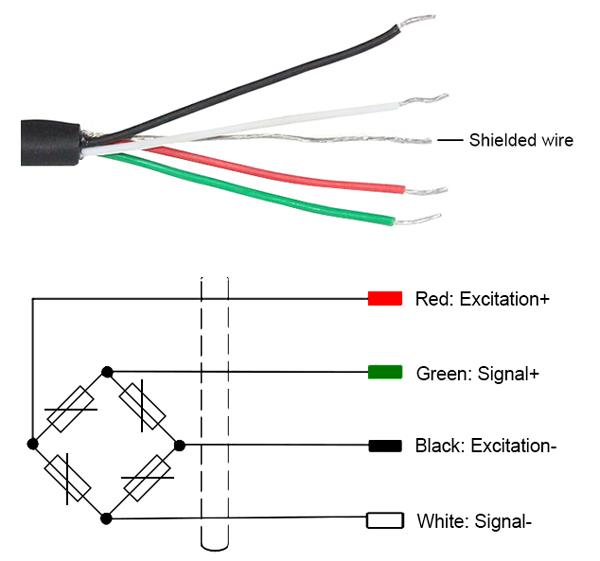
| Wiring | EXC+: Red, EXC-: Black, SIG+: Green, SIG-: White |
Feature
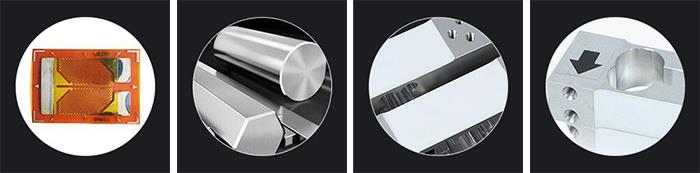
- High Precision Weighing: Features waterproof sealing, a wide measurement range, and stable performance. Suitable for various industrial automation weighing systems.
- High Precision and Stable Performance: Easy to install, ideal for platforms, belt scales, and hoppers in industries like chemicals, pharmaceuticals, and food.
- 2A12-T4 Alloy Material: Strong fatigue resistance, excellent transparency, high strength, corrosion and heat-resistant.
- Small Size and High Precision: Precision better than 0.03%, compact design, and long-term stable performance.
Dimension (unit: mm)
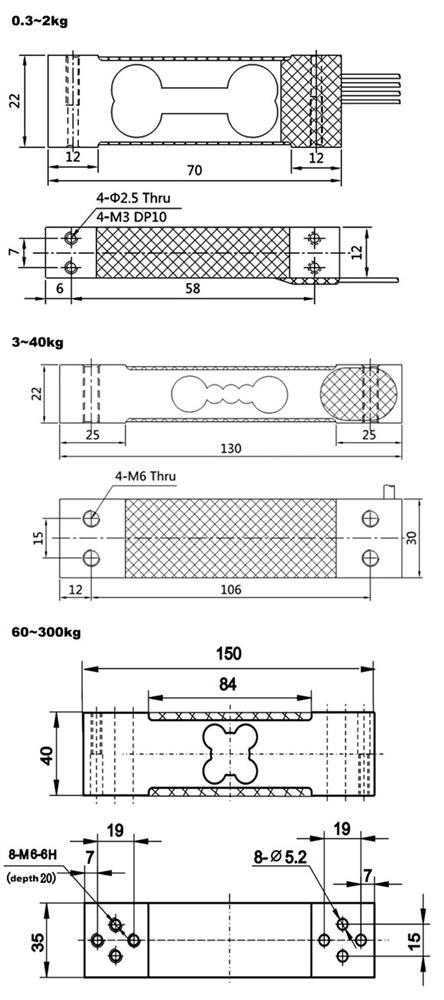
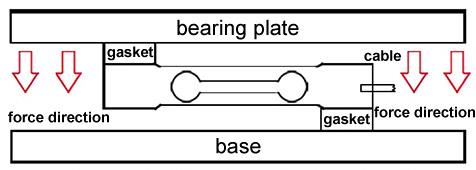
Single Point Load Cell Mounting Diagram
Wiring Method
Application
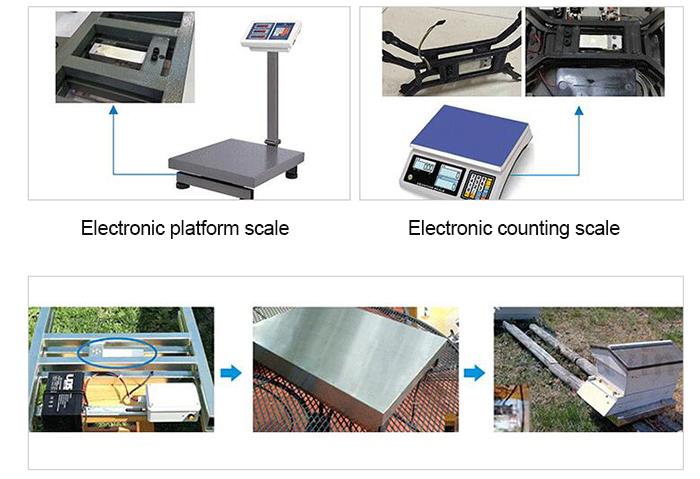
Tips: Single point parallel beam load cell features
In order to keep up with the development speed of the electronic pricing scale, the single point load cell should not only has the characteristics of high sensitivity and high rigidity, but also meet the requirements of short positioning time, strong anti-interference ability, good stability, etc. In addition, load cell is applicable to change for different capacities of electronic pricing scales. The ATO parallel beam load cell has the advantages of reducing the swing of the scale pan, short positioning time, stable and fast reading, and low-capacity anti-overload. In the future, parallel beam load cells will be more widely used in small electronic scales such as commercial or household electronic human health scales and electronic kitchen scales.

Also curious to know if there is a full datasheet beyond what is provided on this webpage.
However, After I did the calibration as what I highlighted in bold, instead of showing some random thing, this time the display is not changing at all. It remain at 0.00kg even though I put the 2Kg load on the top of my load cell.
My step is :
1. reset as we discussed before
2. zero point calibration
3. change the 04 decimal place to 2
4. change the 10 Cr the measure range to 0005.00 because my load cell is a 5kg capacity load cell
5. do the 02 load the calibration value by put the 2 kg load first and then manually enter the 0002.00 to the amplifier
6. long press the first button and exit the setting mode
However, still not work. The display value will not change at this time., keep in 0000.00 in the display screen and nothing change even I put the load on the load cell.
We're mounting a concrete mixer with a weight going from 150 to 156 kg between being empty and being full. That mass will be moving laterally on a set of motorized slides during process. We're planning on reading the weight only after we've stopped the axis from moving. We're expecting there will be non-constant moment/eccentric loads onto each load cells while the mass is being moved around. Would those loads skew the calibration of the load cell even if we're only taking a reading while the mass is stationary?
Looking forward to your feedback.

Load Cell Transmitter, Output 0-5V/0-10V/4-20mA

Digital Load Cell Amplifier, Output 4-20mA/0-10V/RS485

Load Cell Junction Box for Scales, 2/3/4/6/8/10 Inlets to 1 Outlet

Beam Load Cell, 200kg/500kg/1000kg/3 ton/5 ton to 10 ton

5 Digit Display Controller for Load Cells

Micro Load Cell, S Type, 5N/500N/1000N, 1kg/10kg/30kg/200kg

Tension and Compression Load Cell, 1 kg - 500 kg
5 Digit Display Controller for Load Cells