Portable Phosgene (COCl2) Gas Detector, 0 to 1/5/10 ppm

$1,272.06
Buy a portable gas detector for monitoring COCl2 gas concentration. With a high-precision sensor, 0 to 1/5/10 ppm measuring range, clear LCD display, and compact handheld design, this Phosgene COCl2 gas monitor is mainly used in chemical production, leakage detection and emergency response to ensure a safe work environment.
SKU: GD200-COCl2
*
*
*
Free Shipping
Delivery date: 6-12 days

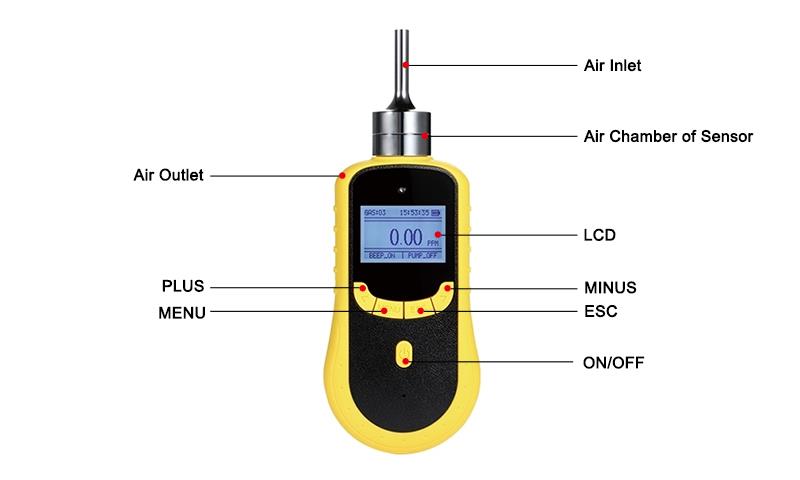
Handheld Phosgene gas detector is available with a measuring range of 0 to 1/5/10 ppm, pump suction type, high-accuracy sensor and gas leak alarm with audible, visual & vibrating. This portable single gas monitor is easy to carry and operate, professionally used for Phosgene COCl2 gas leak detection.

Features

  • LCD dot matrix display, direct readout of gas type, unit, concentration, local time, etc.
  • Support English/Chinese operation, easy to shift.
  • Gas concentration unit PPM and mg/m3 can be shift quickly.
  • Built-in micro-sampling pump, 10 grades of suction are available.
  • Explosion-proof certification

Gas Detector Functions

  • With self-calibration and zero calibration functions, makes the detection more accurate and reliable.
  • One key to restore factory setting, free from maloperation.
  • With temperature and pressure compensation, able to realize the compensation for the gas concentration under different temperature and pressure environments.
  • Two-stage alarm with sound and light, and alarm point is settable.
  • Rechargeable lithiumpolymer battery with large capacity.
  • High-strength special engineering plastic housing, with anti-slip, waterproof, dustproof and explosion-proof.

Specification

ModelGD200-COCl2
Sampling MethodPumping suction, flow rate can be up to 750ml/min
Detection PrincipleElectrochemistry
GasPhosgene (COCl2)
Range (Optional)*0 to 1ppm, 0 to 5ppm, 0 to 10ppm
Resolution0.001ppm
Accuracy≤±3% F.S.
Response Time≤10s
Repeatability≤±1%
Recovery Time≤10s
Linearity Error≤±1%
Zero Shift≤±1% (F.S./year)
Data Logging (Optional Function)High speed data transmission by USB, available for data downloading and printing (The built-in IC card has about 2G memory, which can record 100,000 sets of data.)
AlarmsSound, light and vibration
DisplayLCD dot matrix display
LanguageChinese/English
Battery3.7V rechargeable lithium battery, 3.7 Watt (Charger included: Input AC 100-240V 50/60Hz with optional USA, Europe or UK plug)
Operating Time100h (Pump off)
Explosion-proof GradeII 1G Ex da ia IIC T4 Ga
Case MaterialABS+PC
Protection GradeIP66
CertificationCE, ATEX (Standard: EN IEC 60079-0:2018, EN 60079-1:2014)
Operating Temperature-20℃~50℃
Operating Humidity0~95%RH (non-condensing)
Operating Pressure0.8~1.2bar
Dimension205*75*32mm
Weight300g
Warranty12 months
Extension ProbeAbout 480mm (Total Length), About 300mm (Probe Head)
Accessories (Optional)Calibration kit - gas pressure regulator (calibration gas cylinder NOT included)
  • Body Material: Stainless steel
  • Input Range of Pressure Gauge: 0-25MPa
  • Output Range of Pressure Gauge: 0-0.6Mpa
  • Gauge Class: 2.5
  • Input Pressure: ≤15MPa
  • Output Pressure: ≤0.45MPa
  • Rated Flow: 0.6 m3/h
  • Connection: Inlet: W21.8-14 teeth/inch (levorotation, dextrorotation) ; Outlet: Ф6 flexible tube

Note:
* If you need a COCl2 gas detector with other measuring ranges unlisted in above table, please contact us to inform your operating environment, so as to help you choose an appropriate one for your application.
* We also provide other common gas detectors, and you can refer to ATO Gas Detector Catalog to get the specific gas type and measurement range. If you have any questions, please feel free to contact us.

*** Other Common Gases and Ranges Available for Portable Gas Detectors

Gas TypeMeasure RangeResolution
Ammonia (NH3)0-10/20/50/100/200/500/1000/2000/5000ppm0.01ppm/0.1ppm/1ppm
Benzene (C6H6)0-1/5/10/20/50/100/200/500/1000/2000/5000/10000ppm0.001ppm/0.01ppm/0.1ppm/1ppm
Carbon Dioxide (CO2)0-1000/2000/5000/10000/20000/50000ppm, 0-10%/20%/30%/50%/100% VOL1ppm, 0.01% VOL
Carbon Monoxide (CO)0-10/20/50/100/500/1000/2000ppm0.001ppm/0.01ppm/1ppm
Chlorine (Cl2)0-5/10/20/50/100/200ppm0.001ppm/0.01ppm/0.1ppm
Chlorine Dioxide (ClO2)0-1/5/10/20/50/100ppm0.001ppm/0.01ppm/0.1ppm
Ethylene (C2H4)0-10/20/50/100/500/1000/2000ppm0.001ppm/0.01ppm/0.1ppm/1ppm
Flammable0-100% LEL1% LEL
Formaldehyde (CH2O)0-10/20/50/100/500/1000ppm0.01ppm/0.1ppm/1ppm
Hydrocarbons (HC)0-100% LEL1% LEL
Hydrogen (H2)0-10/20/100/500/1000/2000/3000/5000/10000/20000/40000ppm, 0-4% VOL0.001ppm/0.01ppm/0.1ppm/1ppm, 0.001% VOL
Hydrogen Chloride (HCl)0-10/20/50/100/200/500/1000/2000ppm0.01ppm/0.1ppm/1ppm
Hydrogen Cyanide (HCN)0-10/20/50/100ppm0.01ppm/0.1ppm
Hydrogen Fluoride (HF)0-1/5/10/50ppm0.001ppm/0.01ppm
Hydrogen Sulfide (H2S)0-5/10/20/50/100/200/500/1000/2000ppm0.001ppm/0.01ppm/0.1ppm/1ppm
Methane (CH4)0-100% LEL, 0-50%/100% VOL1% LEL, 0.01%VOL
Methyl Bromide (CH3Br)0-50/100/200/500/1000/2000/3000ppm0.1ppm/1ppm
Nitric Oxide (NO)0-20/50/100/250/500/1000ppm0.01ppm/0.1ppm/1ppm
Nitrogen (N2)0-99.99%/100% VOL0.01% VOL
Nitrogen Dioxide (NO2)0-20/50/100/500/1000ppm0.01ppm/0.1ppm/1ppm
Oxygen (O2)0-25%/30%/100% VOL0.01% VOL
Ozone (O3)0-1/5/10/20/50/100/200/500/1000/2000ppm0.001ppm/0.01ppm/0.1ppm/1ppm
Phosgene (COCl2)0-1/5/10ppm0.001ppm
Phosphine (PH3)0-10/20/50/100/500/1000/2000/3000ppm0.01ppm/0.1ppm/1ppm
Sulfur Dioxide (SO2)0-20/50/100/500/1000ppm0.01ppm/0.1ppm/1ppm
Sulfur Hexafluoride (SF6)0-1000/2000/3000ppm1ppm
Volatile Organic Compounds (VOC)0-1/5/10/20/100ppm0.01ppm/0.1ppm


Details

Handheld Ammonia (NH3) Gas Detector Details

Applications

HF gas detector applications

Tips: What is Phosgene (COCl2) gas?

Phosgene (COCl₂) is a highly toxic and colorless gas with a suffocating odor, often likened to the smell of musty hay or freshly cut grass. It was first synthesized in 1812 by the English chemist John Davy. The name "phosgene" is derived from the Greek words "phos," meaning light, and "gene," meaning born, reflecting its original production method by exposing a mixture of carbon monoxide and chlorine to sunlight.

Phosgene is primarily used in the chemical industry as a reagent in the production of pharmaceuticals, pesticides, dyes, and other organic compounds. It is also used to manufacture polyurethanes and polycarbonate plastics. Despite its industrial utility, phosgene is notorious for its use as a chemical weapon during World War I, where it caused numerous casualties due to its ability to inflict severe respiratory damage.

Exposure to phosgene can lead to symptoms such as coughing, choking, chest pain, and difficulty breathing. Inhalation of high concentrations can result in severe pulmonary edema, leading to potentially fatal respiratory failure. Due to its hazardous nature, phosgene is handled with extreme caution, necessitating strict safety protocols to prevent accidental release and exposure.

Basic Settings of Portable Gas Detector

This video will show you the basic settings of ATO portable gas detectors including high/low alarm setting, language setting and time setting.

Calibration of Portable Gas Detector

This video will show how to calibrate the ATO portable gas detectors.

Concentration Detection of Pesticides Gas

Methyl bromide is an organic compound with the chemical formula CH3Br, which is mainly used as a pesticide, fumigant, refrigerant and solvent, and can also be used in organic synthesis.This video will mainly use methyl bromide and CH3Br as examples to introduce the detection of their concentrations.

How to Detect Hydrogen Sulfide Concentration in the Toilet

Hydrogen sulfide is a flammable acidic gas that smells like rotten eggs at low concentrations and is very toxic. In actual operation, it is necessary to ensure that the detection equipment or method used can accurately measure the concentration of hydrogen sulfide, and pay attention to safety issues during operation to avoid hydrogen sulfide poisoning.

How much C2H4 (ethylene) do ripe bananas and apples produce?

We have various gas detectors such as: CO, O2, O3, H2, NH3, H2S, CH4, Cl2, CH2O, etc, from 0~10000ppm, Industrial or daily use.

How Does a Portable Detector Work?

This video explains how a portable detector works and uses it to measure the air around you.

Portable Single Gas Detector Parameter Settings

In this video, we show you the menu settings of the ATO portable detector. Five button operation makes it very simple to control and activate functions. This device provides two alarm types, high alarm point and low alarm point, which can be adjusted as needed. The speed of the pump is also allowed to be adjusted. Calibration options include zero calibration and span calibration, both of which should be performed by qualified professionals under strict operating conditions using necessary accessories and standard gases.

How to Calibrate a Portable Gas Detector?

This video shows how to calibrate a portable gas detector. The ATO portable gas detector is lithium battery powered, has data logging capabilities and is available with a calibration kit.

Gas Detector Detection Range Setting

This video demonstrates the detection range setting of a portable gas detector.

Product reviews
Working principle
5
Kumire
Avatar
7/10/2025 9:00 PM
Hello, I would like to know how the gas detector works.
Was this review helpful? Yes No (0/0)
ATO Responded
Our detector can detect the data in the air once it is turned on.
Write your review
  • Only registered users can write reviews
*
*
  • Bad
  • Excellent
*
*
*
*

Handheld Phosgene gas detector is available with a measuring range of 0 to 1/5/10 ppm, pump suction type, high-accuracy sensor and gas leak alarm with audible, visual & vibrating. This portable single gas monitor is easy to carry and operate, professionally used for Phosgene COCl2 gas leak detection.

Features

  • LCD dot matrix display, direct readout of gas type, unit, concentration, local time, etc.
  • Support English/Chinese operation, easy to shift.
  • Gas concentration unit PPM and mg/m3 can be shift quickly.
  • Built-in micro-sampling pump, 10 grades of suction are available.
  • Explosion-proof certification

Gas Detector Functions

  • With self-calibration and zero calibration functions, makes the detection more accurate and reliable.
  • One key to restore factory setting, free from maloperation.
  • With temperature and pressure compensation, able to realize the compensation for the gas concentration under different temperature and pressure environments.
  • Two-stage alarm with sound and light, and alarm point is settable.
  • Rechargeable lithiumpolymer battery with large capacity.
  • High-strength special engineering plastic housing, with anti-slip, waterproof, dustproof and explosion-proof.

Specification

ModelGD200-COCl2
Sampling MethodPumping suction, flow rate can be up to 750ml/min
Detection PrincipleElectrochemistry
GasPhosgene (COCl2)
Range (Optional)*0 to 1ppm, 0 to 5ppm, 0 to 10ppm
Resolution0.001ppm
Accuracy≤±3% F.S.
Response Time≤10s
Repeatability≤±1%
Recovery Time≤10s
Linearity Error≤±1%
Zero Shift≤±1% (F.S./year)
Data Logging (Optional Function)High speed data transmission by USB, available for data downloading and printing (The built-in IC card has about 2G memory, which can record 100,000 sets of data.)
AlarmsSound, light and vibration
DisplayLCD dot matrix display
LanguageChinese/English
Battery3.7V rechargeable lithium battery, 3.7 Watt (Charger included: Input AC 100-240V 50/60Hz with optional USA, Europe or UK plug)
Operating Time100h (Pump off)
Explosion-proof GradeII 1G Ex da ia IIC T4 Ga
Case MaterialABS+PC
Protection GradeIP66
CertificationCE, ATEX (Standard: EN IEC 60079-0:2018, EN 60079-1:2014)
Operating Temperature-20℃~50℃
Operating Humidity0~95%RH (non-condensing)
Operating Pressure0.8~1.2bar
Dimension205*75*32mm
Weight300g
Warranty12 months
Extension ProbeAbout 480mm (Total Length), About 300mm (Probe Head)
Accessories (Optional)Calibration kit - gas pressure regulator (calibration gas cylinder NOT included)
  • Body Material: Stainless steel
  • Input Range of Pressure Gauge: 0-25MPa
  • Output Range of Pressure Gauge: 0-0.6Mpa
  • Gauge Class: 2.5
  • Input Pressure: ≤15MPa
  • Output Pressure: ≤0.45MPa
  • Rated Flow: 0.6 m3/h
  • Connection: Inlet: W21.8-14 teeth/inch (levorotation, dextrorotation) ; Outlet: Ф6 flexible tube

Note:
* If you need a COCl2 gas detector with other measuring ranges unlisted in above table, please contact us to inform your operating environment, so as to help you choose an appropriate one for your application.
* We also provide other common gas detectors, and you can refer to ATO Gas Detector Catalog to get the specific gas type and measurement range. If you have any questions, please feel free to contact us.

*** Other Common Gases and Ranges Available for Portable Gas Detectors

Gas TypeMeasure RangeResolution
Ammonia (NH3)0-10/20/50/100/200/500/1000/2000/5000ppm0.01ppm/0.1ppm/1ppm
Benzene (C6H6)0-1/5/10/20/50/100/200/500/1000/2000/5000/10000ppm0.001ppm/0.01ppm/0.1ppm/1ppm
Carbon Dioxide (CO2)0-1000/2000/5000/10000/20000/50000ppm, 0-10%/20%/30%/50%/100% VOL1ppm, 0.01% VOL
Carbon Monoxide (CO)0-10/20/50/100/500/1000/2000ppm0.001ppm/0.01ppm/1ppm
Chlorine (Cl2)0-5/10/20/50/100/200ppm0.001ppm/0.01ppm/0.1ppm
Chlorine Dioxide (ClO2)0-1/5/10/20/50/100ppm0.001ppm/0.01ppm/0.1ppm
Ethylene (C2H4)0-10/20/50/100/500/1000/2000ppm0.001ppm/0.01ppm/0.1ppm/1ppm
Flammable0-100% LEL1% LEL
Formaldehyde (CH2O)0-10/20/50/100/500/1000ppm0.01ppm/0.1ppm/1ppm
Hydrocarbons (HC)0-100% LEL1% LEL
Hydrogen (H2)0-10/20/100/500/1000/2000/3000/5000/10000/20000/40000ppm, 0-4% VOL0.001ppm/0.01ppm/0.1ppm/1ppm, 0.001% VOL
Hydrogen Chloride (HCl)0-10/20/50/100/200/500/1000/2000ppm0.01ppm/0.1ppm/1ppm
Hydrogen Cyanide (HCN)0-10/20/50/100ppm0.01ppm/0.1ppm
Hydrogen Fluoride (HF)0-1/5/10/50ppm0.001ppm/0.01ppm
Hydrogen Sulfide (H2S)0-5/10/20/50/100/200/500/1000/2000ppm0.001ppm/0.01ppm/0.1ppm/1ppm
Methane (CH4)0-100% LEL, 0-50%/100% VOL1% LEL, 0.01%VOL
Methyl Bromide (CH3Br)0-50/100/200/500/1000/2000/3000ppm0.1ppm/1ppm
Nitric Oxide (NO)0-20/50/100/250/500/1000ppm0.01ppm/0.1ppm/1ppm
Nitrogen (N2)0-99.99%/100% VOL0.01% VOL
Nitrogen Dioxide (NO2)0-20/50/100/500/1000ppm0.01ppm/0.1ppm/1ppm
Oxygen (O2)0-25%/30%/100% VOL0.01% VOL
Ozone (O3)0-1/5/10/20/50/100/200/500/1000/2000ppm0.001ppm/0.01ppm/0.1ppm/1ppm
Phosgene (COCl2)0-1/5/10ppm0.001ppm
Phosphine (PH3)0-10/20/50/100/500/1000/2000/3000ppm0.01ppm/0.1ppm/1ppm
Sulfur Dioxide (SO2)0-20/50/100/500/1000ppm0.01ppm/0.1ppm/1ppm
Sulfur Hexafluoride (SF6)0-1000/2000/3000ppm1ppm
Volatile Organic Compounds (VOC)0-1/5/10/20/100ppm0.01ppm/0.1ppm


Details

Handheld Ammonia (NH3) Gas Detector Details

Applications

HF gas detector applications

Tips: What is Phosgene (COCl2) gas?

Phosgene (COCl₂) is a highly toxic and colorless gas with a suffocating odor, often likened to the smell of musty hay or freshly cut grass. It was first synthesized in 1812 by the English chemist John Davy. The name "phosgene" is derived from the Greek words "phos," meaning light, and "gene," meaning born, reflecting its original production method by exposing a mixture of carbon monoxide and chlorine to sunlight.

Phosgene is primarily used in the chemical industry as a reagent in the production of pharmaceuticals, pesticides, dyes, and other organic compounds. It is also used to manufacture polyurethanes and polycarbonate plastics. Despite its industrial utility, phosgene is notorious for its use as a chemical weapon during World War I, where it caused numerous casualties due to its ability to inflict severe respiratory damage.

Exposure to phosgene can lead to symptoms such as coughing, choking, chest pain, and difficulty breathing. Inhalation of high concentrations can result in severe pulmonary edema, leading to potentially fatal respiratory failure. Due to its hazardous nature, phosgene is handled with extreme caution, necessitating strict safety protocols to prevent accidental release and exposure.

Product reviews
Working principle
5
Kumire
Avatar
7/10/2025 9:00 PM
Hello, I would like to know how the gas detector works.
Was this review helpful? Yes No (0/0)
ATO Responded
Our detector can detect the data in the air once it is turned on.
Only registered users can write reviews