Isolated AC Current Sensor/Transducer, 0~200A to 0-5V/0-10V

$95.29
Low price AC current transducer is for sale. It adopts electromagnetic isolation technology, supports 0-200A AC input, and outputs 0-10V/0-5V accurate signals. Isolated AC current sensor combines high performance and low power consumption, with a response time as fast as within 100ms. It is small in size, easy to install and has no insertion loss, making it an efficient choice for equipment current monitoring.
SKU: ATO-CUS-JXK
*
*
*
Free Shipping
Delivery date: 6-12 days

ATO isolated AC current sensor is specifically designed for power frequency 50Hz sinusoidal AC voltage scenarios, with a range covering 0-200A AC and outputting stable 0-10V/0-5V AC signals. It takes high performance as its core advantage, featuring not only low power consumption and fast response but also convenient characteristics such as small size, light weight, and dual installation methods. Current to voltage transducer also supports 10 times the nominal input overload and 2kV isolation voltage, and is widely applicable to AC current measurement and control scenarios such as air conditioning monitoring and frequency converter detection, balancing accuracy and practicality.

Specification

ModelATO-JXK-14VD-S
Working PrincipleElectromagnetic isolation
Primary Side Monitoring Range0-200A AC
Rated OutputAC signal 0-10V, 0-5V
Auxiliary Power Supply24V DC, 220V AC/DC optional
Load CapacityVoltage output 5mA
Overload Capacity10 times nominal input
Response Time<100ms
Isolation Withstand Voltage2kV/50Hz, 1Min
Frequency Bandwidth20~5KHz, especially suitable for power frequency signals
Quiescent Current<30mA
Weight100g
Operating Temperature-10°C~+70°C
Storage Temperature-25°C~+85°C
Installation MethodStandard guide rail + flat screw fixing
ApplicationWidely used in AC current monitoring scenarios, e.g., air conditioner operation monitoring


Features

  • Efficient measurement: Current to voltage transducer adopting electromagnetic isolation + integrated measurement and control technology, it supports 0-200A AC primary side monitoring, outputs 0-10V/0-5V precise signals, with a response time of <100ms, suitable for 50Hz power frequency scenarios, and an overload capacity of 10 times the nominal input.
  • Low consumption and convenience: AC current transducer features low power consumption (static current < 30mA) and dual installation (standard guide rail + screw dual installation methods). The through-hole input has no insertion loss, enabling simple and efficient deployment.
  • Stability and reliability: 2kV isolation voltage ensures safety, with precise and stable signals, a frequency band covering 20~5KHz, and an operating temperature range of -10℃~+70℃, ensuring long-term stable operation.
  • Multi-scenario adaptation: Widely applicable to AC current measurement and control scenarios such as air conditioning monitoring, frequency converter current distortion detection, motor fault early warning, etc., and its functions cover needs such as power quality analysis and relay protection testing.

Dimension (Unit: mm)
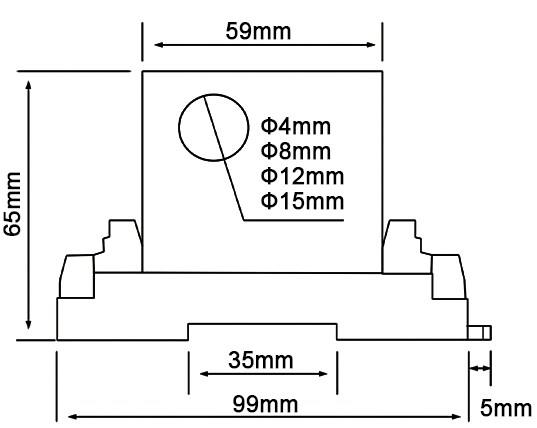
Isolated AC Current Sensor Dimension

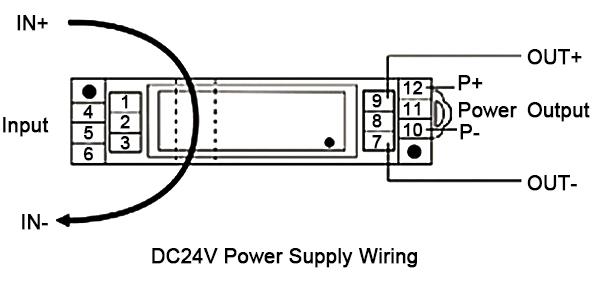
Wiring Diagram

Isolated AC Current Sensor Wiring Diagram

Application

Isolated AC Current Sensor Application

Tips: Why Do I Choose Isolated AC Current Sensor?

In electrical measurement and control scenarios, isolated AC current transducers are the preferred devices — their core value lies in adding a "safety firewall" to the system. The circuit of an ordinary transducer directly connects the measured end and the measurement and control end. Once high voltage or surge occurs in the measured circuit, the risk will be directly transmitted to the backend equipment and even the operation panel. However, isolated products, through electromagnetic or photoelectric isolation design, physically separate the front and backend. This not only avoids equipment burnout but also reduces the risk of electric shock to personnel, which is a "must-have" guarantee for both industrial and civil electrical systems.

Secondly, it can make the data "more reliable". Electromagnetic interference and common-mode noise in the electrical environment are normal. Ordinary transducers are easily "biased" by these interferences, resulting in large fluctuations in output signals, leading to inaccurate monitoring values and misjudgment of faults. In contrast, isolated transducers can filter out these clutter waves, ensuring stability and accuracy. Whether connected to an oscilloscope for waveform analysis or to a PLC for automatic control, the data can reflect the real current status.

Finally, it has friendly adaptability and maintenance costs. Such transducers usually support a wide range of primary currents, and their output standardized signals can match most measurement and control equipment, without the need for additional adapters or parameter debugging. In addition, they are small in size and easy to install on rails or with screws, so they do not take up much space during deployment. Both installation costs and operating costs are more cost-effective than ordinary equipment.

Write your review
  • Only registered users can write reviews
*
*
  • Bad
  • Excellent
*
*
*
*

ATO isolated AC current sensor is specifically designed for power frequency 50Hz sinusoidal AC voltage scenarios, with a range covering 0-200A AC and outputting stable 0-10V/0-5V AC signals. It takes high performance as its core advantage, featuring not only low power consumption and fast response but also convenient characteristics such as small size, light weight, and dual installation methods. Current to voltage transducer also supports 10 times the nominal input overload and 2kV isolation voltage, and is widely applicable to AC current measurement and control scenarios such as air conditioning monitoring and frequency converter detection, balancing accuracy and practicality.

Specification

ModelATO-JXK-14VD-S
Working PrincipleElectromagnetic isolation
Primary Side Monitoring Range0-200A AC
Rated OutputAC signal 0-10V, 0-5V
Auxiliary Power Supply24V DC, 220V AC/DC optional
Load CapacityVoltage output 5mA
Overload Capacity10 times nominal input
Response Time<100ms
Isolation Withstand Voltage2kV/50Hz, 1Min
Frequency Bandwidth20~5KHz, especially suitable for power frequency signals
Quiescent Current<30mA
Weight100g
Operating Temperature-10°C~+70°C
Storage Temperature-25°C~+85°C
Installation MethodStandard guide rail + flat screw fixing
ApplicationWidely used in AC current monitoring scenarios, e.g., air conditioner operation monitoring


Features

  • Efficient measurement: Current to voltage transducer adopting electromagnetic isolation + integrated measurement and control technology, it supports 0-200A AC primary side monitoring, outputs 0-10V/0-5V precise signals, with a response time of <100ms, suitable for 50Hz power frequency scenarios, and an overload capacity of 10 times the nominal input.
  • Low consumption and convenience: AC current transducer features low power consumption (static current < 30mA) and dual installation (standard guide rail + screw dual installation methods). The through-hole input has no insertion loss, enabling simple and efficient deployment.
  • Stability and reliability: 2kV isolation voltage ensures safety, with precise and stable signals, a frequency band covering 20~5KHz, and an operating temperature range of -10℃~+70℃, ensuring long-term stable operation.
  • Multi-scenario adaptation: Widely applicable to AC current measurement and control scenarios such as air conditioning monitoring, frequency converter current distortion detection, motor fault early warning, etc., and its functions cover needs such as power quality analysis and relay protection testing.

Dimension (Unit: mm)
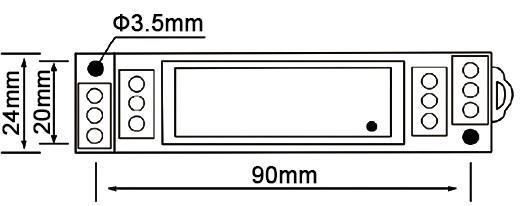
Isolated AC Current Sensor Dimension

Wiring Diagram

Isolated AC Current Sensor Wiring Diagram

Application

Isolated AC Current Sensor Application

Tips: Why Do I Choose Isolated AC Current Sensor?

In electrical measurement and control scenarios, isolated AC current transducers are the preferred devices — their core value lies in adding a "safety firewall" to the system. The circuit of an ordinary transducer directly connects the measured end and the measurement and control end. Once high voltage or surge occurs in the measured circuit, the risk will be directly transmitted to the backend equipment and even the operation panel. However, isolated products, through electromagnetic or photoelectric isolation design, physically separate the front and backend. This not only avoids equipment burnout but also reduces the risk of electric shock to personnel, which is a "must-have" guarantee for both industrial and civil electrical systems.

Secondly, it can make the data "more reliable". Electromagnetic interference and common-mode noise in the electrical environment are normal. Ordinary transducers are easily "biased" by these interferences, resulting in large fluctuations in output signals, leading to inaccurate monitoring values and misjudgment of faults. In contrast, isolated transducers can filter out these clutter waves, ensuring stability and accuracy. Whether connected to an oscilloscope for waveform analysis or to a PLC for automatic control, the data can reflect the real current status.

Finally, it has friendly adaptability and maintenance costs. Such transducers usually support a wide range of primary currents, and their output standardized signals can match most measurement and control equipment, without the need for additional adapters or parameter debugging. In addition, they are small in size and easy to install on rails or with screws, so they do not take up much space during deployment. Both installation costs and operating costs are more cost-effective than ordinary equipment.

Only registered users can write reviews