Dissolved Oxygen Sensor for Water Quality, 0~20mg/L

$401.59
Fluorescence dissolved oxygen sensor for water quality uses the fluorescence method to measure dissolved oxygen in a range of 020 mg/L. The water quality sensor has automatic temperature compensation with a built-in Pt1000 sensor. The sensor outputs data via RS-485 with Modbus/RTU protocol. With low power consumption, two-point calibration, and easy maintenance, ideal for applications such as aquaculture, industrial water treatment, environmental monitoring, and research on natural water bodies.
SKU: ATO-WQS-DOS
Free Shipping
Delivery date: 6-12 days

The fluorescence dissolved oxygen sensor measures 0-20 mg/L with automatic temperature compensation, RS-485 output, and low power use. Ideal for aquaculture, water treatment, and environmental monitoring.

Specification

Model ATO-RDO-106
Measurement Principle Luminescence Method
Measurement Range 0~20 mg/L (0~200% Saturation, at 25°C)
Resolution 0.01 mg/L, 0.1°C
Product Accuracy ±2%, ±0.3°C
Temperature Compensation Automatic (Pt1000)
Output Signal RS485 (Modbus/RTU)
Operating Conditions 0~50°C, <0.2MPa
Storage Temperature -5~65°C
Installation Method Immersion Installation
Cable Length 5 meters (customizable)
Power Consumption 0.2W @12V
Power Supply 12~24VDC
Protection Rating IP68
Calibration Method Two-Point Calibration
Sensor Lifespan 1 year (under normal conditions)
Housing Material POM, ABS, and 316L Stainless Steel


Feature

  • No Electrolyte Required: Operates without the need for electrolyte or cathodes, ensuring stable and corrosion-free performance.
  • No Oxygen Consumption: Unaffected by water flow rate, making it suitable for stagnant or dynamic water environments.
  • Built-in Temperature Sensor: Includes automatic temperature compensation (Pt1000) for accurate readings under varying temperature conditions.
  • Resistant to Interference: Highly resistant to chemical substances like sulfides, ensuring stable and precise measurements without signal drift.
  • Fast Response Time: Reacts quickly to changes in dissolved oxygen levels, providing accurate and real-time data.
  • Low Maintenance: Longer service life and reduced maintenance requirements compared to traditional membrane-based sensors.
  • Ease of Use: Features a luminescence-based design with simple operation and maintenance, lowering overall operating costs.
  • Reliable Communication: Supports RS-485 interface with Modbus/RTU protocol for seamless integration into various monitoring systems.
  • Energy-Efficient and Durable Design: Designed with low-power consumption and anti-interference capabilities for reliable long-term use.

Dimension (Unit: mm)
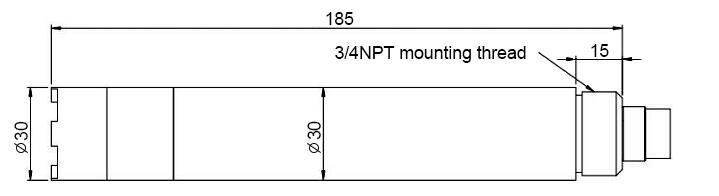
Dissolved oxygen sensor size

Note: The sensor connector is a male M16-5 pole waterproof connector. 

Installation Method
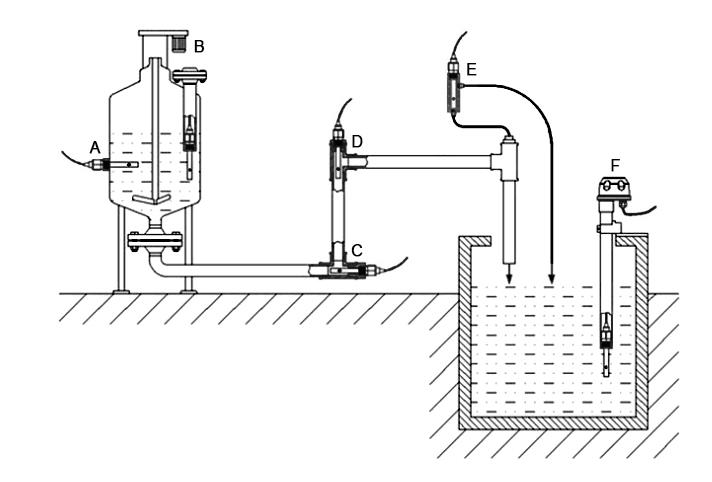
Turbidity sensor for water quality installation method

A B C
Sidewall Mount Top Flange Mount Pipe Turning Mount
D E F
Pipe Turning Mount Flow-through Mount Submersible Mount


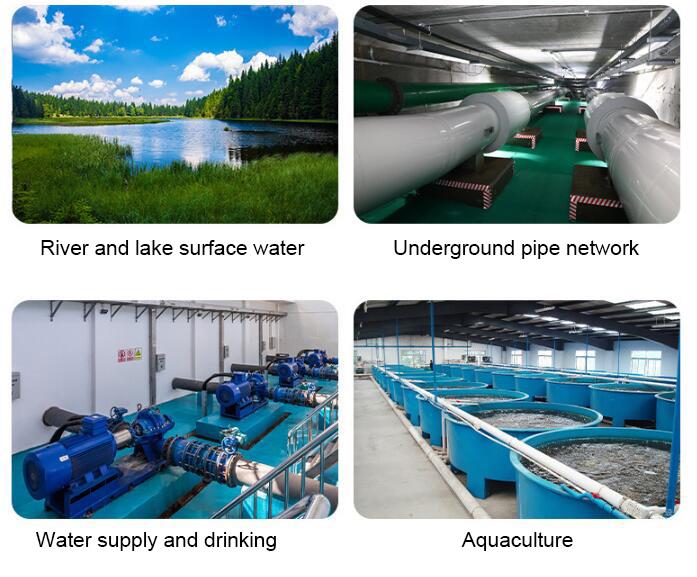
Application

Turbidity sensor for water quality application

Tips: How does this sensor compare to traditional membrane-based dissolved oxygen sensors?

Unlike traditional sensors, this fluorescence-based sensor does not require electrolyte solutions or frequent membrane replacement, significantly reducing maintenance efforts and costs. It also has a longer lifespan and is unaffected by water flow or fouling, making it more reliable in long-term monitoring applications. The fluorescence method also provides faster response times and higher accuracy, especially in low-oxygen environments.

Write your review
  • Only registered users can write reviews
*
*
  • Bad
  • Excellent
*
*
*
*

The fluorescence dissolved oxygen sensor measures 0-20 mg/L with automatic temperature compensation, RS-485 output, and low power use. Ideal for aquaculture, water treatment, and environmental monitoring.

Specification

Model ATO-RDO-106
Measurement Principle Luminescence Method
Measurement Range 0~20 mg/L (0~200% Saturation, at 25°C)
Resolution 0.01 mg/L, 0.1°C
Product Accuracy ±2%, ±0.3°C
Temperature Compensation Automatic (Pt1000)
Output Signal RS485 (Modbus/RTU)
Operating Conditions 0~50°C, <0.2MPa
Storage Temperature -5~65°C
Installation Method Immersion Installation
Cable Length 5 meters (customizable)
Power Consumption 0.2W @12V
Power Supply 12~24VDC
Protection Rating IP68
Calibration Method Two-Point Calibration
Sensor Lifespan 1 year (under normal conditions)
Housing Material POM, ABS, and 316L Stainless Steel


Feature

  • No Electrolyte Required: Operates without the need for electrolyte or cathodes, ensuring stable and corrosion-free performance.
  • No Oxygen Consumption: Unaffected by water flow rate, making it suitable for stagnant or dynamic water environments.
  • Built-in Temperature Sensor: Includes automatic temperature compensation (Pt1000) for accurate readings under varying temperature conditions.
  • Resistant to Interference: Highly resistant to chemical substances like sulfides, ensuring stable and precise measurements without signal drift.
  • Fast Response Time: Reacts quickly to changes in dissolved oxygen levels, providing accurate and real-time data.
  • Low Maintenance: Longer service life and reduced maintenance requirements compared to traditional membrane-based sensors.
  • Ease of Use: Features a luminescence-based design with simple operation and maintenance, lowering overall operating costs.
  • Reliable Communication: Supports RS-485 interface with Modbus/RTU protocol for seamless integration into various monitoring systems.
  • Energy-Efficient and Durable Design: Designed with low-power consumption and anti-interference capabilities for reliable long-term use.

Dimension (Unit: mm)

Dissolved oxygen sensor size

Note: The sensor connector is a male M16-5 pole waterproof connector. 

Installation Method

Turbidity sensor for water quality installation method

A B C
Sidewall Mount Top Flange Mount Pipe Turning Mount
D E F
Pipe Turning Mount Flow-through Mount Submersible Mount


Application

Turbidity sensor for water quality application

Tips: How does this sensor compare to traditional membrane-based dissolved oxygen sensors?

Unlike traditional sensors, this fluorescence-based sensor does not require electrolyte solutions or frequent membrane replacement, significantly reducing maintenance efforts and costs. It also has a longer lifespan and is unaffected by water flow or fouling, making it more reliable in long-term monitoring applications. The fluorescence method also provides faster response times and higher accuracy, especially in low-oxygen environments.

Only registered users can write reviews
Customers who bought this item also bought

Chlorophyll Sensor for Water Quality, 0~400ug/L

ATO-WQS-RSCH
$871.35
The RS485 chlorophyll sensor for sale, measuring 0~400 µg/L (0~100 RFU), uses fluorescence for high-precision chlorophyll detection with a ±5% FS error at 25°C. It has a resolution of 0.1 µg/L and responds within 30 seconds. Operating between 0 and 40°C, it runs on DC 7~30V, consuming 0.4W. With an RS485 ModBus-RTU interface and IP68 waterproof rating. Applications for water quality research, surveys and testing of rivers, lakes, ponds, marine surveys, aquaculture, drinking water sources, algae and phytoplankton conditions.

pH Sensor for Water Quality, 0~14pH

ATO-WQS-PH
$239.96
Good price water quality pH sensor for sale. The pH sensor uses the glass electrode method, measuring 0~14 pH with a resolution of 0.01 and accuracy of ±0.1. It has fast response (<30s), automatic temperature compensation (Pt1000), and two-point calibration for precise readings. With RS-485 (Modbus RTU) output, durable ABS construction, and submersion installation (3/4 NPT), it operates efficiently in 0~60°C and ≤0.2 MPa. Ideal for water quality applications.