Tension Force Sensor for Thin Film, with Bearing, 2.5kg-50kg

$612.94
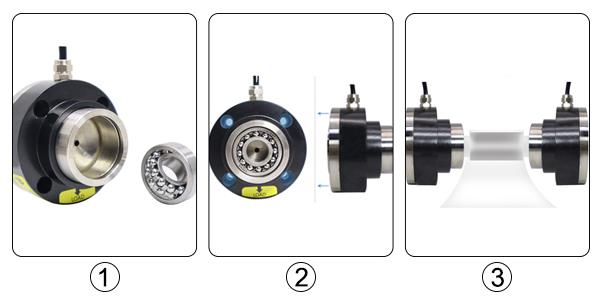
This tension force sensor with bearings is suitable for thin films and offers excellent durability and high accuracy performance. It offers a wide range of capacity options from 2.5kg to 50kg, accurate output sensitivity (1.0~2.0mV/V) for efficient data acquisition and feedback, and a response frequency of up to 1kHz for real-time monitoring of fast dynamic loads.
SKU: ATO-FS-108
*
*
*
Free Shipping
Delivery date: 6-12 days

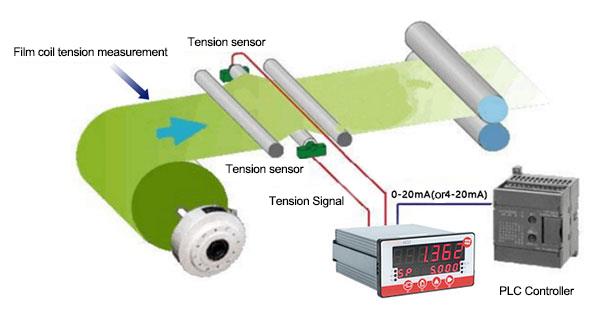
After purchasing one ATO load cell, you can buy a special digital panel meter to obtain readings directly, or buy a transmitter to output standard signal to PLC, DCS and other systems. Customized output signal is 0-5V, 0-10V, or 4-20mA.

Note: The load cell cannot be connected to both the transmitter and the controller at the same time — only one can be selected.

If you need a high precision thin-film tension force measuring device, ATO's tension sensors with bearings are the ideal choice. Different ranges of 2.5kg, 5kg, 15kg, 25kg and 50kg are available to meet a wide range of industrial needs. The use of high-strength 42CrMoA material ensures that the sensor works stably in a wide temperature range of -20℃ to 80℃.

Specification

ModelATO-DYZL-108
Capacity Rang2.5/5/15/25/50kg (optional)
Matched Display ControllerATO-DPM-DY800 (Click it to the controller page)
Matched TransmitterATO-LCTR-OA (Click it to the transmitter page)
Output Sensitivity1.0~2.0mV/V
Zero Output±1%F.S.
Non-linear0.5%F.S.
After Full0.5%F.S.
Repeatability0.3%F.S.
Droop (30 minutes)0.3%F.S.
Temperature Sensitivity Drift0.05%F.S./°C
Zero Temperature Drift0.05%F.S./°C
Response Frequency1kHz
Material42CrMoA
Impedance350Ω
Insulation Resistance≥5000MΩ/100V DC
Operating Voltage10~15V
Operating Temperature Range-20°C ~ 80°C
Safety Overload150%R.C.
Limit Overload300%R.C.
Cable Wire SpecificationΦ5.5*2mm
Ultimate Cable Pull98N


Features

Tension force sensor feature

  1. A Wheatstone full-bridge measuring circuit consisting of semiconductor strain gauges inside each force sensor detects web tension, ensuring high accuracy, reliability and stability of tension measurement.
  2. It can be flange-mounted to the side structure of the equipment with 4 bolts.
  3. Supports web tension detection and control of various types of web materials such as paper, wire, film, and strip.

Dimension (unit: mm)
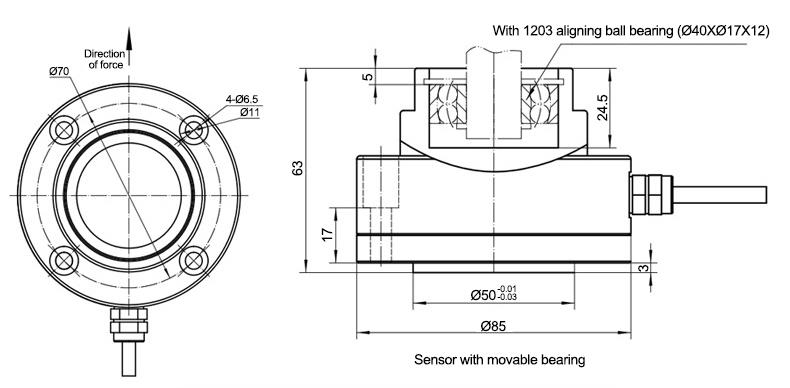
Tension force sensor size

Connection

Tension force sensor connections

Installation

Tension force sensor installation

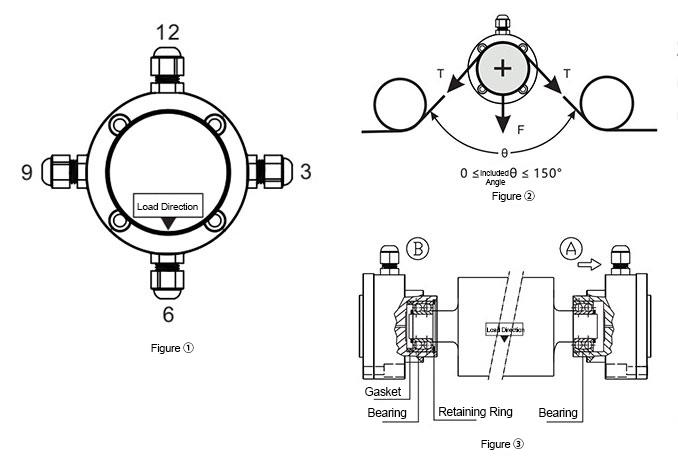
Figure 1 Shows the Direction of Sensor Plugs

  • Standard plug direction: 12-point direction
  • Optional plug direction: 3/6/9

Figure 2 Shows the Installation Diagram

  • T = material tension, F = force applied to the sensor.
  • The standard combined force direction is inverse to the connector direction.
  • That is, if the direction of the force is 6 o'clock, the 12 o'clock direction is the plug outlet.

Figure 3 Shows the Installation Diagram

  1. Mount the 1203 spherical bearing on the shaft at the end of the roller, where one side of the bearing is mounted on the shaft to be fixed with an elastic gear ring, and the other side of the bearing is on the shaft.
  2. There is some room for movement.
    In the illustration, (B) is a sensor mounted with a fixed bearing, and (A) is a tension sensor with a floating bearing.

Caution

  1. The weight of the tension roller must not exceed 50% of the full range of the sensor.
  2. Roll length is less than 1500mm.

Tips: What is a tension sensor?

A tension transducer is a device used to measure the force exerted by an object or material in a stretched state. It is commonly used in engineering, manufacturing and materials testing. By attaching the sensor to the object to be tested, the sensor is able to convert the change in force into a readable electrical signal, helping to analyze the magnitude and trend of the tensile force.

Tension sensors are widely used in many industries including, but not limited to: machine building, construction, aerospace, automotive industry, textiles, and quality control. Common applications include: testing loads on lifting equipment, monitoring cable tension, verifying material strength, measuring automotive pulling force, and more. In these areas, tension sensors can help improve product reliability and safety by ensuring that equipment and materials are within their allowable load capacity.

In this video, we've shown you how to calibrate the weight transmitter Model 610 by ATO using a compression load cell so that you can make sure you get the most accurate readings possible in your measurement.

In this video, ATO offers a variety of load cells and weigh modules designed for your applications.

Product reviews
High Sensitivity Tension Force Sensor for Thin Film
5
Arew
Avatar
1/19/2025 11:08 PM
We have recently purchased this Tension Force Sensor for Thin Film for precise measurement of film tension, and the effect is excellent! The product design is compact, the performance is stable, and the installation is also very convenient. After practical use, we found that it can monitor the tension of the film very accurately, and the data reading is very accurate, which helps us effectively optimize the production process. It is worth mentioning that the response speed of the sensor is very fast, suitable for high-precision working environments.
Was this review helpful? Yes No (0/0)
Installation method
5
Sotina
Avatar
4/24/2026 2:43 AM
We need to add a roll tension monitoring device to the roll handling area of our forming, filling, and sealing packaging machine. We are considering using your company's ATO-FS-108 model. If this device is to be installed on the roller, is it necessary to install one at each end of the roller, or is only one needed, with the other end fixed with a bearing? Does your company have a 3D model of this device and its mounting base? STEP format would be preferred. Thank you.
Was this review helpful? Yes No (0/0)
ATO Responded
For the ATO-FS-108 tension sensor, one must be installed at each end of the roller; the other end cannot be fixed with a standard bearing alone. What is the range you have selected? We can provide you with drawings only after the range is determined.
Write your review
  • Only registered users can write reviews
*
*
  • Bad
  • Excellent
*
*
*
*

After purchasing one ATO load cell, you can buy a special digital panel meter to obtain readings directly, or buy a transmitter to output standard signal to PLC, DCS and other systems. Customized output signal is 0-5V, 0-10V, or 4-20mA.

Note: The load cell cannot be connected to both the transmitter and the controller at the same time — only one can be selected.

If you need a high precision thin-film tension force measuring device, ATO's tension sensors with bearings are the ideal choice. Different ranges of 2.5kg, 5kg, 15kg, 25kg and 50kg are available to meet a wide range of industrial needs. The use of high-strength 42CrMoA material ensures that the sensor works stably in a wide temperature range of -20℃ to 80℃.

Specification

ModelATO-DYZL-108
Capacity Rang2.5/5/15/25/50kg (optional)
Matched Display ControllerATO-DPM-DY800 (Click it to the controller page)
Matched TransmitterATO-LCTR-OA (Click it to the transmitter page)
Output Sensitivity1.0~2.0mV/V
Zero Output±1%F.S.
Non-linear0.5%F.S.
After Full0.5%F.S.
Repeatability0.3%F.S.
Droop (30 minutes)0.3%F.S.
Temperature Sensitivity Drift0.05%F.S./°C
Zero Temperature Drift0.05%F.S./°C
Response Frequency1kHz
Material42CrMoA
Impedance350Ω
Insulation Resistance≥5000MΩ/100V DC
Operating Voltage10~15V
Operating Temperature Range-20°C ~ 80°C
Safety Overload150%R.C.
Limit Overload300%R.C.
Cable Wire SpecificationΦ5.5*2mm
Ultimate Cable Pull98N


Features

Tension force sensor feature

  1. A Wheatstone full-bridge measuring circuit consisting of semiconductor strain gauges inside each force sensor detects web tension, ensuring high accuracy, reliability and stability of tension measurement.
  2. It can be flange-mounted to the side structure of the equipment with 4 bolts.
  3. Supports web tension detection and control of various types of web materials such as paper, wire, film, and strip.

Dimension (unit: mm)

Tension force sensor size

Connection

Tension force sensor connections

Installation

Tension force sensor installation

Figure 1 Shows the Direction of Sensor Plugs

  • Standard plug direction: 12-point direction
  • Optional plug direction: 3/6/9

Figure 2 Shows the Installation Diagram

  • T = material tension, F = force applied to the sensor.
  • The standard combined force direction is inverse to the connector direction.
  • That is, if the direction of the force is 6 o'clock, the 12 o'clock direction is the plug outlet.

Figure 3 Shows the Installation Diagram

  1. Mount the 1203 spherical bearing on the shaft at the end of the roller, where one side of the bearing is mounted on the shaft to be fixed with an elastic gear ring, and the other side of the bearing is on the shaft.
  2. There is some room for movement.
    In the illustration, (B) is a sensor mounted with a fixed bearing, and (A) is a tension sensor with a floating bearing.

Caution

  1. The weight of the tension roller must not exceed 50% of the full range of the sensor.
  2. Roll length is less than 1500mm.

Tips: What is a tension sensor?

A tension transducer is a device used to measure the force exerted by an object or material in a stretched state. It is commonly used in engineering, manufacturing and materials testing. By attaching the sensor to the object to be tested, the sensor is able to convert the change in force into a readable electrical signal, helping to analyze the magnitude and trend of the tensile force.

Tension sensors are widely used in many industries including, but not limited to: machine building, construction, aerospace, automotive industry, textiles, and quality control. Common applications include: testing loads on lifting equipment, monitoring cable tension, verifying material strength, measuring automotive pulling force, and more. In these areas, tension sensors can help improve product reliability and safety by ensuring that equipment and materials are within their allowable load capacity.

Product reviews
High Sensitivity Tension Force Sensor for Thin Film
5
Arew
Avatar
1/19/2025 11:08 PM
We have recently purchased this Tension Force Sensor for Thin Film for precise measurement of film tension, and the effect is excellent! The product design is compact, the performance is stable, and the installation is also very convenient. After practical use, we found that it can monitor the tension of the film very accurately, and the data reading is very accurate, which helps us effectively optimize the production process. It is worth mentioning that the response speed of the sensor is very fast, suitable for high-precision working environments.
Was this review helpful? Yes No (0/0)
Installation method
5
Sotina
Avatar
4/24/2026 2:43 AM
We need to add a roll tension monitoring device to the roll handling area of our forming, filling, and sealing packaging machine. We are considering using your company's ATO-FS-108 model. If this device is to be installed on the roller, is it necessary to install one at each end of the roller, or is only one needed, with the other end fixed with a bearing? Does your company have a 3D model of this device and its mounting base? STEP format would be preferred. Thank you.
Was this review helpful? Yes No (0/0)
ATO Responded
For the ATO-FS-108 tension sensor, one must be installed at each end of the roller; the other end cannot be fixed with a standard bearing alone. What is the range you have selected? We can provide you with drawings only after the range is determined.
Only registered users can write reviews