
Saturated calomel electrodes (SCEs) have a well-defined and reproducible potential, which simplifies calibration in electrochemical experiments. They are widely used in various applications, including pH measurements, corrosion studies, and standardization of other electrodes.
Specification
| Model | ATO-232 |
| Electrode Type | Saturated Calomel (Hg/ Hg2Cl2) Reference Electrode |
| Reference Type | Saturated Calomel Single Salt Bridge Type |
| Salt Bridge Material | Ceramic Sand Core |
| Filling Liquid | Saturated KCl |
| Shell Material | Glass |
| Temperature Range | 5℃~55℃ |
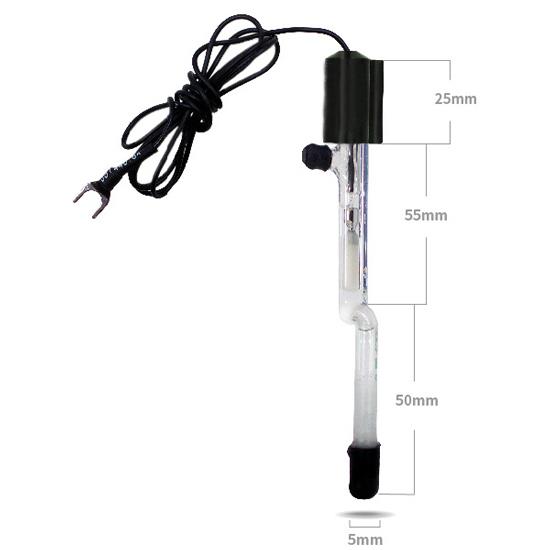
| Dimension | φ12*120mm |
| Connector | U-Shaped Fork Piece |
Dimension
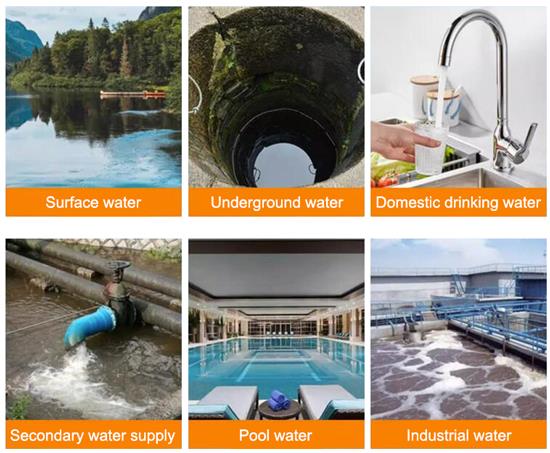
Application
Tips: How to calibrate a SCE reference electrode?
To calibrate a saturated calomel electrode (SCE) reference electrode, follow these steps:
- Prepare Solutions: Create a saturated potassium chloride (KCl) solution and a 0.01 M KCl solution.
- Assemble Setup: Connect the SCE to a high-impedance voltmeter. Submerge the SCE in the saturated KCl solution.
- Stabilize: Allow the system to stabilize, ensuring the SCE junction is immersed in KCl for at least 30 minutes.
- Adjust Potential: Adjust the potential of the SCE to the accepted standard potential, usually +0.241 V versus the standard hydrogen electrode.
- Measure Against Standard: Immerse the SCE in the 0.01 M KCl solution and measure its potential. Compare this reading to the standard potential to identify any deviation.
- Corrective Action: If needed, adjust the potential of the SCE to match the standard potential, ensuring accurate and reliable readings in subsequent electrochemical experiments.
Product reviews
Standard connectivity options simplify setup
Valerian

11/23/2023 12:16 AM
The standard connection options and compatibility with common electrochemical measurement systems simplify the setup process. The SCE Reference Electrode's design allows for straightforward installation and removal, enhancing its practicality for routine monitoring or research purposes.
Was this review helpful? (0/0)
Only registered users can write reviews
Related products

Calcium Ion Selective Electrode
ATO-ISE-CALCIUM
$141.29
Economical price calcium ion selective electrode (Ca2+ ISE) is a specialized sensor used to measure the concentration of calcium ions in a solution. Calcium ISE is widely used in clinical laboratories for monitoring blood calcium levels, environmental analysis for assessing calcium concentrations in water samples, and industrial processes where precise control of calcium levels is crucial.

Copper Ion Selective Electrode
ATO-ISE-COPPER
$141.29
Copper ion selective electrode (Cu-ISE) is a sensor used to measure the concentration of copper ions in a solution. It consists of a membrane selectively permeable to copper ions, made of copper sulfide or copper halides. Low price ISE electrode needs to be used in conjunction with a reference electrode and an ion meter.

Iodide Ion Selective Electrode
ATO-ISE-IODIDR
$141.29
Buy iodide ion selective electrode (ISE) online at favorable price. This iodide ion selective electrode is a sensor designed to measure the concentration of iodide ions in a solution. It offers advantages such as specificity, sensitivity, and rapid response, making it a valuable tool in analytical chemistry for iodide ion detection. This specific electrode needs to be used in conjunction with a reference electrode and an ion meter.

Nitrate Ion Selective Electrode
ATO-ISE-NITRATE
$141.29
A nitrate ion selective electrode (ISE) is a specialized sensor designed to measure the concentration of nitrate ions in a solution. This specific electrode offers a rapid and convenient method for on-site nitrate detection, enabling real-time analysis and aiding in the management of fertilizer use and pollution control. It needs to be used in conjunction with a reference electrode and an ion meter.