Potentiometer Angle Sensor with Bracket, Angular Position Sensor

$76.71
Factory price and high-quality potential angle sensor is for sale. Angular position sensor features high precision with a linearity of ±0.1% and infinitely small resolution, suitable for high-precision intelligent control scenarios such as second-order inverted pendulums. Matching sensor brackets are also available for purchase.
SKU: ATO-AS-35D4
*
Free Shipping
Delivery date: 6-12 days

ATO angular position sensor has outstanding advantages in performance and practicality. In terms of accuracy, it features infinitely small resolution (analog output) and a linearity of ±0.1%, enabling precise capture of position changes. In terms of reliability, it is equipped with a precision ball bearing, boasting a mechanical lifespan of up to 20 million rotations, a rotational torque of <1mN·m, and an IP40 protection rating. In terms of adaptability, optional steel simple brackets and aluminum alloy L-shaped brackets are available, allowing flexible installation. Potentiometer angle sensor is particularly suitable for high-precision intelligent control scenarios such as second-order inverted pendulums and balancing robots, and it is an industrial angle sensor that combines technical strength and practical value.

Specification

ModelATO-WDD35D4
Shell MaterialHard aluminum alloy
Mechanical Angle360°
Electrical Angle345°
ResolutionInfinitesimal
Mechanical Life20 million revolutions
Protection ClassIP40
Rotating Torque<1mN.m
Linearity±0.1%
Sliding Resistance5KΩ±15%
Power2W
Rotational Torque<10mN·m
Dielectric Withstand Voltage500V/1min
Weight47.8g
SizeWith Shaft: Diameter 36.5*38.8mm
Without Shaft: Diameter 36.5*19.7mm
Operating and Storage Temperature-55℃-125℃
Simple Bracket MaterialSteel
L-Shaped Bracket MaterialAluminum alloy


Features

  • Exceptional Precision: The internal resistor uses polymer conductive plastic synthesized from resin and conductive substances, with infinitely small resolution and a linearity of ±0.1%, which can accurately follow position changes.
  • Reliable Service Life and Performance: ATO angle sensor built-in precision ball bearings, mechanical service life of 20 million revolutions, rotational torque <1mN·m, stable and durable hard aluminum alloy housing, protection class IP40.
  • Strong Adaptability: Optional steel simple brackets and aluminum alloy L-shaped brackets, ensuring firm installation and high expandability.
  • Wide Applications: Potential angle sensor meets the needs of high-precision intelligent control scenarios such as second-order inverted pendulums and balancing robots, compatible with devices like STM32 and Arduino (with flexible power supply voltage).

Dimensions (Unit: mm)

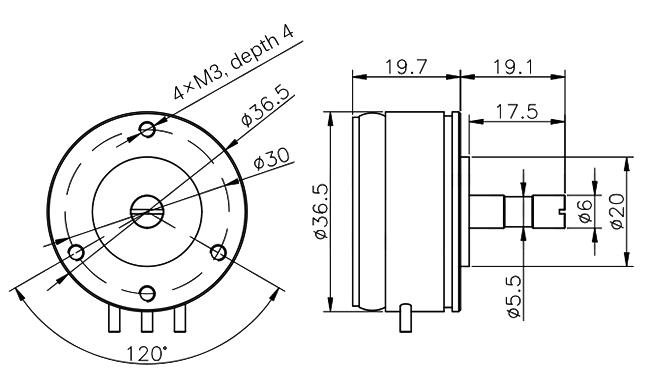
  • Potentiometer Angle Sensor

Potentiometer angle sensor dimension

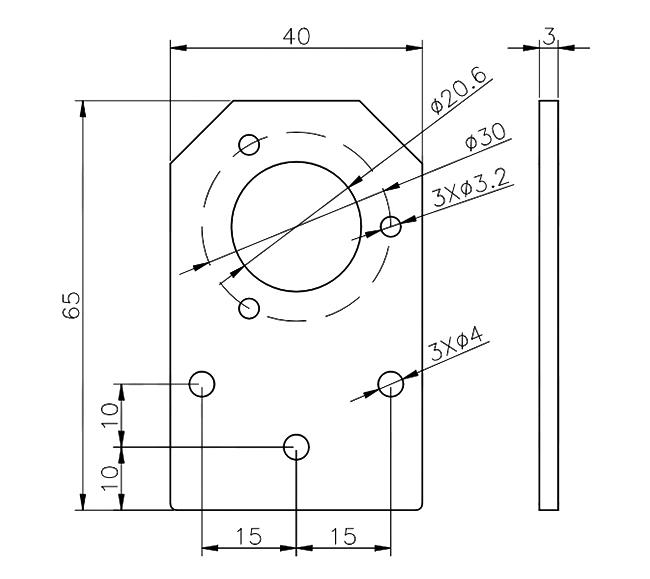
  • Simple Bracket

Potentiometer angle sensor bracket dimension

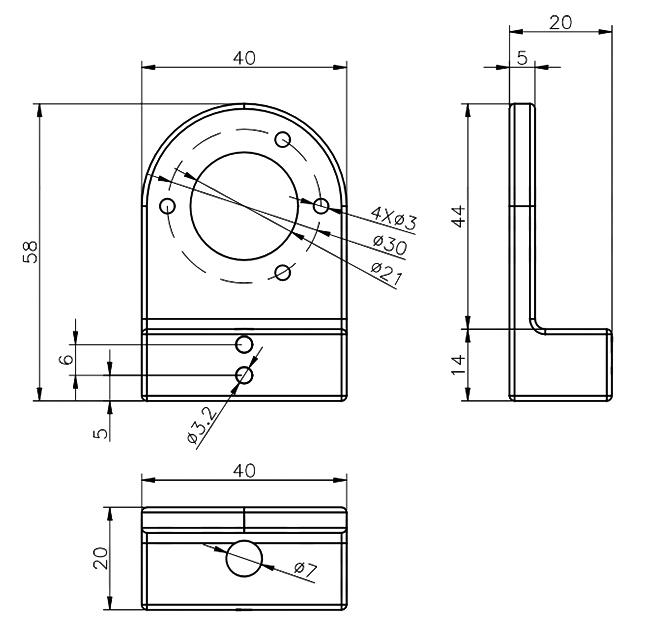
  • L-Shaped Bracket

Potentiometer angle sensor L shape bracket dimension

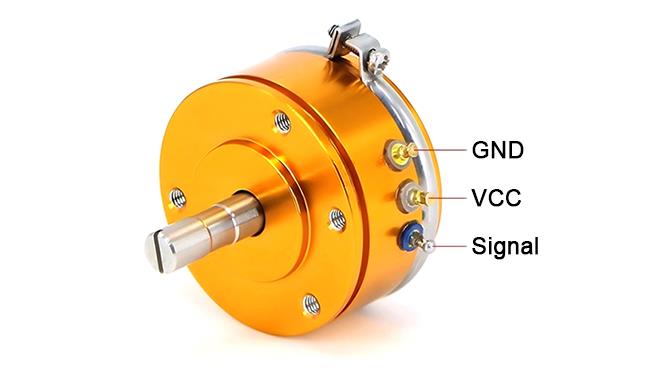
Detail

Potentiometer angle sensor details

Tips: How to Selecting VCC Supply Voltage of Potentiometer Angle Sensor?

Potentiometer angle sensor can be understood as a slide rheostat. The VCC voltage only affects the voltage range output by the signal pin. The actual VCC voltage depends on the voltage acquisition range of the user's device (corresponding to the ADC reference voltage in the microcontroller). It is recommended that the VCC voltage ≤ the voltage acquisition range; otherwise, it may cause damage to the user's device. When selecting the VCC power supply voltage, STM32 recommends using 3.3V, and Arduino recommends using 5V.

Write your review
  • Only registered users can write reviews
*
*
  • Bad
  • Excellent
*
*
*
*

ATO angular position sensor has outstanding advantages in performance and practicality. In terms of accuracy, it features infinitely small resolution (analog output) and a linearity of ±0.1%, enabling precise capture of position changes. In terms of reliability, it is equipped with a precision ball bearing, boasting a mechanical lifespan of up to 20 million rotations, a rotational torque of <1mN·m, and an IP40 protection rating. In terms of adaptability, optional steel simple brackets and aluminum alloy L-shaped brackets are available, allowing flexible installation. Potentiometer angle sensor is particularly suitable for high-precision intelligent control scenarios such as second-order inverted pendulums and balancing robots, and it is an industrial angle sensor that combines technical strength and practical value.

Specification

ModelATO-WDD35D4
Shell MaterialHard aluminum alloy
Mechanical Angle360°
Electrical Angle345°
ResolutionInfinitesimal
Mechanical Life20 million revolutions
Protection ClassIP40
Rotating Torque<1mN.m
Linearity±0.1%
Sliding Resistance5KΩ±15%
Power2W
Rotational Torque<10mN·m
Dielectric Withstand Voltage500V/1min
Weight47.8g
SizeWith Shaft: Diameter 36.5*38.8mm
Without Shaft: Diameter 36.5*19.7mm
Operating and Storage Temperature-55℃-125℃
Simple Bracket MaterialSteel
L-Shaped Bracket MaterialAluminum alloy


Features

  • Exceptional Precision: The internal resistor uses polymer conductive plastic synthesized from resin and conductive substances, with infinitely small resolution and a linearity of ±0.1%, which can accurately follow position changes.
  • Reliable Service Life and Performance: ATO angle sensor built-in precision ball bearings, mechanical service life of 20 million revolutions, rotational torque <1mN·m, stable and durable hard aluminum alloy housing, protection class IP40.
  • Strong Adaptability: Optional steel simple brackets and aluminum alloy L-shaped brackets, ensuring firm installation and high expandability.
  • Wide Applications: Potential angle sensor meets the needs of high-precision intelligent control scenarios such as second-order inverted pendulums and balancing robots, compatible with devices like STM32 and Arduino (with flexible power supply voltage).

Dimensions (Unit: mm)

  • Potentiometer Angle Sensor

Potentiometer angle sensor dimension

  • Simple Bracket

Potentiometer angle sensor bracket dimension

  • L-Shaped Bracket

Potentiometer angle sensor L shape bracket dimension

Detail

Potentiometer angle sensor details

Tips: How to Selecting VCC Supply Voltage of Potentiometer Angle Sensor?

Potentiometer angle sensor can be understood as a slide rheostat. The VCC voltage only affects the voltage range output by the signal pin. The actual VCC voltage depends on the voltage acquisition range of the user's device (corresponding to the ADC reference voltage in the microcontroller). It is recommended that the VCC voltage ≤ the voltage acquisition range; otherwise, it may cause damage to the user's device. When selecting the VCC power supply voltage, STM32 recommends using 3.3V, and Arduino recommends using 5V.

Only registered users can write reviews