Magnetic Angle Sensor, Non-Contact, CAN BUS

$389.99
Magnetic hall angle sensor is a non-contact position sensor, selectable full range precision ±0.3° or±0.1°. CAN-Bus output signal, voltage input 7 – 36V DC, with multi-stage different sloping setting programmable intelligent control to realize the measuring range of 0 ~ 360°.
SKU: ATO-AS-CAN
*
*
Free Shipping
Delivery date: 6-12 days

Low price angle sensor adopts magnetic signal non-contact induction and performs signal processing through a microprocessor to convert the mechanical angle into a standard signal output.

Specification

ModelATO-LW125DATO-HW225D
Full Range Precision±0.3°±0.1°
Temperature Drift±0.0015°/°C
Sensitivity Temperature Coefficient<150ppm/°C
Measuring Range (Optional)0~30°, 0~60°, 0~90°, 0~180°, 0~270°, 0~360°
Output SignalCAN-Bus (CANH, CANL)
Output Load240Ω
Voltage Input9-36V DC
Typical Voltage12V
Sampling Frequency1KHz
Linearity0.5%-0.15%
High Vibration Resistance>20000g
Frequency Response100Hz
Angle Resolution0.022°
Full Range Accuracy±0.3°
Operating Temperature-40°C~+85°C
Storage Temperature-55°C~+100°C
Power-on Startup Time0.2s
Response Time0.01s
Average Operation Time≥55000 Hour/Time
Cablewith 1.5m length shielded cable 3*0.3mm2
Power Reverse Protection40mV
Signal Reverse Protection40mV
Running Torque<10mN·m
MaterialShell: Aluminum alloy oxidation
Back Cover: Stainless steel
Shaft: Stainless steel
Protection GradeIP66
Weight1kg


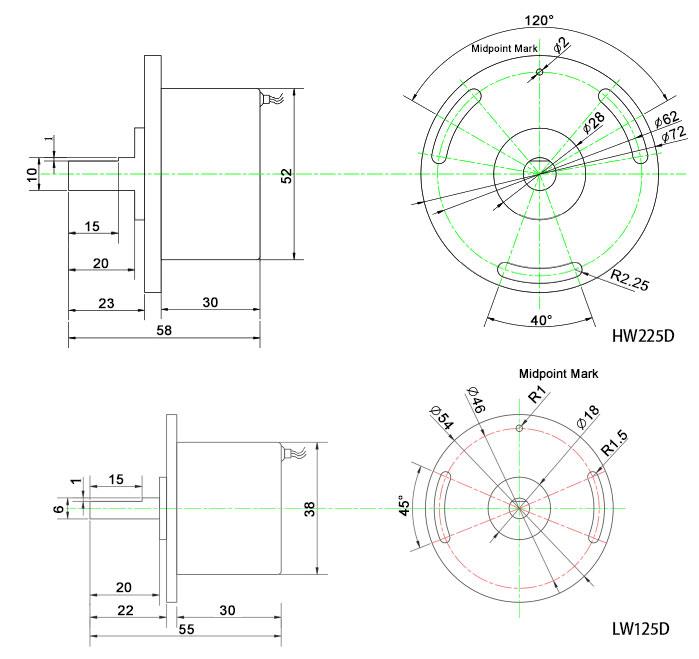
Dimensions (Unit: mm)

Dimensions of angle sensor non-contact CAN

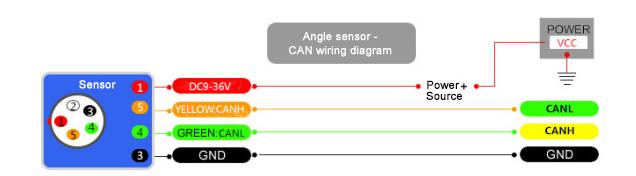
Wiring Diagram

Angle sensor non contact CAN wiring diagram

12345
RedWhiteBlackGreenYellow
VCCNCGNDCANLCANH


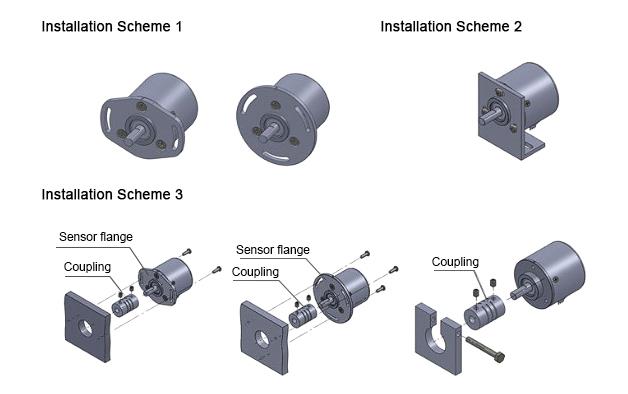
Installation Methods

Magnetic angle sensor installation method

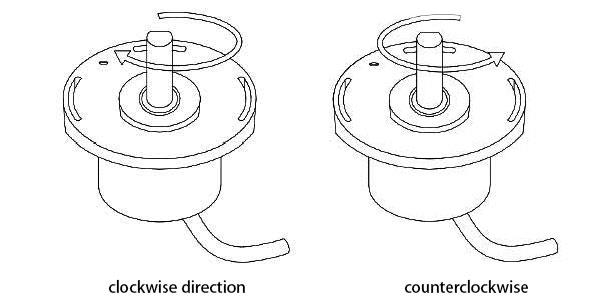
Direction of Rotation of the Spindle

Magnetic angle sensor direction of rotation of spindle

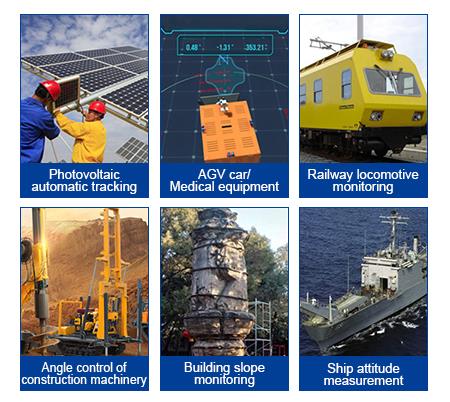
Applications

Magnetic angle sensor application

Tips: How to choose an angle sensor?

  • Sensitivity
    Generally, within the linear range of the angle sensor, it is desirable that the higher the sensitivity of the angle sensor, the better. Because only when the sensitivity is high, the value of the output signal corresponding to the measured change is relatively large, which is conducive to signal processing. However, it should be noted that the sensitivity of the sensor is high, and external noise that has nothing to do with the measurement is also easy to mix in, and it will also be amplified by the amplification system, which affects the measurement accuracy. It should have a high signal-to-noise ratio, and try to reduce factory interference signals introduced from the outside world.
    The sensitivity of the angle sensor is directional. When the measured is a single vector, and its directivity requirements are high, you should choose a sensor with less sensitivity in other directions; if the measured is a multi-dimensional vector, the cross sensitivity of the sensor is required to be as small as possible.
  • Frequency response characteristics
    The frequency response characteristics of the angle sensor determine the frequency range to be measured, and the measurement conditions must be kept undistorted within the allowable frequency range. In fact, the response of the sensor always has a fixed delay, and it is hoped that the delay time is as short as possible.
    The frequency response of the sensor is high, the signal frequency range that can be measured is wide, and due to the influence of the structural characteristics, the inertia of the mechanical system is larger, and the frequency of the measurable signal is lower due to the low frequency sensor.
    In dynamic measurement, the response characteristics should be based on the characteristics of the signal (steady state, transient state, random, etc.) to avoid over-fire errors.
  • Linear range
    The linear range of the angle sensor refers to the range in which the output is proportional to the input. In theory, the sensitivity remains constant within this range. The wider the linear range of the sensor, the larger the measuring range, and a certain measurement accuracy can be guaranteed. When selecting a sensor, when the type of sensor is determined, it is first necessary to see whether its range meets the requirements.
    But in fact, no sensor can guarantee absolute linearity, and its linearity is also relative. When the required measurement accuracy is relatively low, within a certain range, the sensor with less nonlinear error can be approximately regarded as linear, which will bring great convenience to the measurement.
  • Stability
    The ability of an angle sensor to keep its performance unchanged after a period of use is called stability. In addition to the structure of the sensor itself, the factors that affect the long-term stability of the sensor are mainly the use environment of the sensor. Therefore, in order for the sensor to have good stability, the sensor must have strong environmental adaptability.
Product reviews
good magnetic angle sensor
5
Quintus
Avatar
9/17/2025 8:37 PM
I am really impressed with this CAN-BUS output magnetic angle sensor. The accuracy is fantastic and the non-contact design means it should last a long time without wear. Setup was straightforward and it integrated perfectly into my CAN network. The seller also provided excellent support when I had a question, which was a huge plus. Great product and great service!
Was this review helpful? Yes No (0/0)
Write your review
  • Only registered users can write reviews
*
*
  • Bad
  • Excellent
*
*
*
*

Low price angle sensor adopts magnetic signal non-contact induction and performs signal processing through a microprocessor to convert the mechanical angle into a standard signal output.

Specification

ModelATO-LW125DATO-HW225D
Full Range Precision±0.3°±0.1°
Temperature Drift±0.0015°/°C
Sensitivity Temperature Coefficient<150ppm/°C
Measuring Range (Optional)0~30°, 0~60°, 0~90°, 0~180°, 0~270°, 0~360°
Output SignalCAN-Bus (CANH, CANL)
Output Load240Ω
Voltage Input9-36V DC
Typical Voltage12V
Sampling Frequency1KHz
Linearity0.5%-0.15%
High Vibration Resistance>20000g
Frequency Response100Hz
Angle Resolution0.022°
Full Range Accuracy±0.3°
Operating Temperature-40°C~+85°C
Storage Temperature-55°C~+100°C
Power-on Startup Time0.2s
Response Time0.01s
Average Operation Time≥55000 Hour/Time
Cablewith 1.5m length shielded cable 3*0.3mm2
Power Reverse Protection40mV
Signal Reverse Protection40mV
Running Torque<10mN·m
MaterialShell: Aluminum alloy oxidation
Back Cover: Stainless steel
Shaft: Stainless steel
Protection GradeIP66
Weight1kg


Dimensions (Unit: mm)

Dimensions of angle sensor non-contact CAN

Wiring Diagram

Angle sensor non contact CAN wiring diagram

12345
RedWhiteBlackGreenYellow
VCCNCGNDCANLCANH


Installation Methods

Magnetic angle sensor installation method

Direction of Rotation of the Spindle

Magnetic angle sensor direction of rotation of spindle

Applications

Magnetic angle sensor application

Tips: How to choose an angle sensor?

  • Sensitivity
    Generally, within the linear range of the angle sensor, it is desirable that the higher the sensitivity of the angle sensor, the better. Because only when the sensitivity is high, the value of the output signal corresponding to the measured change is relatively large, which is conducive to signal processing. However, it should be noted that the sensitivity of the sensor is high, and external noise that has nothing to do with the measurement is also easy to mix in, and it will also be amplified by the amplification system, which affects the measurement accuracy. It should have a high signal-to-noise ratio, and try to reduce factory interference signals introduced from the outside world.
    The sensitivity of the angle sensor is directional. When the measured is a single vector, and its directivity requirements are high, you should choose a sensor with less sensitivity in other directions; if the measured is a multi-dimensional vector, the cross sensitivity of the sensor is required to be as small as possible.
  • Frequency response characteristics
    The frequency response characteristics of the angle sensor determine the frequency range to be measured, and the measurement conditions must be kept undistorted within the allowable frequency range. In fact, the response of the sensor always has a fixed delay, and it is hoped that the delay time is as short as possible.
    The frequency response of the sensor is high, the signal frequency range that can be measured is wide, and due to the influence of the structural characteristics, the inertia of the mechanical system is larger, and the frequency of the measurable signal is lower due to the low frequency sensor.
    In dynamic measurement, the response characteristics should be based on the characteristics of the signal (steady state, transient state, random, etc.) to avoid over-fire errors.
  • Linear range
    The linear range of the angle sensor refers to the range in which the output is proportional to the input. In theory, the sensitivity remains constant within this range. The wider the linear range of the sensor, the larger the measuring range, and a certain measurement accuracy can be guaranteed. When selecting a sensor, when the type of sensor is determined, it is first necessary to see whether its range meets the requirements.
    But in fact, no sensor can guarantee absolute linearity, and its linearity is also relative. When the required measurement accuracy is relatively low, within a certain range, the sensor with less nonlinear error can be approximately regarded as linear, which will bring great convenience to the measurement.
  • Stability
    The ability of an angle sensor to keep its performance unchanged after a period of use is called stability. In addition to the structure of the sensor itself, the factors that affect the long-term stability of the sensor are mainly the use environment of the sensor. Therefore, in order for the sensor to have good stability, the sensor must have strong environmental adaptability.
Product reviews
good magnetic angle sensor
5
Quintus
Avatar
9/17/2025 8:37 PM
I am really impressed with this CAN-BUS output magnetic angle sensor. The accuracy is fantastic and the non-contact design means it should last a long time without wear. Setup was straightforward and it integrated perfectly into my CAN network. The seller also provided excellent support when I had a question, which was a huge plus. Great product and great service!
Was this review helpful? Yes No (0/0)
Only registered users can write reviews