Laser Sensor, Vibration/Thickness Measurement, M18, Range 300mm

$137.56
Cylindrical M18 laser sensor adopts diffuse reflection detection mode, with stainless steel housing (thread size M18*1.5mm), laser spot size 4mm, fast response time 0.1ms, optional output mode NPN/PNP NO/NC, protection class IP67, can be used for vibration measurement, or object thickness/ flatness detection. The maximum detection range of M18 diffuse reflection laser sensor is 300mm.
SKU: ATO-LASES-M18
*
*
*
Free Shipping
Delivery date: 6-12 days

Laser sensor with M18*1.5mm metal detection head, 4mm spot size, diffuse reflection detection mode, NPN/PNP NO/NC output mode for selection.

Specification:

ModelATO-LASES-M18
Shipping weight2kg
Thread sizeM18*1.5mm
Detection of spot size4mm
Detection modeDiffuse reflection type
Detection rangeSn=300mm, Sn=500mm
Light sourceInfrared ray LED (880nm)
The laser beam is invisible. The laser spot is visible.
Output mode *NPN NO, NPN NC, PNP NO, PNP NC
Power supply10-30VDC
No-load current<10mA
Maximum load current150mA
Leakage current<0.01mA
Voltage drop<1V
Switching frequency120Hz
Response time0.1ms
Switching hysteresis<15% (sr)
Repeat accuracy<1.0% (sr)
Protection classIP67
Environment humidity35-95%
Operating temperature-5~+50℃ (23~122℉)
Temperature drift<10% (sr)
Short circuit protectionYes
Indicator lightYes
Housing material304 stainless steel
Connection methodDirect lead wire
Cable length2m

Note: The detection range of diffuse reflection laser sensor can be adjusted by the knob (Clockwise rotation for adding distance, anticlockwise rotation for reducing distance).
Dimension (unit: mm):
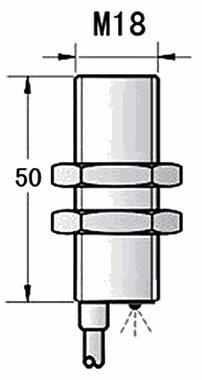
M18 diffuse reflection/through beam laser sensor dimension
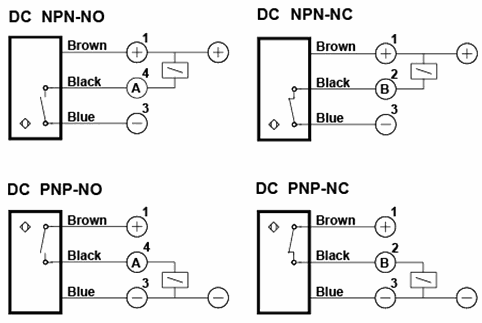
Wiring diagram:
Diffuse reflection/through beam laser sensor M18 wiring diagram

Tips: Laser sensor for vibration measurement
Using laser sensor for vibration measurement is based on the Doppler principle. The Doppler principle means that if the wave source or the observer receiving the wave moves relative to the medium in which the wave propagates, the frequency measured by the observer depends not only on the frequency of vibration emitted by the wave source but also on the magnitude and direction of the speed of motion of the source or observer. The difference between the measured frequency and the frequency of the wave source is called the Doppler shift. This kind of laser vibration sensor converts the vibration of the object into the corresponding Doppler frequency shift by the optical part during measurement, and converts the frequency shift into an electrical signal by the photoelectric detector. After appropriate processing by the circuit part, it is sent to the Doppler signal processor. The Doppler signal processor converts the Doppler-shifted signal into an electrical signal corresponding to the vibration velocity, which is finally recorded on a magnetic tape. This laser vibration sensor uses a helium-neon laser with a wavelength of 6328 angstroms, uses an acousto-optic modulator for optical frequency modulation, uses a quartz crystal oscillator and a power amplifier circuit as the driving source of the acousto-optic modulator, uses a photomultiplier tube for photoelectric detection, and using a frequency tracker to process the Doppler signal. The advantage of this laser sensor is that it is easy to use, does not require a fixed reference frame, does not affect the vibration of the object itself, and has a wide measurement frequency range, high precision and large dynamic range. The disadvantage is that the measurement process is greatly affected by other stray light.

In this video, ATO will show you top ten most used sensors (sensing technologies).

How to Connect Photoelectric Sensors to PLC?

This video introduces the connection method of photoelectric sensors to PLC. Whether it is a photoelectric sensor, proximity sensor or laser switch, their wiring principles are similar. We can use its output signal to control the intermediate relay, or we can input the signal to the PLC for logic control.

How Do Laser Sensor/Switch Work with Relay?

This video shows an example of how laser sensors/switches work with relays. Photoelectric switches, proximity switches or laser sensors are often used as PLC input signals and relay coil controls.

Product reviews
Short-distance measurement
5
Agoro
Avatar
10/13/2025 1:42 AM
My application requires high-accuracy measurements (ideally less than 0.1 mm) over a short distance of 50 cm. This sensor, mounted on a robot end-effector, measures the distance between the end-effector and the concrete surface.
Was this review helpful? Yes No (0/0)
ATO Responded
We recommend this M18 laser sensor, model ATO-LASES-M18, with a detection range of 500 mm, an NPN/PNP switching output, and a price tag under $200.
Write your review
  • Only registered users can write reviews
*
*
  • Bad
  • Excellent
*
*
*
*

Laser sensor with M18*1.5mm metal detection head, 4mm spot size, diffuse reflection detection mode, NPN/PNP NO/NC output mode for selection.

Specification:

ModelATO-LASES-M18
Shipping weight2kg
Thread sizeM18*1.5mm
Detection of spot size4mm
Detection modeDiffuse reflection type
Detection rangeSn=300mm, Sn=500mm
Light sourceInfrared ray LED (880nm)
The laser beam is invisible. The laser spot is visible.
Output mode *NPN NO, NPN NC, PNP NO, PNP NC
Power supply10-30VDC
No-load current<10mA
Maximum load current150mA
Leakage current<0.01mA
Voltage drop<1V
Switching frequency120Hz
Response time0.1ms
Switching hysteresis<15% (sr)
Repeat accuracy<1.0% (sr)
Protection classIP67
Environment humidity35-95%
Operating temperature-5~+50℃ (23~122℉)
Temperature drift<10% (sr)
Short circuit protectionYes
Indicator lightYes
Housing material304 stainless steel
Connection methodDirect lead wire
Cable length2m

Note: The detection range of diffuse reflection laser sensor can be adjusted by the knob (Clockwise rotation for adding distance, anticlockwise rotation for reducing distance).
Dimension (unit: mm):
M18 diffuse reflection/through beam laser sensor dimension
Wiring diagram:
Diffuse reflection/through beam laser sensor M18 wiring diagram

Tips: Laser sensor for vibration measurement
Using laser sensor for vibration measurement is based on the Doppler principle. The Doppler principle means that if the wave source or the observer receiving the wave moves relative to the medium in which the wave propagates, the frequency measured by the observer depends not only on the frequency of vibration emitted by the wave source but also on the magnitude and direction of the speed of motion of the source or observer. The difference between the measured frequency and the frequency of the wave source is called the Doppler shift. This kind of laser vibration sensor converts the vibration of the object into the corresponding Doppler frequency shift by the optical part during measurement, and converts the frequency shift into an electrical signal by the photoelectric detector. After appropriate processing by the circuit part, it is sent to the Doppler signal processor. The Doppler signal processor converts the Doppler-shifted signal into an electrical signal corresponding to the vibration velocity, which is finally recorded on a magnetic tape. This laser vibration sensor uses a helium-neon laser with a wavelength of 6328 angstroms, uses an acousto-optic modulator for optical frequency modulation, uses a quartz crystal oscillator and a power amplifier circuit as the driving source of the acousto-optic modulator, uses a photomultiplier tube for photoelectric detection, and using a frequency tracker to process the Doppler signal. The advantage of this laser sensor is that it is easy to use, does not require a fixed reference frame, does not affect the vibration of the object itself, and has a wide measurement frequency range, high precision and large dynamic range. The disadvantage is that the measurement process is greatly affected by other stray light.

Product reviews
Short-distance measurement
5
Agoro
Avatar
10/13/2025 1:42 AM
My application requires high-accuracy measurements (ideally less than 0.1 mm) over a short distance of 50 cm. This sensor, mounted on a robot end-effector, measures the distance between the end-effector and the concrete surface.
Was this review helpful? Yes No (0/0)
ATO Responded
We recommend this M18 laser sensor, model ATO-LASES-M18, with a detection range of 500 mm, an NPN/PNP switching output, and a price tag under $200.
Only registered users can write reviews