Rectangular Fiber Optic Sensor, Top Induction

$141.56
The industrial grade rectangular fiber optic sensor combines advanced technology to provide efficient and stable inspection performance. Its diffuse reflective design and top induction mode, together with three inspection ranges (10mm, 15mm, 20mm), help you accomplish difficult inspection tasks with ease!
SKU: ATO-FIBER-RT
*
Free Shipping
Delivery date: 6-12 days

The first choice for accurate detection-rectangular fiber optic sensors, with top induction diffuse reflection technology, durable temperature zone (-55 ℃ ~ 70 ℃), detection distance up to 120mm, extended 2 m fiber optic cable and minimum R25 bending design, the user can be more convenient installation and wiring.

Specification

ModelATO-LSD-DF10MLDATO-LSD-DF15MLDATO-LSD-DF20MLD
Detection Range10mm15mm20mm
Detection TypeDiffuse reflective
Sensing PositionTop induction
Optical Fiber Outer DiameterØ2.2
Fiber Core I.D.Ø0.25*8Ø0.25*8Ø0.25*16
Working Temperature-55℃~70℃
Inspection Distance120mm
Min. Bend RadiusR25
Line Length2m
Size10*10mm15*15mm15*15mm
Net Weight≤150g


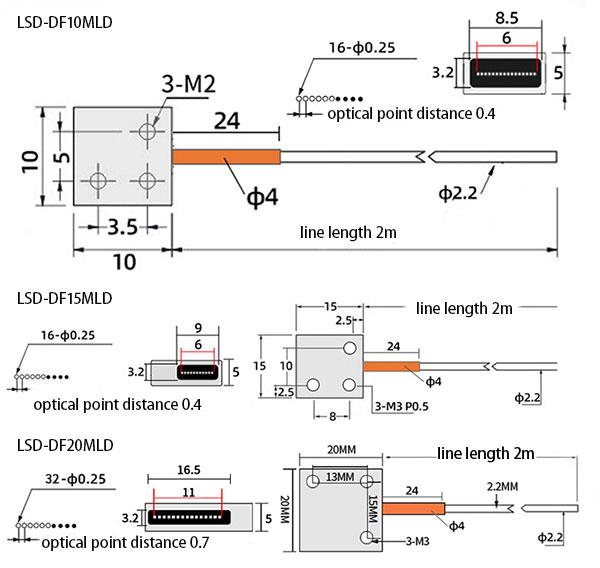
Dimensional Drawing (unit: mm)

Fiber optic sensor top induction sizes

Detection Type

Fiber optic sensor lateral induction Fiber optic sensor lateral induction type

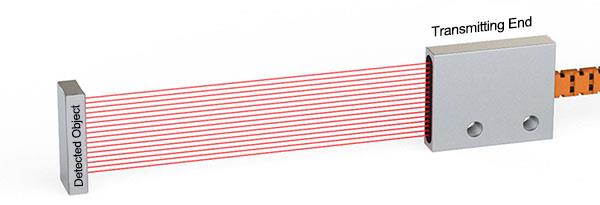
Diffuse Reflective: When the switch emits a beam of light, the target is diffusely reflected and the emitter and receiver form a single standard component. The switch state changes when enough combined light returns to the receiver.

Applications

Fiber optic sensor lateral induction application

Tips: What are the advantages of rectangular fiber optic sensors vs. traditional fiber optic sensors?

The main advantages of rectangular fiber optic sensors are their flexibility and accuracy.

  • Highly Adaptable: The rectangular cross-section design makes it easier to install in tight or complex spaces while providing higher mechanical strength.
  • High Sensitivity: Due to the unique propagation path of the light signal in the rectangular fiber, it responds faster and more accurately to changes in the external environment.
  • Versatility: Multiple parameters, such as temperature, pressure and displacement, can be detected simultaneously, reducing the number and complexity of devices.

Compared to traditional fiber optic sensors, rectangular fiber optic sensors are better suited to the need for high-precision measurements in complex environments.

Write your review
  • Only registered users can write reviews
*
*
  • Bad
  • Excellent
*
*
*
*

The first choice for accurate detection-rectangular fiber optic sensors, with top induction diffuse reflection technology, durable temperature zone (-55 ℃ ~ 70 ℃), detection distance up to 120mm, extended 2 m fiber optic cable and minimum R25 bending design, the user can be more convenient installation and wiring.

Specification

ModelATO-LSD-DF10MLDATO-LSD-DF15MLDATO-LSD-DF20MLD
Detection Range10mm15mm20mm
Detection TypeDiffuse reflective
Sensing PositionTop induction
Optical Fiber Outer DiameterØ2.2
Fiber Core I.D.Ø0.25*8Ø0.25*8Ø0.25*16
Working Temperature-55℃~70℃
Inspection Distance120mm
Min. Bend RadiusR25
Line Length2m
Size10*10mm15*15mm15*15mm
Net Weight≤150g


Dimensional Drawing (unit: mm)

Fiber optic sensor top induction sizes

Detection Type

Fiber optic sensor lateral induction Fiber optic sensor lateral induction type

Diffuse Reflective: When the switch emits a beam of light, the target is diffusely reflected and the emitter and receiver form a single standard component. The switch state changes when enough combined light returns to the receiver.

Applications

Fiber optic sensor lateral induction application

Tips: What are the advantages of rectangular fiber optic sensors vs. traditional fiber optic sensors?

The main advantages of rectangular fiber optic sensors are their flexibility and accuracy.

  • Highly Adaptable: The rectangular cross-section design makes it easier to install in tight or complex spaces while providing higher mechanical strength.
  • High Sensitivity: Due to the unique propagation path of the light signal in the rectangular fiber, it responds faster and more accurately to changes in the external environment.
  • Versatility: Multiple parameters, such as temperature, pressure and displacement, can be detected simultaneously, reducing the number and complexity of devices.

Compared to traditional fiber optic sensors, rectangular fiber optic sensors are better suited to the need for high-precision measurements in complex environments.

Only registered users can write reviews