Rectangular Fiber Optic Sensor, Lateral Induction

$137.96
The rectangular fiber optic sensor combines advanced lateral induction and diffuse reflection detection technologies to provide a wide range of detection options from 15mm to 120mm, adapting to complex industrial environments.
SKU: ATO-FIBER-RL
*
Free Shipping
Delivery date: 6-12 days

Designed for high-precision detection, this rectangular fiber optic sensor uses a diffuse reflection detection type with lateral induction for sensitive and stable detection. 2 meter fiber optic cable provides flexible mounting options with a minimum bending radius of R25, making it easy to route in complex scenarios.

Specification

ModelATO-LSD-DF15MLATO-LSD-DF20MLATO-LSD-DF25MLATO-LSD-DF30MLATO-LSD-DF35MLATO-LSD-DF50MLATO-LSD-DF120ML
Detection Range15mm20mm25mm30mm35mm50mm120mm
Detection TypeDiffuse reflective
Sensing PositionLateral induction
Optical Fiber Outer DiameterØ2.2
Fiber Core I.D.Ø0.25*16
Working Temperature-55℃~70℃
Inspection Distance120mm
Min. Bend RadiusR25
Line Length2m
Size15*15mm20*20mm34*19mm39*19mm44*19mm59*19mm139*19mm
Net Weight≤150g


Feature

Fiber optic sensor lateral induction feature

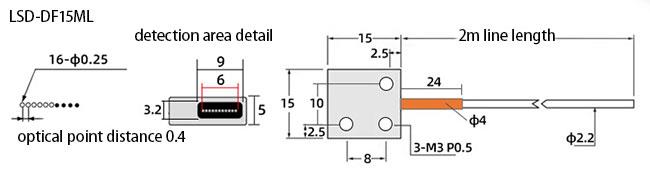
Dimensional Drawing (unit: mm)
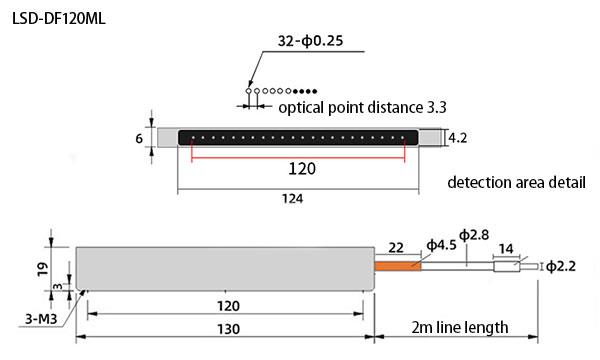
Fiber optic sensor lateral induction 15ML sizeFiber optic sensor lateral induction 120ML size

Note: Please click on the PDF file to view the size information for other specifications.

Detection Type
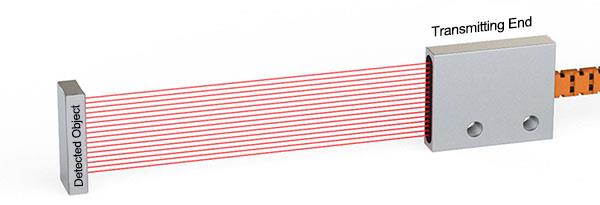
Fiber optic sensor lateral induction Fiber optic sensor lateral induction type

Diffuse Reflective: When the switch emits a beam of light, the target is diffusely reflected and the emitter and receiver form a single standard component. The switch state changes when enough combined light returns to the receiver.

Applications

Fiber optic sensor lateral induction application

Tips: What is a rectangular fiber optic sensor?

A rectangular fiber optic sensor is a sensing device that uses fiber optic technology to make measurements with a rectangular shaped cross section. It senses physical or chemical changes in the environment by sending light signals to a specific sensing area and detecting changes in the returned light signals (such as intensity, phase or wavelength). The core principle of this fiber optic sensor is based on the reflective, refractive or interferometric properties of light. When external conditions (e.g. pressure, temperature or displacement) change, the properties of the light signal change accordingly, providing accurate measurement data.

Write your review
  • Only registered users can write reviews
*
*
  • Bad
  • Excellent
*
*
*
*

Designed for high-precision detection, this rectangular fiber optic sensor uses a diffuse reflection detection type with lateral induction for sensitive and stable detection. 2 meter fiber optic cable provides flexible mounting options with a minimum bending radius of R25, making it easy to route in complex scenarios.

Specification

ModelATO-LSD-DF15MLATO-LSD-DF20MLATO-LSD-DF25MLATO-LSD-DF30MLATO-LSD-DF35MLATO-LSD-DF50MLATO-LSD-DF120ML
Detection Range15mm20mm25mm30mm35mm50mm120mm
Detection TypeDiffuse reflective
Sensing PositionLateral induction
Optical Fiber Outer DiameterØ2.2
Fiber Core I.D.Ø0.25*16
Working Temperature-55℃~70℃
Inspection Distance120mm
Min. Bend RadiusR25
Line Length2m
Size15*15mm20*20mm34*19mm39*19mm44*19mm59*19mm139*19mm
Net Weight≤150g


Feature

Fiber optic sensor lateral induction feature

Dimensional Drawing (unit: mm)

Fiber optic sensor lateral induction 15ML sizeFiber optic sensor lateral induction 120ML size

Note: Please click on the PDF file to view the size information for other specifications.

Detection Type

Fiber optic sensor lateral induction Fiber optic sensor lateral induction type

Diffuse Reflective: When the switch emits a beam of light, the target is diffusely reflected and the emitter and receiver form a single standard component. The switch state changes when enough combined light returns to the receiver.

Applications

Fiber optic sensor lateral induction application

Tips: What is a rectangular fiber optic sensor?

A rectangular fiber optic sensor is a sensing device that uses fiber optic technology to make measurements with a rectangular shaped cross section. It senses physical or chemical changes in the environment by sending light signals to a specific sensing area and detecting changes in the returned light signals (such as intensity, phase or wavelength). The core principle of this fiber optic sensor is based on the reflective, refractive or interferometric properties of light. When external conditions (e.g. pressure, temperature or displacement) change, the properties of the light signal change accordingly, providing accurate measurement data.

Only registered users can write reviews