Blue Green Algae Sensor for Water Quality, 0~300000 cells/ml

$872.66
Good price blue green algae sensor for water quality adopts RS485 communication, measures up to 300,000 cells/ml with a temperature error of ±0.5°C. It has a resolution of 1 cell/ml and a temperature resolution of 0.1°C, with a high linearity of R² > 0.999. It is an important instrument for water quality research, operates between 0 and 40°C, powered by DC 7~30V with a power consumption of 0.4W.
SKU: ATO-WQS-RSBA
*

Blue green algae sensor for water quality is a device to measure the concentration of blue-green algae in the water body; it adopts fluorescence principle, which is more efficient and quicker than the traditional manual counting method and can be monitored online in real time; the internal increase of filtering algorithms makes it resistant to external light interference; the built-in temperature transmitter can automatically compensate for the temperature. It can be used for research, investigation and detection of rivers, lakes, ponds, marine survey, aquaculture, drinking water sources, algae and phytoplankton conditions.

Specification

ModelATO-RS-BA-N01-2
Measurement Range0~300000 cells/ml
Temperature Error±0.5°C
Resolution1 cell/ml; Temperature: 0.1°C
LinearityR² > 0.999
Operating Conditions0~40°C
Power SupplyDC 7~30V
Power Consumption0.4W
Communication InterfaceRS485; Standard ModBus-RTU protocol; Communication Baud Rate: Default 4800 (1200, 2400, 4800, 9600, 19200, 38400, 57600, 115200 configurable)
Measurement PrincipleFluorescence Method
Waterproof RatingIP68
Cable LengthDefault 5m
Exterior MaterialCorrosion-resistant plastic
Pressure Resistance<0.6MPa
Weight0.15kg


Feature

  • High Sensitivity and Stability: Provides precise and reliable measurements with strong resistance to external disturbances.
  • Durable and Long-lasting: Built for extended use with minimal wear, ideal for continuous operation in demanding environments.
  • Fast Response: Supports real-time monitoring with quick detection capabilities.
  • Integrated Self-cleaning: Includes a self-cleaning brush to ensure accuracy and reduce maintenance needs.
  • Automatic Temperature Compensation: Adjusts to temperature fluctuations, improving measurement accuracy.
  • IP68 Waterproof Protection: Suitable for underwater use up to 20 meters, with a corrosion-resistant exterior for durability.
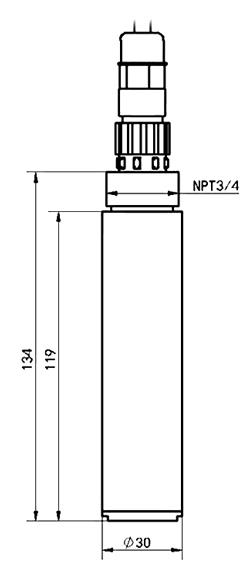
  • Simple Installation: Designed with 3/4 NPT threading for easy and secure installation.

Detail
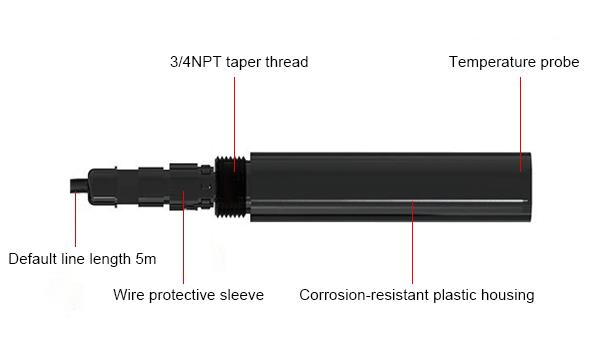
Chlorophyll sensor detail

Size (Unit: mm)

Chlorophyll sensor size

Wiring Instructions

FunctionWire ColorDescription
PowerBrownPower Positive (10~30VDC)
CommunicationBlackPower Negative
Yellow485-A
Blue485-B


Application

Application for research, surveys and testing of rivers, lakes, ponds, marine surveys, aquaculture, drinking water sources, algae and phytoplankton conditions.

Chlorophyll sensor application

Tips: What is the measurement principle of this sensor?

The RS485 Blue Green Algae Sensor uses the fluorescence measurement principle. This method involves emitting light at a specific wavelength that excites the blue-green algae cells, causing them to fluoresce or emit light at a different wavelength. The sensor then detects this emitted light, which correlates to the concentration of blue-green algae cells in the water. This technique is highly sensitive and specific, allowing for accurate, real-time detection of algae concentrations without requiring chemical reagents. Fluorescence measurement is particularly effective in aquatic environments, as it minimizes interference and provides reliable data across various water conditions.

Write your review
  • Only registered users can write reviews
*
*
  • Bad
  • Excellent
*
*
*
*

Blue green algae sensor for water quality is a device to measure the concentration of blue-green algae in the water body; it adopts fluorescence principle, which is more efficient and quicker than the traditional manual counting method and can be monitored online in real time; the internal increase of filtering algorithms makes it resistant to external light interference; the built-in temperature transmitter can automatically compensate for the temperature. It can be used for research, investigation and detection of rivers, lakes, ponds, marine survey, aquaculture, drinking water sources, algae and phytoplankton conditions.

Specification

ModelATO-RS-BA-N01-2
Measurement Range0~300000 cells/ml
Temperature Error±0.5°C
Resolution1 cell/ml; Temperature: 0.1°C
LinearityR² > 0.999
Operating Conditions0~40°C
Power SupplyDC 7~30V
Power Consumption0.4W
Communication InterfaceRS485; Standard ModBus-RTU protocol; Communication Baud Rate: Default 4800 (1200, 2400, 4800, 9600, 19200, 38400, 57600, 115200 configurable)
Measurement PrincipleFluorescence Method
Waterproof RatingIP68
Cable LengthDefault 5m
Exterior MaterialCorrosion-resistant plastic
Pressure Resistance<0.6MPa
Weight0.15kg


Feature

  • High Sensitivity and Stability: Provides precise and reliable measurements with strong resistance to external disturbances.
  • Durable and Long-lasting: Built for extended use with minimal wear, ideal for continuous operation in demanding environments.
  • Fast Response: Supports real-time monitoring with quick detection capabilities.
  • Integrated Self-cleaning: Includes a self-cleaning brush to ensure accuracy and reduce maintenance needs.
  • Automatic Temperature Compensation: Adjusts to temperature fluctuations, improving measurement accuracy.
  • IP68 Waterproof Protection: Suitable for underwater use up to 20 meters, with a corrosion-resistant exterior for durability.
  • Simple Installation: Designed with 3/4 NPT threading for easy and secure installation.

Detail

Chlorophyll sensor detail

Size (Unit: mm)

Chlorophyll sensor size

Wiring Instructions

FunctionWire ColorDescription
PowerBrownPower Positive (10~30VDC)
CommunicationBlackPower Negative
Yellow485-A
Blue485-B


Application

Application for research, surveys and testing of rivers, lakes, ponds, marine surveys, aquaculture, drinking water sources, algae and phytoplankton conditions.

Chlorophyll sensor application

Tips: What is the measurement principle of this sensor?

The RS485 Blue Green Algae Sensor uses the fluorescence measurement principle. This method involves emitting light at a specific wavelength that excites the blue-green algae cells, causing them to fluoresce or emit light at a different wavelength. The sensor then detects this emitted light, which correlates to the concentration of blue-green algae cells in the water. This technique is highly sensitive and specific, allowing for accurate, real-time detection of algae concentrations without requiring chemical reagents. Fluorescence measurement is particularly effective in aquatic environments, as it minimizes interference and provides reliable data across various water conditions.

Only registered users can write reviews