
Human presence sensor using 5.8G mmWave radar enables accurate 0–6m positioning with a >90° detection angle. A dedicated illuminance chip ensures stable response under varied light levels. Adjustable distance limits and sensitivity allow fine tuning for different layouts. Compact size, Type-C power, and wide operating temperature support reliable indoor deployment.
Specification
| Model | ATO-HPS08; ATO-HPS01 |
| Radar Frequency | 5.8G |
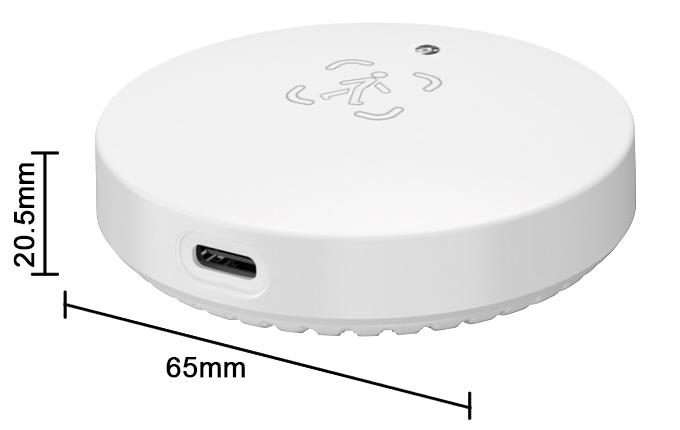
| Size | Φ65*20.5mm |
| Type-c Input | DC 5V/1A |
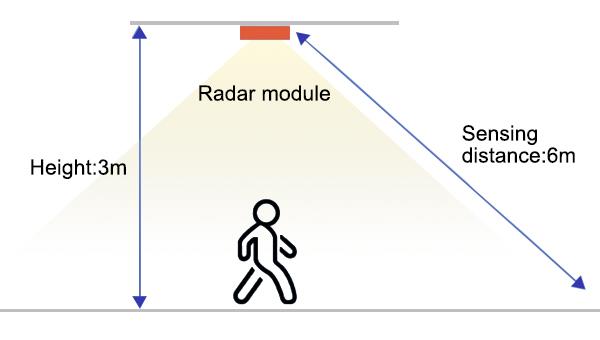
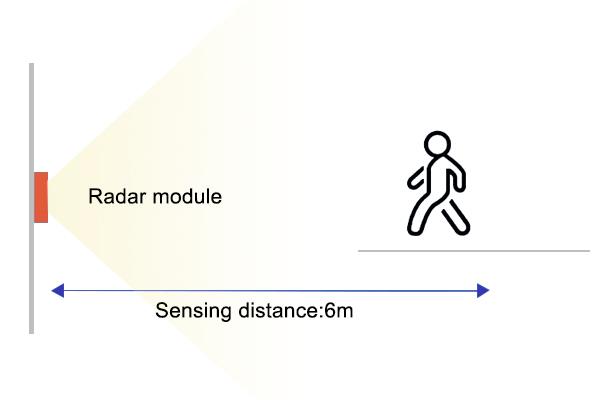
| Radar Detection Range | 0~6m |
| Wireless Protocol | Wifi |
| Detection Angle | > 90° |
| Illuminance | 0~3000Lux |
| Working Temperature | -10℃~55℃ |
| Motion Sensitivity | Supports heartbeat, breathing, micro-motion, and regular motion detection |
| Penetration Capability | Penetrates insulating materials (fabrics, plastics, glass, etc.) |
| Environmental Adaptability | Unaffected by temperature, heat sources, light sources, and air currents |
Features
- Professional Light Sensing: The WiFi human presence sensor integrates an illuminance chip that detects 0–3000Lux brightness for all-day adaptive response.
- Wide-Angle Long-Distance Detection: Provides a 90° detection angle and up to 6m coverage for accurate human activity sensing.
- Adjustable Sensitivity and Range: Supports custom sensitivity and distance limits for both motion and micro-motion detection across different spaces.
- mmWave Radar Motion Detection: Uses mmWave radar detection to accurately sense human motion and micro-movements, enhancing safety and anti-theft monitoring.
- Static Presence Recognition: Powered by 5.8G microwave technology to detect breathing and subtle micro-motions, enabling reliable static human presence detection and preventing false light-offs.
- Universal Type-C Power: Equipped with a standard Type-C interface for convenient and widely compatible power supply.
Dimension
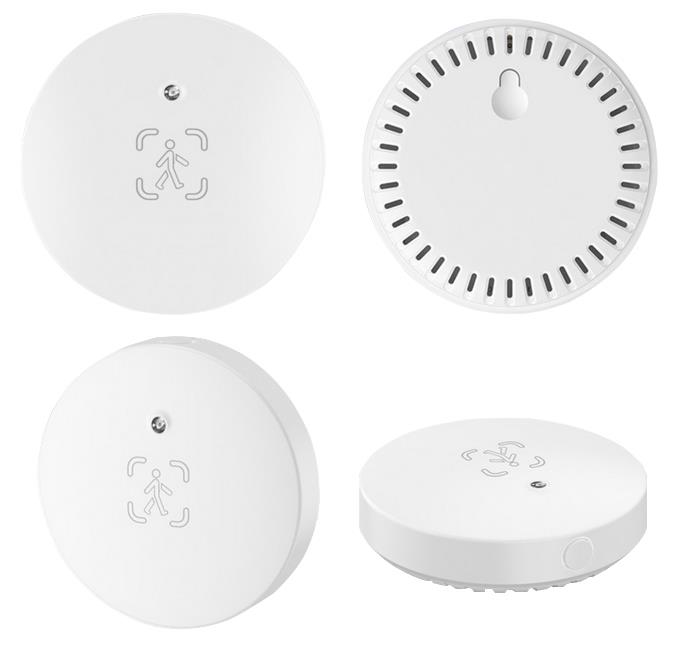
Details
Installation Diagram
Ceiling Installation
Side Installation
Tips: Human Presence Sensors vs. PIR Sensors
In the field of intelligent sensing, human presence sensors and traditional pyroelectric infrared (PIR) sensors differ significantly in technical principles and application performance. The former uses millimeter-wave radar for active detection, accurately recognizing regular movements and micro-motions like heartbeat/breathing. It operates stably amid ambient temperature fluctuations, heat/light/airflow interference, penetrates insulating materials (fabrics, plastics, glass), and supports 0~6m ranging. In contrast, PIR sensors rely on passive infrared sensing, only detecting short-range human movement. They suffer from reduced sensitivity due to environmental factors and lack ranging/penetration capabilities, making human presence sensors more accurate and reliable for diverse intelligent sensing needs.


mmWave Human Presence Sensor, RS485/LoRa/LoRaWAN Output

mmWave Radar Presence Sensor, RS485 Output

Rectangular Laser Sensor, Presence/Distance Detection, 200mm/50m
