
UPS Inverters
The ups inverter (uninterruptible power supply inverter) is a device that provides backup power to electronic equipment. An uninterruptible power supply (UPS), offers guaranteed power protection for connected electronics. Pure sine wave ups inverter can be used in PC, TV, refrigerator, digtial products and home appliances. Especially ups inverter for home, bringing us a lot of convenience.
ATO shop offers cost-effective ups power inverter with various powers. 300W, 500W, 600W, 1000W, 1500W, 2000W, 2500W, 3000W, 3500W home ups inverter for sale online. 12V, 24V, 48V DC input voltage and 50Hz, 60Hz output frequency can be chosen in our website. The ups inverter battery can be selected from lead-acid battery and lithium battery.
Functions of UPS Inverter:
- Automatic voltage stabilizing function. When the battery voltage fluctuates between undervoltage and overvoltage, and the load changes within the rated power range, the device can automatically output voltage.
- Overload protection function. If the AC output power exceeds the rated power, the device will automatically cut off the inverter output, the front panel LCD will display "Overload", and the buzzer will sound for 10 seconds. The "Inverter switch is off" on the front panel, and the "Overload" display disappears. If you need to restart, you must check that the load is within the allowable range, and then turn on the "inverter switch" to restore the inverter's output.
- Overheating protection function. If the temperature of the control part inside the chassis is too high, the ups inverter automatically cuts off the output of the inverter. The LCD on the front panel displays "Overheating", and the buzzer sounds an alarm for 10 seconds. After the temperature returns to normal, the output of the inverter returns to normal.
- Battery reverse protection function. If the polarity of the ups inverter battery is reversed, the chassis of the fuse will fuse automatically, so as not to damage the battery and equipment. But reverse batteries are still forbidden!
3 Ways to Control UPS Inverter:
The inverter is the core of uninterrupted power source. It converts the direct current into the alternating current required by users. For ups, the quality of inverter output voltage determines its overall performance. There are 3 ways to control ups inverter.
- Predictive control. Predictive control can achieve small current distortion and strong anti-noise ability in the ups inverter. However, this algorithm requires accurate load model and circuit parameters, and the delay caused by numerical calculation is also a problem in practical applications.
- Hysteresis control. Hysteresis control has fast response speed and high stability, but the switching frequency of hysteresis control is not fixed, so that the reliability of the circuit is reduced, the frequency spectrum of the output voltage is worse, and the system performance of the ups inverter is not good.
- Dead-beat control. Dead-beat control was first proposed by Kalman. It is a control method based on the precise mathematical model of the controlled object. The basic idea of beat free control is to calculate the PWM pulse width of the next switching period according to the state equation of the sine wave ups inverter and the output feedback signal (usually the voltage and current of the output filter capacitor). The PWM pulse width is calculated from the state vector at the current time and the reference sine at the next sampling time.
What Kind of Battery Does UPS Inverter Use?
- Lead-acid battery. At present, the most commonly used lead-acid battery is valve controlled lead-acid maintenance-free battery. The electrolyte is mainly composed of lead and sulfuric acid. It is characterized by no need to add water and acid when used, good sealing, relatively small volume, and high cost performance as a ups battery. In addition to maintenance-free lead-acid batteries, there are open liquid lead-acid batteries, which need to regularly measure the specific gravity, add water and acid. If these batteries are used, anti-corrosion bricks need to be laid in the installation environment.
- Lithium battery. It is the first choice for environmental protection. Lithium batteries are free of heavy metals such as lead, nickel and chromium. Compared with ordinary lead-acid batteries, lithium batteries have the characteristics of light weight, high energy storage and low self-discharge.
Things to Consider When Buying UPS Inverter:
UPS inverters can seem complex and unbearable, especially if you are not an electrician. However, with some general guidelines, it is easy to understand the most important differences between inverters and why one ups inverter may better meet your needs than another.
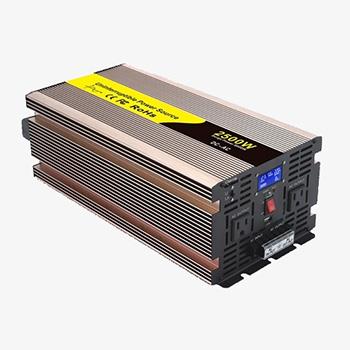
- Use. First of all, does the ups inverter need to be portable? For example, for use in a RV or boat? Or, if you use a ups inverter in combination with a solar array, finding ups inverter that can combine solar energy with grid power can save a lot of energy and time. In addition,considering what and how many appliances and devices you plan to power off an inverter will play a large role in determining the wattage and surge power capabilities that you need.
- Wattage. The wattage provided by your ups inverter is one of its most important specifications, because this number determines how much power you can supply and how many devices you can supply in a single time. Before choosing a ups inverter for home, take a look at the power requirements of the device you plan to use most often compared with the inverter, the ups inverter needs to output at least the power required by each device, and at least the sum of the power required by the device you intend to power at the same time.
- Continuous power and surge power. Inverter power ratings are usually measured in watts and include the power they output continuously over a period of minutes to hours (called continuous power) and the additional power they output over a period of seconds (called surge power). Continuous power determines how many devices you can power at once. Surge power is a very important consideration if you are using motor driven equipment. Motor-driven equipment usually requires more power to start than to run after starting.

300W (330 VA) UPS Inverter For Home

500W (550 VA) UPS Inverter For Home

600W (650 VA) UPS Inverter For Home

1000W (1100 VA) UPS Inverter For Home

1500W (1600 VA) UPS Inverter For Home

2000W (2200 VA) UPS Inverter For Home

2500W (2700 VA) UPS Inverter For Home

3000W (3 kVA) UPS Inverter For Home


