Magnetic Rotary Angle Sensor, Non-Contact, 0~360°

$98.21
This magnetic rotary angle sensor is a high-performance non-contact sensor designed for precise and durable angle measurement. Utilizing Hall effect technology, it offers infinite rotation, high isolation voltage, and excellent linearity. With a compact aluminum alloy housing, wide operating voltage (3.3–5V DC), it is ideal for harsh industrial environments including exposure to water, oil, and vibration.
SKU: ATO-AS-CW360
*
*
Free Shipping
Delivery date: 6-12 days

Non-contact magnetic angle sensor operates based on magnetic field variations as the angle changes. Utilizing Hall Effect sensors and magnetoresistive elements, it detects the rotational movement in relation to a magnetic field. Angle transducer designed with high-quality components and robust construction, it ensures accurate measurement, long-term reliability, and smooth operation even under demanding conditions.

Specification

ModelATO-AS-CW360
Resolution4096 counts (12-bit)
Effective Rotation Angle30°, 45°, 60°, 90°, 180°, 270°, 360° (selectable)
Linearity AccuracyStandard: 0.2%
Update Speed10ns
Load Resistance>10 kΩ
End-to-End Output Deviation<0.3% VCC
Operating Voltage3.3–5V ±10%
Operating Current<4.5mA
Housing MaterialAluminum Alloy
BearingNSK
Shaft Material304 Stainless Steel
Output TerminalGold-plated / None
Mechanical Rotation360° (no stop)
Protection RatingIP40
Operating Temperature-30°C to +80°C
Storage Temperature-60°C to +100°C
Rotational Torque<5 mN·m
Mechanical Life>80 million rotations
Weight25g


Feature

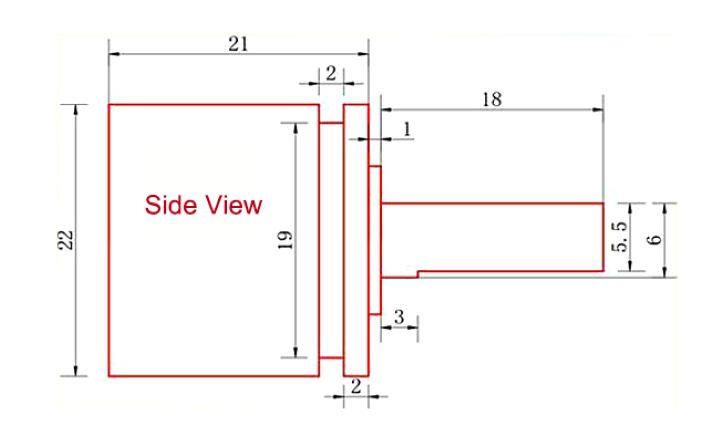
  • The compact design of the sensor, with a maximum outer diameter of 22mm, allows easy integration into space-constrained applications.
  • Full 360° rotation without dead zones makes the magnetic angle measurement sensor suitable for precise angular measurement across the entire range.
  • Operating at 3.3–5V DC, the sensor provides flexible power options for various systems.
  • Minimal damping in the magnetic angle transducer provides smooth rotation and enhanced user experience.
  • The non-contact design ensures a long service life, theoretically unlimited, by eliminating mechanical wear.
  • Suitable for harsh environments including exposure to water, oil, and vibration, the sensor maintains reliable performance (excluding electromagnetic interference).

Dimensions (Unit: mm)
Output Characteristics

The following figure takes ±45° as an example; other angles will not be illustrated one by one.

Tips: What factors should be considered when selecting a magnetic angle sensor?

When selecting a magnetic rotary angle sensor, several factors must be considered to ensure optimal performance. First, the sensor's resolution and accuracy are crucial, as they determine the device's ability to provide precise angle measurements. The operating range, or the range of angles the sensor can effectively detect, should match the application's requirements. Consider environmental conditions, such as temperature and humidity, as they can impact sensor performance. Evaluate the sensor's response time and update rate to ensure it meets real-time application needs. Additionally, assess the sensor's output interface compatibility and power consumption to integrate seamlessly into the system. Finally, consider the cost and form factor, balancing performance requirements with budget constraints and physical space limitations. Overall, a thorough evaluation of resolution, range, environmental conditions, response time, interface, power consumption, and cost is essential for selecting the right magnetic angle sensor for a specific application.

Write your review
  • Only registered users can write reviews
*
*
  • Bad
  • Excellent
*
*
*
*

Non-contact magnetic angle sensor operates based on magnetic field variations as the angle changes. Utilizing Hall Effect sensors and magnetoresistive elements, it detects the rotational movement in relation to a magnetic field. Angle transducer designed with high-quality components and robust construction, it ensures accurate measurement, long-term reliability, and smooth operation even under demanding conditions.

Specification

ModelATO-AS-CW360
Resolution4096 counts (12-bit)
Effective Rotation Angle30°, 45°, 60°, 90°, 180°, 270°, 360° (selectable)
Linearity AccuracyStandard: 0.2%
Update Speed10ns
Load Resistance>10 kΩ
End-to-End Output Deviation<0.3% VCC
Operating Voltage3.3–5V ±10%
Operating Current<4.5mA
Housing MaterialAluminum Alloy
BearingNSK
Shaft Material304 Stainless Steel
Output TerminalGold-plated / None
Mechanical Rotation360° (no stop)
Protection RatingIP40
Operating Temperature-30°C to +80°C
Storage Temperature-60°C to +100°C
Rotational Torque<5 mN·m
Mechanical Life>80 million rotations
Weight25g


Feature

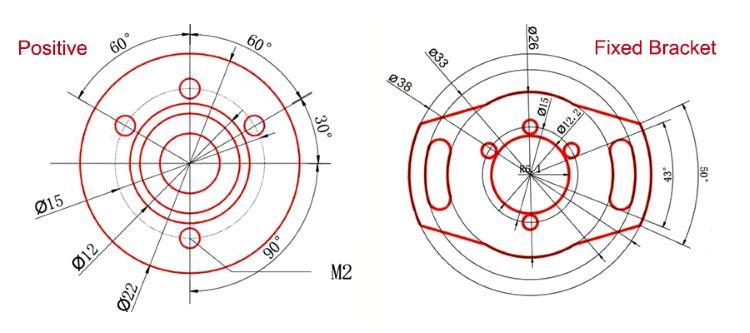
  • The compact design of the sensor, with a maximum outer diameter of 22mm, allows easy integration into space-constrained applications.
  • Full 360° rotation without dead zones makes the magnetic angle measurement sensor suitable for precise angular measurement across the entire range.
  • Operating at 3.3–5V DC, the sensor provides flexible power options for various systems.
  • Minimal damping in the magnetic angle transducer provides smooth rotation and enhanced user experience.
  • The non-contact design ensures a long service life, theoretically unlimited, by eliminating mechanical wear.
  • Suitable for harsh environments including exposure to water, oil, and vibration, the sensor maintains reliable performance (excluding electromagnetic interference).

Dimensions (Unit: mm)
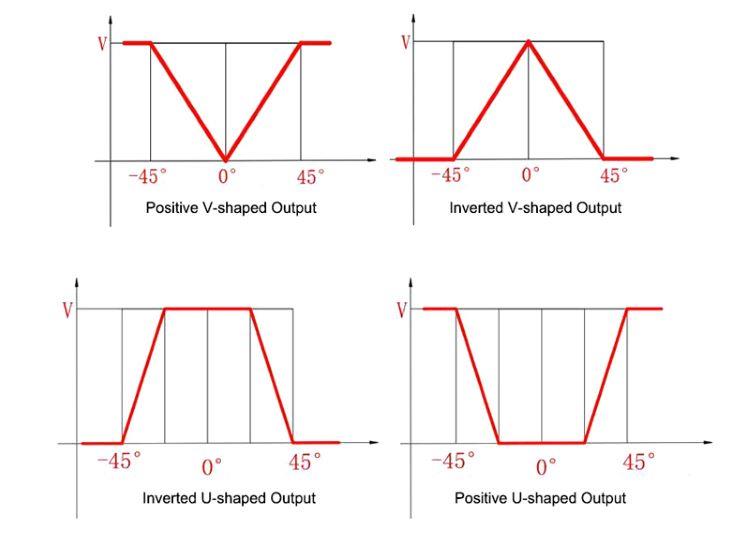
Output Characteristics

The following figure takes ±45° as an example; other angles will not be illustrated one by one.
Tips: What factors should be considered when selecting a magnetic angle sensor?

When selecting a magnetic rotary angle sensor, several factors must be considered to ensure optimal performance. First, the sensor's resolution and accuracy are crucial, as they determine the device's ability to provide precise angle measurements. The operating range, or the range of angles the sensor can effectively detect, should match the application's requirements. Consider environmental conditions, such as temperature and humidity, as they can impact sensor performance. Evaluate the sensor's response time and update rate to ensure it meets real-time application needs. Additionally, assess the sensor's output interface compatibility and power consumption to integrate seamlessly into the system. Finally, consider the cost and form factor, balancing performance requirements with budget constraints and physical space limitations. Overall, a thorough evaluation of resolution, range, environmental conditions, response time, interface, power consumption, and cost is essential for selecting the right magnetic angle sensor for a specific application.

Only registered users can write reviews