LNA RF Low Noise Amplifier, 0.5~6 GHz, 23dB Gain

$158.59
Buy RF low noise amplifier online at a low price, with a frequency range of 0.5~6 GHz, 23dB gain, and a working current of 85mA at 5V or 12V voltage. LNA plays a crucial role in satellite communication systems, enhancing weak signals from GPS satellites before reaching the receiver. LNA integrated circuit (IC) is designed to minimize signal degradation and combat noise inherent in operational amplifiers.
SKU: ATO-LNA-05623
*
Free Shipping
Delivery date: 6-12 days

Low noise amplifiers are indispensable for maintaining signal integrity in the realm of satellite communication where precision is paramount. These wideband RF LNAs operate at high speeds, effectively amplifying signals across various frequencies. Whether integrated as part of a receiver or used as a standalone module, the LNA's role is pivotal in optimizing the performance of satellite communication systems.

Specification

  • Model: ATO-LNA-0.5/6-SE
  • Frequency Range: 0.5~6 GHz
  • Gain: 23 dB min.
  • Input Standing Wave Ratio (VSWR): ≤2.0
  • Output Standing Wave Ratio (VSWR): ≤2.2
  • Noise Figure: ≤2.4dB
  • Output 1dB Compression Point: 20dBm@2GHz/12dBm@6GHz
  • Output Third-Order Cutoff Point: 30dBm
  • Working Current: 85mA@5V TYP.
  • Working Voltage (Optional): 5V or 12V
  • Maximum Input Level: 0dBm
  • Shell Material: Sandblasted
  • Connector Type: SMA-Female

Dimension (Unit: mm)
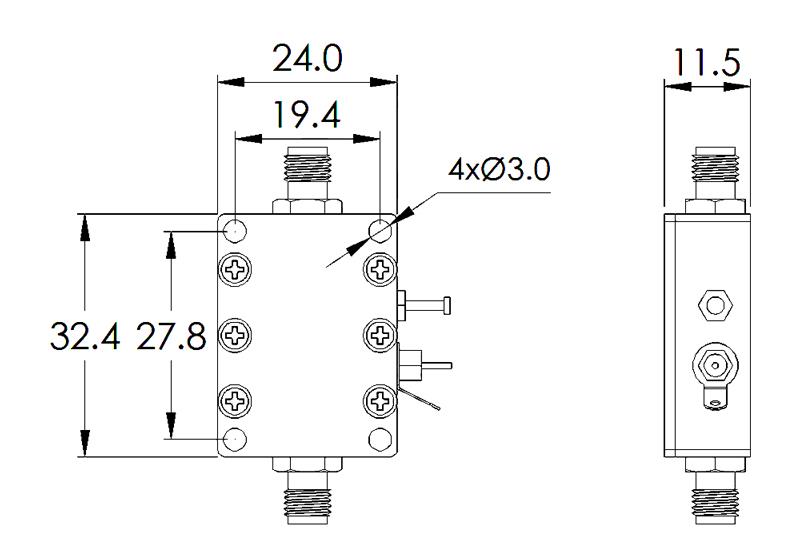
6 GHz LNA low noise RF amplifier dimension

Note: General tolerance ±0.3mm

Gain Diagram
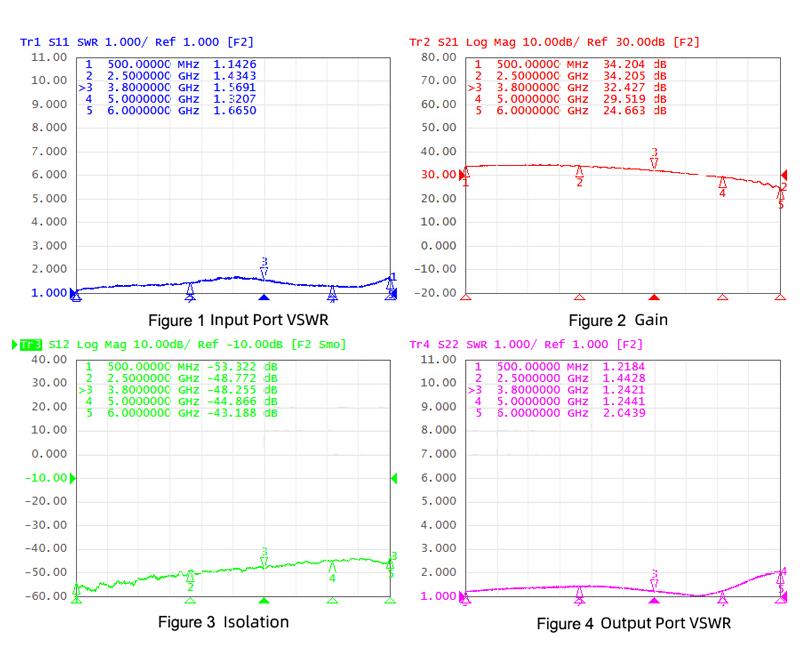
6 GHz 23dB LNA low noise RF amplifier gain diagram

Tips: How does a LNA RF low noise amplifier work?

A low noise amplifier (LNA) is a critical component in radio frequency (RF) systems designed to amplify weak signals while introducing minimal additional noise. Operating at the front end of a receiver chain, LNAs enhance the signal-to-noise ratio, crucial for systems like communication receivers or GPS devices.

LNAs achieve low noise performance by utilizing transistors with low inherent noise characteristics. Typically, they operate in the microwave frequency range, where signal quality is paramount. The LNA's key function is to provide signal gain while introducing the least amount of additional noise possible.

Incorporating technologies such as field-effect transistors (FETs) or bipolar junction transistors (BJTs), LNAs selectively amplify weak signals while minimizing electronic noise contribution. This ensures that the amplified signal maintains a high level of fidelity, making LNAs essential for sensitive RF applications where weak signals must be accurately received and processed.

Product reviews
The signal is very clear
5
Beny
Avatar
10/25/2024 12:09 AM
This amplifier has a relatively low noise figure and can enhance signal quality without introducing too much additional noise. During use, I clearly felt an improvement in signal clarity and a significant reduction in interference and noise. Installation and debugging are very convenient, the interface design is reasonable, and it is easy to get started.
Was this review helpful? Yes No (0/0)
Write your review
  • Only registered users can write reviews
*
*
  • Bad
  • Excellent
*
*
*
*

Low noise amplifiers are indispensable for maintaining signal integrity in the realm of satellite communication where precision is paramount. These wideband RF LNAs operate at high speeds, effectively amplifying signals across various frequencies. Whether integrated as part of a receiver or used as a standalone module, the LNA's role is pivotal in optimizing the performance of satellite communication systems.

Specification

  • Model: ATO-LNA-0.5/6-SE
  • Frequency Range: 0.5~6 GHz
  • Gain: 23 dB min.
  • Input Standing Wave Ratio (VSWR): ≤2.0
  • Output Standing Wave Ratio (VSWR): ≤2.2
  • Noise Figure: ≤2.4dB
  • Output 1dB Compression Point: 20dBm@2GHz/12dBm@6GHz
  • Output Third-Order Cutoff Point: 30dBm
  • Working Current: 85mA@5V TYP.
  • Working Voltage (Optional): 5V or 12V
  • Maximum Input Level: 0dBm
  • Shell Material: Sandblasted
  • Connector Type: SMA-Female

Dimension (Unit: mm)

6 GHz LNA low noise RF amplifier dimension

Note: General tolerance ±0.3mm

Gain Diagram

6 GHz 23dB LNA low noise RF amplifier gain diagram

Tips: How does a LNA RF low noise amplifier work?

A low noise amplifier (LNA) is a critical component in radio frequency (RF) systems designed to amplify weak signals while introducing minimal additional noise. Operating at the front end of a receiver chain, LNAs enhance the signal-to-noise ratio, crucial for systems like communication receivers or GPS devices.

LNAs achieve low noise performance by utilizing transistors with low inherent noise characteristics. Typically, they operate in the microwave frequency range, where signal quality is paramount. The LNA's key function is to provide signal gain while introducing the least amount of additional noise possible.

Incorporating technologies such as field-effect transistors (FETs) or bipolar junction transistors (BJTs), LNAs selectively amplify weak signals while minimizing electronic noise contribution. This ensures that the amplified signal maintains a high level of fidelity, making LNAs essential for sensitive RF applications where weak signals must be accurately received and processed.

Product reviews
The signal is very clear
5
Beny
Avatar
10/25/2024 12:09 AM
This amplifier has a relatively low noise figure and can enhance signal quality without introducing too much additional noise. During use, I clearly felt an improvement in signal clarity and a significant reduction in interference and noise. Installation and debugging are very convenient, the interface design is reasonable, and it is easy to get started.
Was this review helpful? Yes No (0/0)
Only registered users can write reviews