Industrial Noise Sensor, TTL/RS485/IIC/0-3V

$94.55
This industrial noise sensor not only has a wide operating voltage range (5V or 12V selectable), which is now available at a good price, but also supports TTL, RS485, and a variety of analog output signals (0-3V, IIC), with a measurement accuracy of ±0.5dB, making it suitable for use in applications that require high-precision noise measurements.
SKU: ATO-NS-ZS-BZ
*
*
Free Shipping
Delivery date: 6-12 days

High precision industrial noise sensors for sale are designed to operate normally at -20°C to 60°C and 0 to 90%RH without condensation, adapting to a variety of harsh industrial environments. Its 500ms fast response mode and 1.5 seconds slow response mode provide flexible measurement options for scenarios requiring fast response or long-term monitoring. Built-in reference calibration points of 94dB and 114dB ensure high accuracy at 1kHz with an accuracy error of only ±0.5dB.

Specification

ModelATO-VMS-ZS-BZ
Working Voltage4.5~5.5V (5V) (default)
10~28V (12V) (optional)
Power Consumption18.9mA@5V
31.0mA@12V
27.8mA@24V
Output SignalUART(TTL)Output voltage: 0~3.3V/ Input voltage: 0~3.3V Compatible 5V
RS-485ModBus-RTU communication protocol
Analog outputOutput voltage: 0~3V corresponding to 30~130dB
UART or RS-485 Communication Parameters9600  N  8  1
Measuring Range30dB~130dB
Frequency WeightingA-weighting
Frequency Response Range20Hz~12.5kHz
Transmitter Circuit Operating Temperature-20℃~+60℃,0%RH~90%RH (no condensation)
Response TimeFast mode500ms
Slow mode1.5s
StabilityLess than 2% of cycle time
Reference Calibration Point94dB and 114dB calibration, reference sound pressure 20uPa, frequency 1kHz
Noise Accuracy±0.5dB (at reference pitch, 94dB@1kHz)
Dust Cover ImpactEffect ≤0.5dB in the range of 50~115dB
Influence ≤0.7dB in other ranges within the measurement range
Working EnvironmentAir temperature: -20~+60℃
Static pressure: 65kPa~106kPa
No strong mechanical vibration, impact, strong electromagnetic field and corrosive gas in the surrounding area.
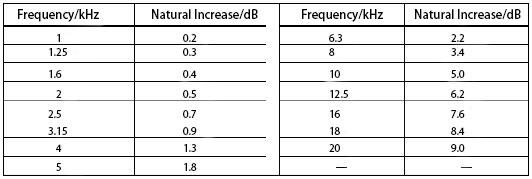
Adjustment Data for Sound Pressure Response and Free Field Response

The equivalent free-field response can be obtained by adjusting the data in the following table through the sound pressure response generated by an acoustic calibrator or the simulated sound pressure response generated by an electrostatic exciter.

Adjustment data for sound pressure response and free field response

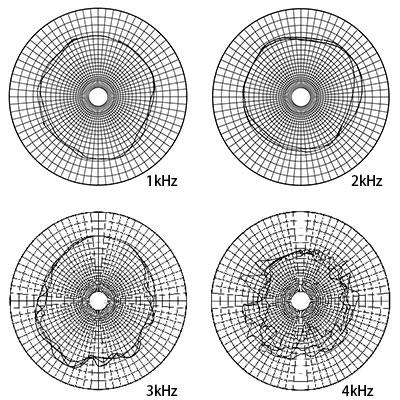
Module Directivity at 1kHz, 2kHz, 4kHz, 8kHzModular directivity
Electret Parameters
Free-field sensitivityApprox. 8mV/Pa (free-field sensitivity level of -42dB, using 1V as reference)
Electret Head CapacitanceApprox. 15pF
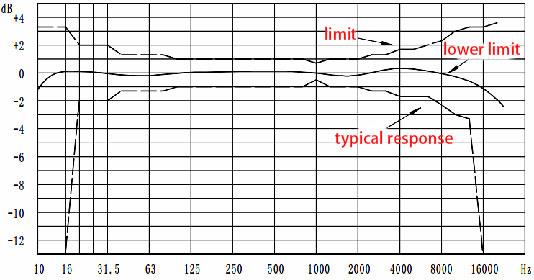
Typical Frequency ResponseTypical response

Features

  1. PCB board mounting method.
  2. 30~130dB wide range, 20~12.5kHz wide frequency measurement.
  3. Adopt high performance prepolarized back-pole electret condenser microphone, wide dynamic range and stable performance.
  4. Output interface TTL/RS485/0-3V/IIC optional.
  5. With two modes of slow and fast measurement to meet different customer requirements.
  6. Power supply 4.5V~5.5VDC, 10~28VDC optional.

Dimension (unit: mm)
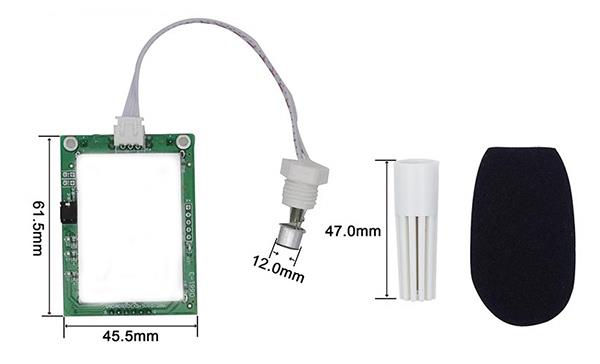
Industrial noise sensor size

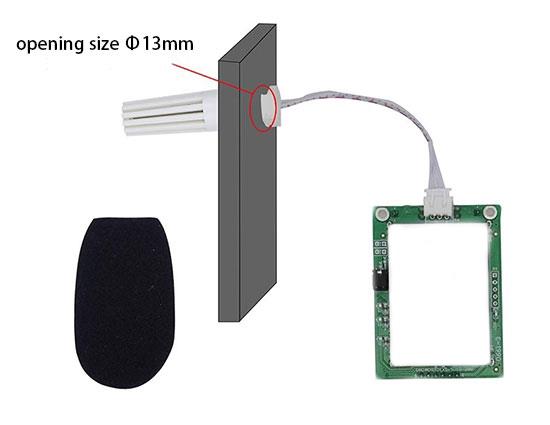
Installation Notes

Industrial noise sensor installation note

Application

Industrial noise sensor applicationTips: How do industrial noise sensors work?

Industrial noise sensors detect sound fluctuations in the environment by means of a built-in, high-precision microphone, which measures the noise using a specific frequency weighting (e.g. A-weighting or C-weighting). The sensor converts the noise signal into an electrical signal that is displayed or recorded on a monitoring device. These sensors are commonly used in industrial locations to monitor noise, ensure compliance with regulations and prevent long-term exposure to noisy environments.

Write your review
  • Only registered users can write reviews
*
*
  • Bad
  • Excellent
*
*
*
*

High precision industrial noise sensors for sale are designed to operate normally at -20°C to 60°C and 0 to 90%RH without condensation, adapting to a variety of harsh industrial environments. Its 500ms fast response mode and 1.5 seconds slow response mode provide flexible measurement options for scenarios requiring fast response or long-term monitoring. Built-in reference calibration points of 94dB and 114dB ensure high accuracy at 1kHz with an accuracy error of only ±0.5dB.

Specification

ModelATO-VMS-ZS-BZ
Working Voltage4.5~5.5V (5V) (default)
10~28V (12V) (optional)
Power Consumption18.9mA@5V
31.0mA@12V
27.8mA@24V
Output SignalUART(TTL)Output voltage: 0~3.3V/ Input voltage: 0~3.3V Compatible 5V
RS-485ModBus-RTU communication protocol
Analog outputOutput voltage: 0~3V corresponding to 30~130dB
UART or RS-485 Communication Parameters9600  N  8  1
Measuring Range30dB~130dB
Frequency WeightingA-weighting
Frequency Response Range20Hz~12.5kHz
Transmitter Circuit Operating Temperature-20℃~+60℃,0%RH~90%RH (no condensation)
Response TimeFast mode500ms
Slow mode1.5s
StabilityLess than 2% of cycle time
Reference Calibration Point94dB and 114dB calibration, reference sound pressure 20uPa, frequency 1kHz
Noise Accuracy±0.5dB (at reference pitch, 94dB@1kHz)
Dust Cover ImpactEffect ≤0.5dB in the range of 50~115dB
Influence ≤0.7dB in other ranges within the measurement range
Working EnvironmentAir temperature: -20~+60℃
Static pressure: 65kPa~106kPa
No strong mechanical vibration, impact, strong electromagnetic field and corrosive gas in the surrounding area.
Adjustment Data for Sound Pressure Response and Free Field Response

The equivalent free-field response can be obtained by adjusting the data in the following table through the sound pressure response generated by an acoustic calibrator or the simulated sound pressure response generated by an electrostatic exciter.

Adjustment data for sound pressure response and free field response

Module Directivity at 1kHz, 2kHz, 4kHz, 8kHzModular directivity
Electret Parameters
Free-field sensitivityApprox. 8mV/Pa (free-field sensitivity level of -42dB, using 1V as reference)
Electret Head CapacitanceApprox. 15pF
Typical Frequency ResponseTypical response

Features

  1. PCB board mounting method.
  2. 30~130dB wide range, 20~12.5kHz wide frequency measurement.
  3. Adopt high performance prepolarized back-pole electret condenser microphone, wide dynamic range and stable performance.
  4. Output interface TTL/RS485/0-3V/IIC optional.
  5. With two modes of slow and fast measurement to meet different customer requirements.
  6. Power supply 4.5V~5.5VDC, 10~28VDC optional.

Dimension (unit: mm)

Industrial noise sensor size

Installation Notes

Industrial noise sensor installation note

Application

Industrial noise sensor applicationTips: How do industrial noise sensors work?

Industrial noise sensors detect sound fluctuations in the environment by means of a built-in, high-precision microphone, which measures the noise using a specific frequency weighting (e.g. A-weighting or C-weighting). The sensor converts the noise signal into an electrical signal that is displayed or recorded on a monitoring device. These sensors are commonly used in industrial locations to monitor noise, ensure compliance with regulations and prevent long-term exposure to noisy environments.

Only registered users can write reviews
Customers who bought this item also bought

Noise Detection Sensor, Wall Mounted, 4-20mA/RS485

ATO-NS-WM485
$165.89
The new wall-mounted noise detector is ideal for home use. noise detector has a wide measuring range of 30-120 dB and an accuracy of ±0.5 dB. with a choice of RS485 (Modbus RTU) or 4-20mA signals, it monitors sound levels and detects high levels of noise, making it ideal for both domestic and industrial applications.