Hydrogen Cyanide (HCN) Gas Sensor, 0-50ppm

$149.79
Selling high quality hydrogen cyanide (HCN) gas sensor. This HCN gas sensor uses an electrochemical three-electrode system to detect hydrogen cyanide in the 0-50 ppm range. The gas sensor has 0.1 ppm resolution, ±5% precision, ≤120s response time, and works in 90-110 kPa pressure. Used in environmental quality testing, industrial robots, chemical plants, coal mines, instrumentation.
SKU: ATO-GS-HCN
Free Shipping
Delivery date: 6-12 days

High-quality HCN gas sensor detects 0-50 ppm hydrogen cyanide with 0.1 ppm resolution, ±5% precision, and ≤120s response time. Works under 90-110 kPa pressure. Ideal for environmental testing, industrial robots, chemical plants, coal mines, and instrumentation.

Specification

ModelATO-S4-HCN
Detection PrincipleElectrochemical Three-Electrode
Detected GasHydrogen Cyanide (HCN)
Detection Range0~50 ppm
Maximum Load Concentration100 ppm
Sensitivity100 ±30 nA/ppm
Zero Drift-1~1 ppm
Resolution0.1 ppm
Precision±5%FS
Response Time≤120s
Operating Pressure90 to 110 kPa
Temperature Range-30°C to 50°C
Humidity Range15%RH to 90%RH (Non-condensing)
Repeatability< ±2% Signal/Month
Long-term Stability< 2% Signal/Month
LinearityLinear up to 100 ppm
Service Life2 years


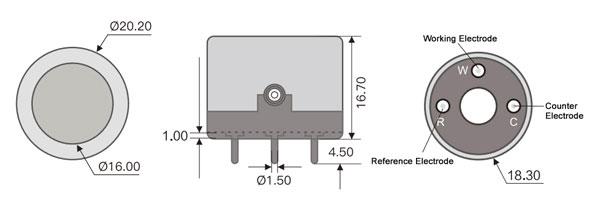
Dimension (Unit: mm)

Electrochemical gas sensors size

Crossover Interference

The hydrogen cyanide (HCN) gas sensor also responds to gases other than the target gas. For reference, the response characteristics of the sensor to several common interfering gases are listed in the table below. The data in the table are typical responses of interfering gases at a given concentration.

Interfering GasGas Concentration Used (ppm)Displayed Value (ppm/HCN)
CO1000
SO₂238
H₂S2652
Cl₂16.30
NO180
NO₂23-1


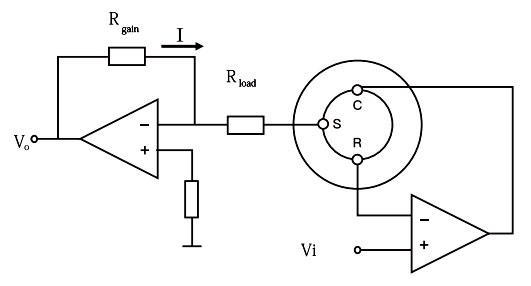
Basic Test Circuit

Gas sensor basic test circuit

Application

Hydrogen cyanide (HCN) gas sensor can be used in environmental quality testing, industrial robots, chemical plants, coal mines, instrumentation, underground pipelines, fruit and vegetable gardens, greenhouses and so on.
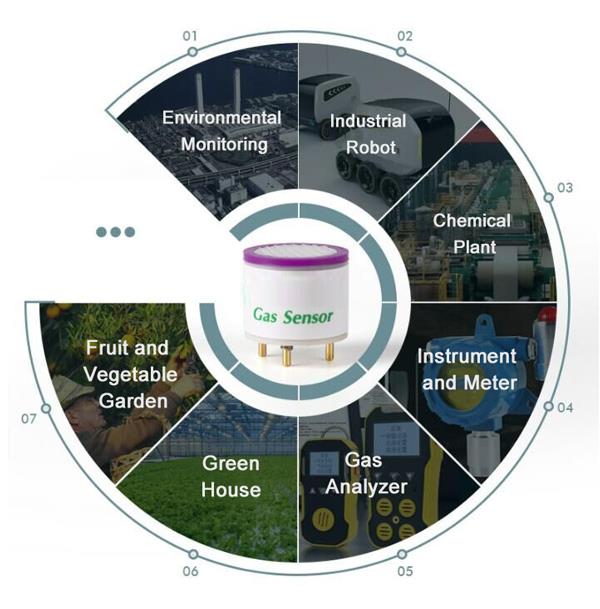
HCN gas semsor application

Tips: What makes hydrogen cyanide (HCN) gas dangerous?

Hydrogen cyanide (HCN) is an extremely toxic and flammable gas that interferes with the body's ability to use oxygen, leading to respiratory failure, dizziness, unconsciousness, and even death at high concentrations. It is widely used in chemical manufacturing, mining, and fumigation processes, making real-time monitoring essential for safety. Even low-level exposure can cause irritation of the eyes, skin, and respiratory system, which is why accurate and reliable HCN detection is critical in workplaces where cyanide compounds are handled.

Product reviews
Reliable and precise sensor
5
Liam
Avatar
9/29/2025 8:55 PM
I’ve been using this hydrogen cyanide (HCN) gas sensor in an environmental testing project, and it performs very well. The detection range of 0–50 ppm with 0.1 ppm resolution is accurate and stable, giving me confidence in the readings. The response time is fast, usually under two minutes, which is crucial for safety monitoring. Build quality is solid, and it integrates easily into instrumentation setups. Overall, a reliable and precise sensor for industrial and research applications.
Was this review helpful? Yes No (0/0)
Write your review
  • Only registered users can write reviews
*
*
  • Bad
  • Excellent
*
*
*
*

High-quality HCN gas sensor detects 0-50 ppm hydrogen cyanide with 0.1 ppm resolution, ±5% precision, and ≤120s response time. Works under 90-110 kPa pressure. Ideal for environmental testing, industrial robots, chemical plants, coal mines, and instrumentation.

Specification

ModelATO-S4-HCN
Detection PrincipleElectrochemical Three-Electrode
Detected GasHydrogen Cyanide (HCN)
Detection Range0~50 ppm
Maximum Load Concentration100 ppm
Sensitivity100 ±30 nA/ppm
Zero Drift-1~1 ppm
Resolution0.1 ppm
Precision±5%FS
Response Time≤120s
Operating Pressure90 to 110 kPa
Temperature Range-30°C to 50°C
Humidity Range15%RH to 90%RH (Non-condensing)
Repeatability< ±2% Signal/Month
Long-term Stability< 2% Signal/Month
LinearityLinear up to 100 ppm
Service Life2 years


Dimension (Unit: mm)

Electrochemical gas sensors size

Crossover Interference

The hydrogen cyanide (HCN) gas sensor also responds to gases other than the target gas. For reference, the response characteristics of the sensor to several common interfering gases are listed in the table below. The data in the table are typical responses of interfering gases at a given concentration.

Interfering GasGas Concentration Used (ppm)Displayed Value (ppm/HCN)
CO1000
SO₂238
H₂S2652
Cl₂16.30
NO180
NO₂23-1


Basic Test Circuit

Gas sensor basic test circuit

Application

Hydrogen cyanide (HCN) gas sensor can be used in environmental quality testing, industrial robots, chemical plants, coal mines, instrumentation, underground pipelines, fruit and vegetable gardens, greenhouses and so on.

HCN gas semsor application

Tips: What makes hydrogen cyanide (HCN) gas dangerous?

Hydrogen cyanide (HCN) is an extremely toxic and flammable gas that interferes with the body's ability to use oxygen, leading to respiratory failure, dizziness, unconsciousness, and even death at high concentrations. It is widely used in chemical manufacturing, mining, and fumigation processes, making real-time monitoring essential for safety. Even low-level exposure can cause irritation of the eyes, skin, and respiratory system, which is why accurate and reliable HCN detection is critical in workplaces where cyanide compounds are handled.

Product reviews
Reliable and precise sensor
5
Liam
Avatar
9/29/2025 8:55 PM
I’ve been using this hydrogen cyanide (HCN) gas sensor in an environmental testing project, and it performs very well. The detection range of 0–50 ppm with 0.1 ppm resolution is accurate and stable, giving me confidence in the readings. The response time is fast, usually under two minutes, which is crucial for safety monitoring. Build quality is solid, and it integrates easily into instrumentation setups. Overall, a reliable and precise sensor for industrial and research applications.
Was this review helpful? Yes No (0/0)
Only registered users can write reviews