Fluoride Ion Selective Electrode

$141.29
Fluoride ion selective electrode (ISE) is a sensor designed to measure the concentration of fluoride ions in solution. Economical price fluoride ISEs are widely employed in environmental monitoring, water quality assessment, and industrial processes. Specific electrode needs to be used in conjunction with a reference electrode.
SKU: ATO-ISE-FLUORIDE
*
Free Shipping
Delivery date: 6-12 days

ATO fluoride ion selective electrodes (ISEs) are specialized sensors designed to measure the concentration of fluoride ions in a solution. Their selective sensitivity to fluoride ions makes them valuable tools for accurate and rapid ion concentration measurements.

Specification

ModelATO-PF-2-01ATO-PF-202-C
Electrode TypeSingle ElectrodeComposite Electrode
IonFluoride Ion (F-)Fluoride Ion (F-)
Standard SolutionNaF SolutionNaF Solution
Measuring Range1 x 10-6~10-1mol/L1 x 10-5~10-1mol/L
19ug/L~1.9g/L190ug/L~1.9g/L
Ionic Strength Adjuster (Powder)Small Amount of NaClSmall Amount of NaCl
Sensitive Film MaterialCrystal FilmCrystal Film
Shell MaterialPolycarbonatePolycarbonate
Working Temperature5℃~45℃5℃~45℃
InterfaceBNC (Q9)BNC (Q9)
Reference Solution/3 mol/L KCl
Reference Structure/Ag/ AgCl
Working pH4~84~8
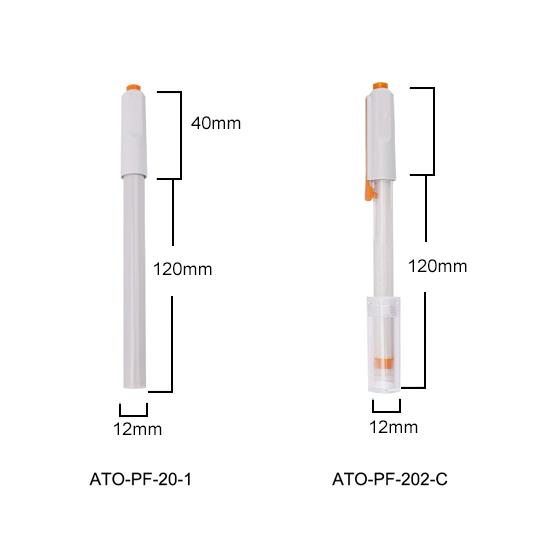
Dimensionφ12*120mmφ12*120mm
Recommend Reference ElectrodeATO-232-01/


Dimension

Fluoride ion selective electrode ISE dimension

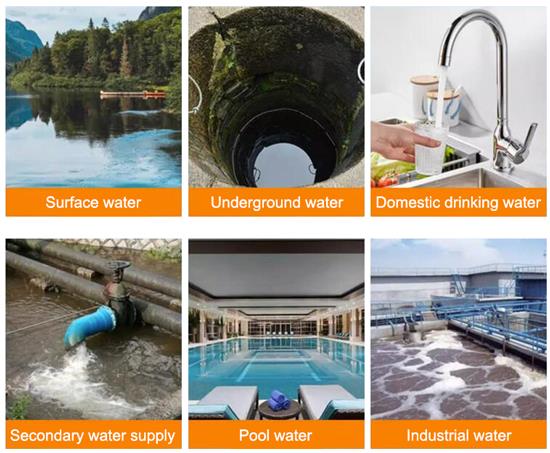
Application

Ion selective electrode ISE application

Tips: Fluoride ion selective electrode working principle

The fluoride ion-selective electrode (ISE) operates based on the Nernst equation, which describes the relationship between the concentration of an ion in solution and the voltage across the electrode. The ISE consists of a solid-state membrane selective to fluoride ions, typically made of lanthanum fluoride crystals. When immersed in a sample solution, the fluoride ions in the sample interact with the membrane, generating a potential difference. This potential is measured against a reference electrode, and the Nernst equation is applied to determine the fluoride ion concentration. The electrode's selectivity is crucial, ensuring minimal interference from other ions. The fluoride ISE finds applications in water quality monitoring, particularly in assessing fluoride levels for public health and environmental purposes.

In this video, ATO will show you top ten most used sensors (sensing technologies).

Product reviews
Precise, durable, and affordable
5
Ethan
Avatar
11/5/2025 7:00 PM
I’ve been using the fluoride ion selective electrode for my water quality testing, and it works very well. The readings are accurate and stable, making it reliable for routine fluoride monitoring. It’s easy to connect with a reference electrode and responds quickly to changes in concentration. The build quality feels solid, and it performs consistently even after multiple tests.
Was this review helpful? Yes No (0/0)
Real-time measurement
5
Hester
Avatar
8/18/2026 12:01 AM
Can this sensor measure in real time? Can I connect it to an Arduino or an ESP32?
Was this review helpful? Yes No (0/0)
ATO Responded
Sorry, the default output interface for this fluoride ion selective electrode unit is BNC (Q9), and it cannot be directly connected to an Arduino or an ESP32. It is generally used directly with online fluoride ion monitors and water quality controllers.
Write your review
  • Only registered users can write reviews
*
*
  • Bad
  • Excellent
*
*
*
*

ATO fluoride ion selective electrodes (ISEs) are specialized sensors designed to measure the concentration of fluoride ions in a solution. Their selective sensitivity to fluoride ions makes them valuable tools for accurate and rapid ion concentration measurements.

Specification

ModelATO-PF-2-01ATO-PF-202-C
Electrode TypeSingle ElectrodeComposite Electrode
IonFluoride Ion (F-)Fluoride Ion (F-)
Standard SolutionNaF SolutionNaF Solution
Measuring Range1 x 10-6~10-1mol/L1 x 10-5~10-1mol/L
19ug/L~1.9g/L190ug/L~1.9g/L
Ionic Strength Adjuster (Powder)Small Amount of NaClSmall Amount of NaCl
Sensitive Film MaterialCrystal FilmCrystal Film
Shell MaterialPolycarbonatePolycarbonate
Working Temperature5℃~45℃5℃~45℃
InterfaceBNC (Q9)BNC (Q9)
Reference Solution/3 mol/L KCl
Reference Structure/Ag/ AgCl
Working pH4~84~8
Dimensionφ12*120mmφ12*120mm
Recommend Reference ElectrodeATO-232-01/


Dimension

Fluoride ion selective electrode ISE dimension

Application

Ion selective electrode ISE application

Tips: Fluoride ion selective electrode working principle

The fluoride ion-selective electrode (ISE) operates based on the Nernst equation, which describes the relationship between the concentration of an ion in solution and the voltage across the electrode. The ISE consists of a solid-state membrane selective to fluoride ions, typically made of lanthanum fluoride crystals. When immersed in a sample solution, the fluoride ions in the sample interact with the membrane, generating a potential difference. This potential is measured against a reference electrode, and the Nernst equation is applied to determine the fluoride ion concentration. The electrode's selectivity is crucial, ensuring minimal interference from other ions. The fluoride ISE finds applications in water quality monitoring, particularly in assessing fluoride levels for public health and environmental purposes.

Product reviews
Precise, durable, and affordable
5
Ethan
Avatar
11/5/2025 7:00 PM
I’ve been using the fluoride ion selective electrode for my water quality testing, and it works very well. The readings are accurate and stable, making it reliable for routine fluoride monitoring. It’s easy to connect with a reference electrode and responds quickly to changes in concentration. The build quality feels solid, and it performs consistently even after multiple tests.
Was this review helpful? Yes No (0/0)
Real-time measurement
5
Hester
Avatar
8/18/2026 12:01 AM
Can this sensor measure in real time? Can I connect it to an Arduino or an ESP32?
Was this review helpful? Yes No (0/0)
ATO Responded
Sorry, the default output interface for this fluoride ion selective electrode unit is BNC (Q9), and it cannot be directly connected to an Arduino or an ESP32. It is generally used directly with online fluoride ion monitors and water quality controllers.
Only registered users can write reviews