Carbon Monoxide (CO) Gas Sensor, 5ppm to 5000ppm

$30.03
The provided Carbon Monoxide gas sensor uses a simple circuit to convert conductivity changes in gas concentration into corresponding output signals. MEMS CO gas sensor with a detection range 5ppm to 5000ppm is a good choice for carbon monoxide leak detection in residential or industrial applications.
SKU: ATO-GS-CO-702B
This product has a minimum quantity of 2
Free Shipping
Delivery date: 8-12 days

Carbon Monoxide (CO) gas sensing provides MEMS technology, 5ppm to 5000ppm detection range, high sensitivity, low power consumption, fast response and recovery, simple driving circuit, suitable for Carbon Monoxide leak detection for residential or industrial purposes.

Specifications

ModelATO-GM-702B
Product TypeMEMS Gas Sensor
Standard PackageCeramic
Detect GasCarbon Monoxide (CO)
Detection Concentration5~5000ppm CO
Standard Circuit ConditionsLoop VoltageVC≤24V DC
Heating VoltageVH

2.5V±0.1V AC or DC (High Temperature)
0.5V±0.1V AC or DC (Low Temperature)

Heating TimeTL60s±1s (High Temperature), 90s±1s (Low Temperature),
Load ResistanceRLAdjustable
Gas Sensor Characteristics Under Standard Test ConditionsHeating ResistorRH80±20Ω (Room Temperature)
Heating Power ConsumptionPH≤50mW
Sensitive Body ResistanceRS1kΩ~30kΩ (in 150ppm CO)
SensitivitySRo(in air)/RS (in 150ppm CO)≥3
Standard Test ConditionsTemperature and Humidity20℃±2℃, 55%±5%RH
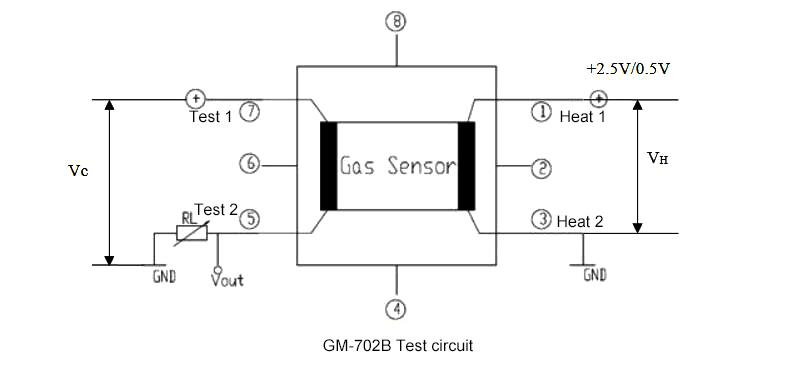
Standard Test Circuit

VC: 2.5V±0.1V (High Temperature), 0.5V±0.1V (Low Temperature)

VH: 5.0V±0.1V


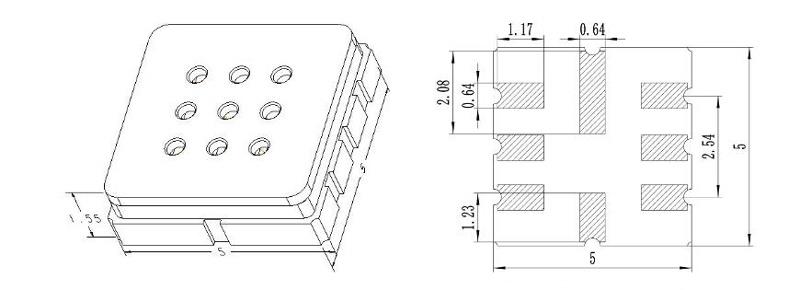
Dimension

CO gas sensor dimension

Circuit Diagram

CO gas sensor circuit diagram

Tips: What is a carbon monoxide (CO) gas sensor?

Carbon monoxide (CO) gas sensor is a device designed to detect and measure the presence of carbon monoxide gas in the surrounding environment. Carbon monoxide is a colorless, odorless, and tasteless gas that is produced by incomplete combustion of carbon-containing fuels, such as gas, oil, wood, and coal. It is highly toxic and poses a significant health risk to humans and animals.

The CO sensor operates based on various technologies, including electrochemical, metal oxide, infrared, and semiconductor sensors. Electrochemical sensors are commonly used and work by measuring the electrical current produced when carbon monoxide reacts with a chemical solution within the sensor. The concentration of carbon monoxide is then calculated based on this current.

These sensors are crucial for ensuring safety in environments where combustion occurs, such as homes with gas appliances, industrial facilities, and vehicles. When the sensor detects elevated levels of carbon monoxide, it triggers an alarm or activates safety systems to alert individuals and prompt them to take necessary precautions, such as ventilating the area or evacuating. This early detection capability is vital for preventing carbon monoxide poisoning, a potentially life-threatening condition that can lead to symptoms ranging from headaches and dizziness to unconsciousness and death. Regular maintenance and calibration of CO sensors are essential to ensure their accuracy and reliability.

Product reviews
This sensor worked as expected
5
Gabriel
Avatar
9/27/2026 7:07 PM
We were testing a small CO alarm board and needed a sensor that wouldn't make the circuit overly complicated. This one was fairly easy to get running. After some calibration, the output behaved as expected during our gas tests.
Was this review helpful? Yes No (0/0)
Write your review
  • Only registered users can write reviews
*
*
  • Bad
  • Excellent
*
*
*
*

Carbon Monoxide (CO) gas sensing provides MEMS technology, 5ppm to 5000ppm detection range, high sensitivity, low power consumption, fast response and recovery, simple driving circuit, suitable for Carbon Monoxide leak detection for residential or industrial purposes.

Specifications

ModelATO-GM-702B
Product TypeMEMS Gas Sensor
Standard PackageCeramic
Detect GasCarbon Monoxide (CO)
Detection Concentration5~5000ppm CO
Standard Circuit ConditionsLoop VoltageVC≤24V DC
Heating VoltageVH

2.5V±0.1V AC or DC (High Temperature)
0.5V±0.1V AC or DC (Low Temperature)

Heating TimeTL60s±1s (High Temperature), 90s±1s (Low Temperature),
Load ResistanceRLAdjustable
Gas Sensor Characteristics Under Standard Test ConditionsHeating ResistorRH80±20Ω (Room Temperature)
Heating Power ConsumptionPH≤50mW
Sensitive Body ResistanceRS1kΩ~30kΩ (in 150ppm CO)
SensitivitySRo(in air)/RS (in 150ppm CO)≥3
Standard Test ConditionsTemperature and Humidity20℃±2℃, 55%±5%RH
Standard Test Circuit

VC: 2.5V±0.1V (High Temperature), 0.5V±0.1V (Low Temperature)

VH: 5.0V±0.1V


Dimension

CO gas sensor dimension

Circuit Diagram

CO gas sensor circuit diagram

Tips: What is a carbon monoxide (CO) gas sensor?

Carbon monoxide (CO) gas sensor is a device designed to detect and measure the presence of carbon monoxide gas in the surrounding environment. Carbon monoxide is a colorless, odorless, and tasteless gas that is produced by incomplete combustion of carbon-containing fuels, such as gas, oil, wood, and coal. It is highly toxic and poses a significant health risk to humans and animals.

The CO sensor operates based on various technologies, including electrochemical, metal oxide, infrared, and semiconductor sensors. Electrochemical sensors are commonly used and work by measuring the electrical current produced when carbon monoxide reacts with a chemical solution within the sensor. The concentration of carbon monoxide is then calculated based on this current.

These sensors are crucial for ensuring safety in environments where combustion occurs, such as homes with gas appliances, industrial facilities, and vehicles. When the sensor detects elevated levels of carbon monoxide, it triggers an alarm or activates safety systems to alert individuals and prompt them to take necessary precautions, such as ventilating the area or evacuating. This early detection capability is vital for preventing carbon monoxide poisoning, a potentially life-threatening condition that can lead to symptoms ranging from headaches and dizziness to unconsciousness and death. Regular maintenance and calibration of CO sensors are essential to ensure their accuracy and reliability.

Product reviews
This sensor worked as expected
5
Gabriel
Avatar
9/27/2026 7:07 PM
We were testing a small CO alarm board and needed a sensor that wouldn't make the circuit overly complicated. This one was fairly easy to get running. After some calibration, the output behaved as expected during our gas tests.
Was this review helpful? Yes No (0/0)
Only registered users can write reviews