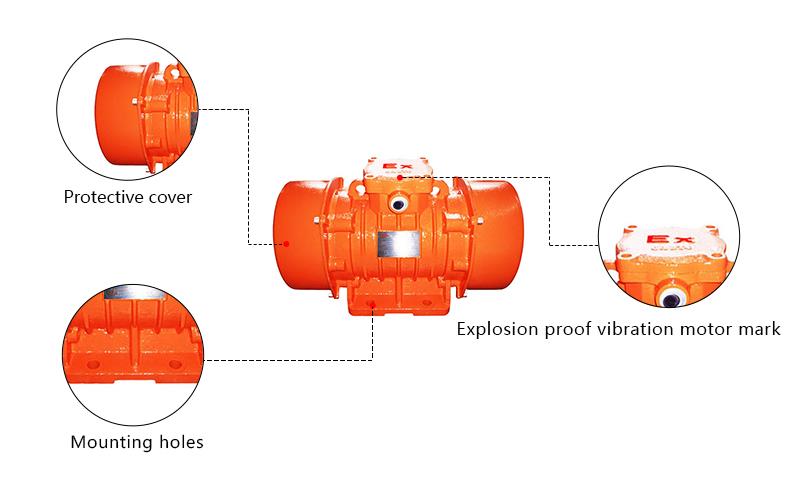
750W Explosion Proof Vibration Motor, 2 pole

$1,736.89
Big 3 phase explosion proof vibration motor, 750W, 2 pole, adjustable excitation force, class F insulation performance, the oil-resistant and oxidation-resistant power cord has a protective cover to prevent damage caused by long-term vibration.
SKU: ATO-EPNM-VBB-102
Free Shipping
Delivery date: 20-30 days

Electric vibration motor for sale, 750W, three phase, 380 volt, vibration force can be adjusted steplessly, easy to use, long lifespan improves the stability of the vibration motor.

Specification

ModelATO-EPNM-VBB-102
Power750W
Rated Current1.68A
Voltage380V
Phase3 Phase
Pole2 Pole
Speed2875 rpm
Frequency50/60 Hz
Force10 kN
Insulation ClassF
Protection LevelIP55
Weight68kg
CertificateCE

2 Pole Explosion Proof Vibration Motor Dimension (unit: mm)
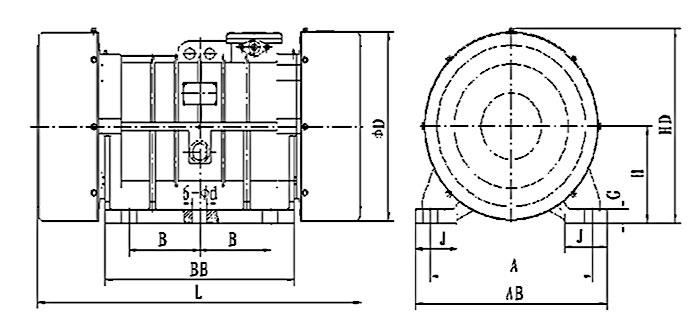
Explosion proof vibration motor dimension

ABABBBDLJGHHDdBolt
200110250220213425601612328422M20

750W Explosion Proof Vibration Motor Applications
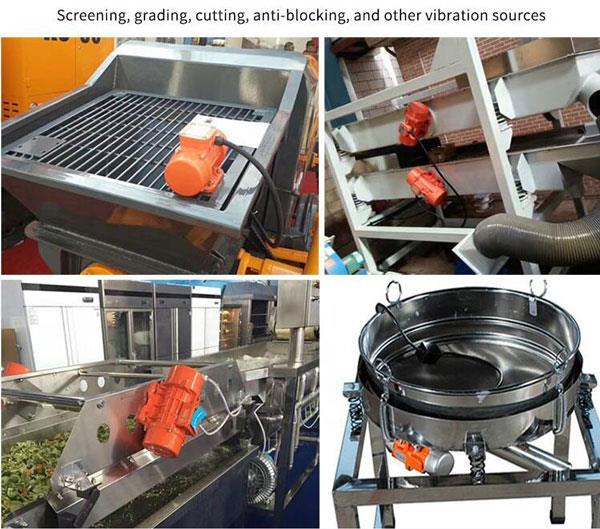
Vibration motor applications

Details

750W Explosion Proof Vibration Motor Details

Tips: The difference in insulation class of vibration motors

The insulation levels of the motor are: O, A, E, B, F, H, C.

The maximum allowable temperature of Class O insulation is 90°. Class O insulation is fiber materials and their products that have not been treated with oil or paint, such as cotton yarn, cotton cloth, natural silk, paper and other similar materials. Compared with the low insulation heat resistance, it is no longer used in vibration motors.

The allowable temperature of Class A insulation is 105°, and Class A insulation is cotton yarn, cotton cloth, natural silk, paper and other similar organic substances that have been treated with oil or oleoresin. The entire winding is impregnated with oil or oleoresin first, and then dried in an electric oven. This procedure is called impregnation. The bubbles or moisture contained in the fibers escape after being heated, and the oil or oleoresin fills the original voids. Because the dielectric constant of oily substances is relatively large, the insulation ability of Class A insulation is strong enough to teach Class O insulation. The paint film of ordinary enameled wire also belongs to Class A absolute complaint. Among the early small and medium-sized vibration motors, Class A insulation is the most widely used. After the 1960s, due to the development of the insulation material industry, small and medium-sized vibration motors have now adopted Class F insulation.

The maximum allowable temperature of Class E insulation is 120°. Class E insulation includes insulating films made of various organic synthetic resins, such as phenolic resin, epoxy resin, and polyester film.

The maximum allowable temperature of Class B insulation is 130°C. Class B insulation includes the use of inorganic substances, such as mica, asbestos, glass wool and organic binders, as well as mica paper, asbestos board, glass varnished cloth, etc. with Class A insulation as the substrate. Class B insulation is widely used in large and medium-sized vibration motors.
The maximum allowable temperature of Class F insulation is 155°C. Class F insulation is an inorganic substance bonded with heat-resistant organic paint (such as polyester paint), such as mica, asbestos, glass wool, etc.

The H-class insulation limit allowable temperature is 180°C. The H-class insulation includes heat-resistant silicone organic resin, silicone organic paint, and inorganic insulating materials that use them as adhesives, such as silicone organic mica tape. Class H insulation is expensive, so it is only used for vibration motors with very strict restrictions on size and quality.

The allowable limit temperature of Class C insulation is 180C ℃. Class C insulation includes various inorganic substances, such as mica, porcelain, glass, quartz, etc., but does not use any organic binder. This type of insulating material has extremely high heat resistance. Their physical properties make them unsuitable for the winding insulation of vibrating motors. Class C insulation is widely used in transmission lines. In the vibration motor industry, ceramics are used to make transformers for insulation and heat dissipation.

VFD Two-Wire Control Wiring with Push Button for Forward Motor

In this video we've guided you through how to do VFD control wiring with a self-lock push button switch to run the motor in forward direction. We've covered everything from wiring to programming and even a test run. So just watch it through and hope you'll find it informative and helpful.

Product reviews
Reliable and durable choice
5
Rowan
Avatar
10/28/2025 8:20 PM
I purchased the 750W explosion proof vibration motor for my industrial screening equipment, and it has been performing flawlessly. The 2-pole design provides strong, consistent vibration, and the adjustable excitation force makes it easy to fine-tune for different materials. I’m impressed by the build quality — the power cord is thick, oil-resistant, and well-protected, which really helps in our heavy-duty environment. After months of continuous use, the motor still runs smoothly without overheating. Definitely a reliable and durable choice for industrial applications.
Was this review helpful? Yes No (0/0)
Write your review
  • Only registered users can write reviews
*
*
  • Bad
  • Excellent
*
*
*
*

Electric vibration motor for sale, 750W, three phase, 380 volt, vibration force can be adjusted steplessly, easy to use, long lifespan improves the stability of the vibration motor.

Specification

ModelATO-EPNM-VBB-102
Power750W
Rated Current1.68A
Voltage380V
Phase3 Phase
Pole2 Pole
Speed2875 rpm
Frequency50/60 Hz
Force10 kN
Insulation ClassF
Protection LevelIP55
Weight68kg
CertificateCE

2 Pole Explosion Proof Vibration Motor Dimension (unit: mm)
Explosion proof vibration motor dimension

ABABBBDLJGHHDdBolt
200110250220213425601612328422M20

750W Explosion Proof Vibration Motor Applications
Vibration motor applications

Details

750W Explosion Proof Vibration Motor Details

Tips: The difference in insulation class of vibration motors

The insulation levels of the motor are: O, A, E, B, F, H, C.

The maximum allowable temperature of Class O insulation is 90°. Class O insulation is fiber materials and their products that have not been treated with oil or paint, such as cotton yarn, cotton cloth, natural silk, paper and other similar materials. Compared with the low insulation heat resistance, it is no longer used in vibration motors.

The allowable temperature of Class A insulation is 105°, and Class A insulation is cotton yarn, cotton cloth, natural silk, paper and other similar organic substances that have been treated with oil or oleoresin. The entire winding is impregnated with oil or oleoresin first, and then dried in an electric oven. This procedure is called impregnation. The bubbles or moisture contained in the fibers escape after being heated, and the oil or oleoresin fills the original voids. Because the dielectric constant of oily substances is relatively large, the insulation ability of Class A insulation is strong enough to teach Class O insulation. The paint film of ordinary enameled wire also belongs to Class A absolute complaint. Among the early small and medium-sized vibration motors, Class A insulation is the most widely used. After the 1960s, due to the development of the insulation material industry, small and medium-sized vibration motors have now adopted Class F insulation.

The maximum allowable temperature of Class E insulation is 120°. Class E insulation includes insulating films made of various organic synthetic resins, such as phenolic resin, epoxy resin, and polyester film.

The maximum allowable temperature of Class B insulation is 130°C. Class B insulation includes the use of inorganic substances, such as mica, asbestos, glass wool and organic binders, as well as mica paper, asbestos board, glass varnished cloth, etc. with Class A insulation as the substrate. Class B insulation is widely used in large and medium-sized vibration motors.
The maximum allowable temperature of Class F insulation is 155°C. Class F insulation is an inorganic substance bonded with heat-resistant organic paint (such as polyester paint), such as mica, asbestos, glass wool, etc.

The H-class insulation limit allowable temperature is 180°C. The H-class insulation includes heat-resistant silicone organic resin, silicone organic paint, and inorganic insulating materials that use them as adhesives, such as silicone organic mica tape. Class H insulation is expensive, so it is only used for vibration motors with very strict restrictions on size and quality.

The allowable limit temperature of Class C insulation is 180C ℃. Class C insulation includes various inorganic substances, such as mica, porcelain, glass, quartz, etc., but does not use any organic binder. This type of insulating material has extremely high heat resistance. Their physical properties make them unsuitable for the winding insulation of vibrating motors. Class C insulation is widely used in transmission lines. In the vibration motor industry, ceramics are used to make transformers for insulation and heat dissipation.

Product reviews
Reliable and durable choice
5
Rowan
Avatar
10/28/2025 8:20 PM
I purchased the 750W explosion proof vibration motor for my industrial screening equipment, and it has been performing flawlessly. The 2-pole design provides strong, consistent vibration, and the adjustable excitation force makes it easy to fine-tune for different materials. I’m impressed by the build quality — the power cord is thick, oil-resistant, and well-protected, which really helps in our heavy-duty environment. After months of continuous use, the motor still runs smoothly without overheating. Definitely a reliable and durable choice for industrial applications.
Was this review helpful? Yes No (0/0)
Only registered users can write reviews