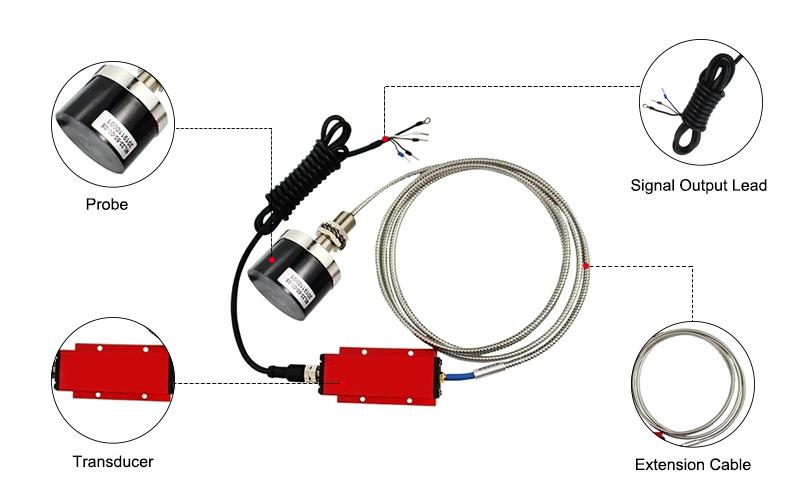
4mm Eddy Current Displacement Sensor, Φ 11mm Probe

$593.69
Buy eddy current displacement sensor at affordable price. Measuring range 4mm, probe diameter 11mm, selectable output signal 0~5V/10V voltage, 4~20mA current and RS485, corresponding max working current 45/25/40mA, DC power supply, linear error ≤±0. 5 %. Non-contact inductive eddy current transducer, vibration measurement is available.
SKU: ATO-ECDS-411
*
*
*
*
*
Free Shipping
Delivery date: 6-12 days

Manufacturer directly sales eddy current displacement sensor. Measurement range 4mm, probe diameter 11mm, output signal 0~5V/10V voltage, 4~20mA current and RS485 for selection, working current less than 45mA. Inductive eddy current linear displacement transducer, also supports vibration measurement, non-contact, affordable price.

Applications: By measuring the relative position of the measured metal object and the probe end, eddy current displacement sensor senses and processes it into corresponding electrical signal output. Eddy current displacement transducer adopts non-contact measurement, which can work reliably for a long time, has high sensitivity, strong anti-interference ability, fast response speed, and is not affected by media such as oil and water. Eddy current displacement sensors are widely used in long-term real-time monitoring of shaft displacement, shaft vibration, shaft speed and other specifications of large rotating machinery, and are extended to satellite launch, material identification, weighing measurement, metal plate thickness measurement, material deformation and other application fields.

Specification

ModelATO-ML33-04
Measurement Range4mm
Probe Diameter11mm
Linear Error≤ ±0.5 % F.S.
Repeatability1 um
Frequency Response (-3dB)0~8 kHz
Output Signal (optional)Voltage 0-5V (1 um resolution) (4-wire)
Voltage 0-10V (0.2 um resolution) (4-wire)
Current 4-20mA (0.2 um resolution) (2-wire)
RS485 (16 bit resolution) (4-wire)
Power Supply (optional)Voltage type: +9~18V DC, +18~36V DC, ± 15V~± 18V DC
Current type: +22~30V DC
RS485 type: +12V DC
Working CurrentVoltage type: < 45mA
Current type: < 25mA
RS485 type: < 40mA
Ripple≤ 20mV
System Temperature Drift≤ 0.05% / ℃
Static SensitivityDepending on output signal and the corresponding range
Output LoadVoltage output: Load capacity < 10 kΩ
Current output: Load capacity < 500 Ω
Calibration Ambient Temperature(20 ± 5) ℃
Working TemperatureProbe -30℃ ~ +150℃, Proximitor -30℃ ~ +85℃
Protection GradeProbe IP67, Proximitor IP65
Probe ThreadM8X1.0
Probe CableDefault 2m, customizable
Power CableDefault 2m, customizable

Eddy Current Action Principle Diagram (Unit: mm)
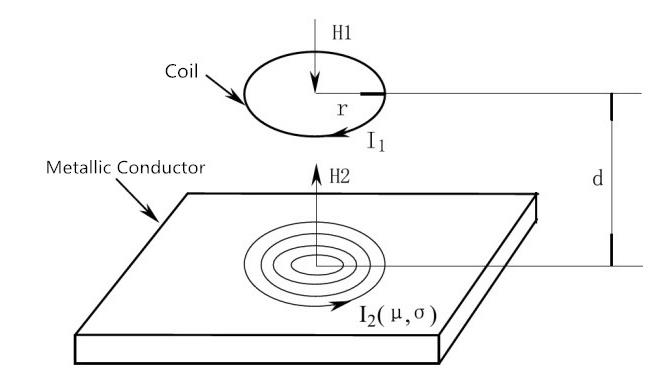
Eddy current action principle diagram

Eddy Current Displacement Sensor Probe Structure & Dimension Diagram (Unit: mm)
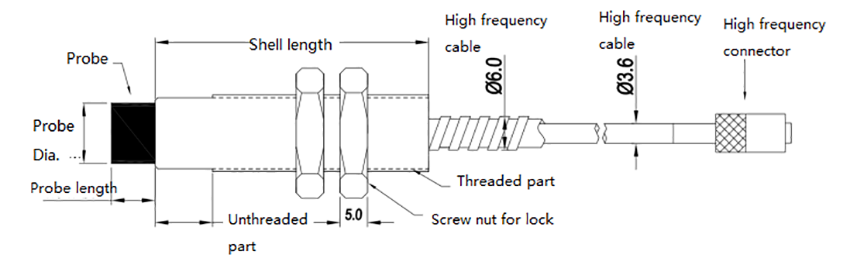
Eddy Current Displacement Sensor Probe Structure & Dimension Diagram

Note: The shell of the eddy current displacement sensor probe is used to connect and fix the probe head, and is used as a clamping structure when installing the probe. In order to adapt to different applications and mounting occasions, the probe shell has different types and different threads and size specifications.

Eddy Current Displacement Sensor Proximitor Shell Dimension Diagram (Unit: mm)

The proximitor is the signal processing center of the entire eddy current sensor system. On the one hand, the proximitor provides high-frequency AC excitation current for the probe coil to make the probe work. On the other hand, through a special circuit, the proximitor senses the change in the gap between the probe head and the metal conductor. After being processed by the proximitor, a voltage or current output signal that changes with the linear change of the gap is generated.
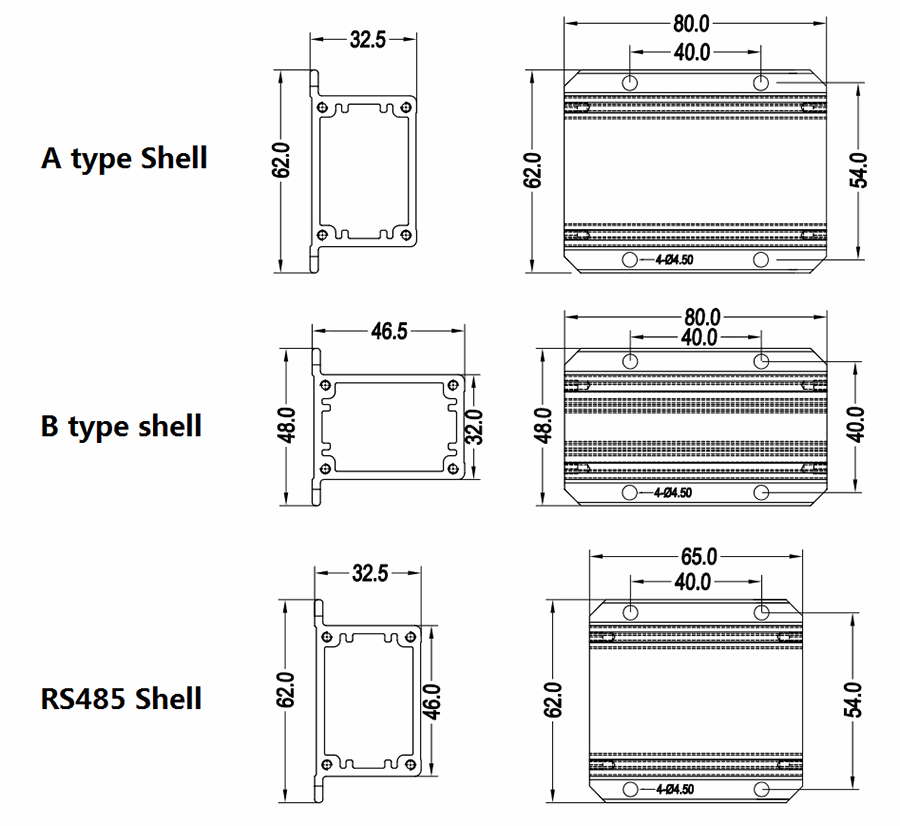
Eddy Current Displacement Sensor Proximitor Shell Dimension Diagram

Details

4mm Eddy Current Displacement Sensor Details

Tips: The initial gap of eddy current displacement sensor.

Regardless of the type of eddy current displacement sensor, its readings have better linearity under a certain gap voltage value. Therefore, when installing the eddy current displacement sensor, a proper initial gap must be adjusted. Manufacturers will conduct a characteristic test for each set of eddy current displacement sensor products and draw the corresponding characteristic curve. When using the eddy current displacement sensor, engineers and technicians must carefully study the matching calibration certificate and carefully analyze the characteristic curve to determine whether the sensor meets the gap to be measured. Generally, the larger the diameter of eddy current displacement sensor, the larger the measured gap.

In this video, ATO will simply show you how to connect linear displacement sensor and digital panel meter.

Product reviews
Accurate
5
Yu
Avatar
9/11/2025 9:26 PM
I’ve been using this 4mm eddy current displacement sensor for vibration measurement, and it works very well. The readings are accurate with minimal error, and the non-contact design makes it durable and easy to install. The 0–5V output integrates smoothly with my setup, and power use is very low. Great value for the price.
Was this review helpful? Yes No (0/0)
Write your review
  • Only registered users can write reviews
*
*
  • Bad
  • Excellent
*
*
*
*

Manufacturer directly sales eddy current displacement sensor. Measurement range 4mm, probe diameter 11mm, output signal 0~5V/10V voltage, 4~20mA current and RS485 for selection, working current less than 45mA. Inductive eddy current linear displacement transducer, also supports vibration measurement, non-contact, affordable price.

Applications: By measuring the relative position of the measured metal object and the probe end, eddy current displacement sensor senses and processes it into corresponding electrical signal output. Eddy current displacement transducer adopts non-contact measurement, which can work reliably for a long time, has high sensitivity, strong anti-interference ability, fast response speed, and is not affected by media such as oil and water. Eddy current displacement sensors are widely used in long-term real-time monitoring of shaft displacement, shaft vibration, shaft speed and other specifications of large rotating machinery, and are extended to satellite launch, material identification, weighing measurement, metal plate thickness measurement, material deformation and other application fields.

Specification

ModelATO-ML33-04
Measurement Range4mm
Probe Diameter11mm
Linear Error≤ ±0.5 % F.S.
Repeatability1 um
Frequency Response (-3dB)0~8 kHz
Output Signal (optional)Voltage 0-5V (1 um resolution) (4-wire)
Voltage 0-10V (0.2 um resolution) (4-wire)
Current 4-20mA (0.2 um resolution) (2-wire)
RS485 (16 bit resolution) (4-wire)
Power Supply (optional)Voltage type: +9~18V DC, +18~36V DC, ± 15V~± 18V DC
Current type: +22~30V DC
RS485 type: +12V DC
Working CurrentVoltage type: < 45mA
Current type: < 25mA
RS485 type: < 40mA
Ripple≤ 20mV
System Temperature Drift≤ 0.05% / ℃
Static SensitivityDepending on output signal and the corresponding range
Output LoadVoltage output: Load capacity < 10 kΩ
Current output: Load capacity < 500 Ω
Calibration Ambient Temperature(20 ± 5) ℃
Working TemperatureProbe -30℃ ~ +150℃, Proximitor -30℃ ~ +85℃
Protection GradeProbe IP67, Proximitor IP65
Probe ThreadM8X1.0
Probe CableDefault 2m, customizable
Power CableDefault 2m, customizable

Eddy Current Action Principle Diagram (Unit: mm)

Eddy current action principle diagram

Eddy Current Displacement Sensor Probe Structure & Dimension Diagram (Unit: mm)

Eddy Current Displacement Sensor Probe Structure & Dimension Diagram

Note: The shell of the eddy current displacement sensor probe is used to connect and fix the probe head, and is used as a clamping structure when installing the probe. In order to adapt to different applications and mounting occasions, the probe shell has different types and different threads and size specifications.

Eddy Current Displacement Sensor Proximitor Shell Dimension Diagram (Unit: mm)

The proximitor is the signal processing center of the entire eddy current sensor system. On the one hand, the proximitor provides high-frequency AC excitation current for the probe coil to make the probe work. On the other hand, through a special circuit, the proximitor senses the change in the gap between the probe head and the metal conductor. After being processed by the proximitor, a voltage or current output signal that changes with the linear change of the gap is generated.

Eddy Current Displacement Sensor Proximitor Shell Dimension Diagram

Details

4mm Eddy Current Displacement Sensor Details

Tips: The initial gap of eddy current displacement sensor.

Regardless of the type of eddy current displacement sensor, its readings have better linearity under a certain gap voltage value. Therefore, when installing the eddy current displacement sensor, a proper initial gap must be adjusted. Manufacturers will conduct a characteristic test for each set of eddy current displacement sensor products and draw the corresponding characteristic curve. When using the eddy current displacement sensor, engineers and technicians must carefully study the matching calibration certificate and carefully analyze the characteristic curve to determine whether the sensor meets the gap to be measured. Generally, the larger the diameter of eddy current displacement sensor, the larger the measured gap.

Product reviews
Accurate
5
Yu
Avatar
9/11/2025 9:26 PM
I’ve been using this 4mm eddy current displacement sensor for vibration measurement, and it works very well. The readings are accurate with minimal error, and the non-contact design makes it durable and easy to install. The 0–5V output integrates smoothly with my setup, and power use is very low. Great value for the price.
Was this review helpful? Yes No (0/0)
Only registered users can write reviews