2000W Vertical Axis Wind Turbine, 24V/48V/96V

$5,678.97
The 2000W vertical-axis home wind turbine is meticulously crafted to deliver optimal power output with minimal input. It is available in three voltage options, 24V, 48V, or 96V. ATO's three-blade horizontal-axis wind turbine provides a cost-effective and practical solution for harnessing renewable energy.
SKU: ATO-VAWT-2000
*
Free Shipping
Delivery date: 6-12 days

The 2000-watt vertical axis wind turbine is crafted using premium materials, ensuring its resilience against even the most severe weather conditions. Requiring minimal maintenance, these turbines promise years of dependable power generation.

Specification

ModelATO-X9-2000
Rated Power2000W
Rated Voltage24V/48V/96V
With ControllerATO-FM4820
Start Up Wind Speed2m/s
Rated Wind Speed12m/s
Survival Wind Speed50m/s
Wind Wheel Diameter/Height0.5m/1.5m
Number of Blades3
Blades MaterialNylon
Fuselage MaterialAluminum alloy
Magnetic SteelNdFeB
Generator TypeThree-phase AC permanent magnetically suspended generators
Controller SystemElectromagnetic brakes
Speed Regulation360° Automatically Adjust Windard
Installation FlangeDN80
Degree of protectionIP54
Gross Weight120kg
Package Dimension1065*520*570mm (Generator)+ 2100*360*505mm (Blade)


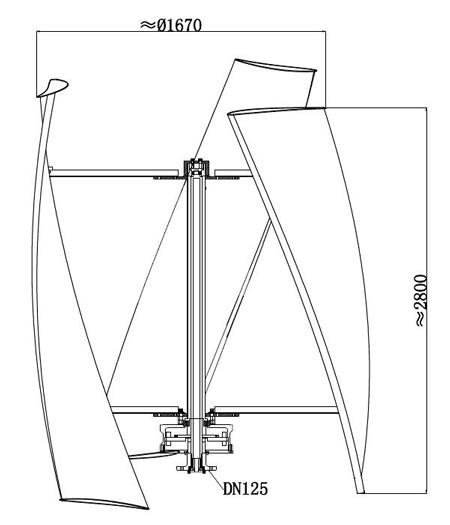
Dimension (Unit: mm)

2000W vertical axis wind turbine dimension

Tips: How loud are vertical axis wind turbines?

Vertical axis wind turbines (VAWTs) are generally considered to be quieter compared to their horizontal axis counterparts (HAWTs). This is primarily because VAWTs operate at lower rotational speeds and feature a simpler, more compact design. Nonetheless, the noise produced by a VAWT is contingent on several factors, including the turbine's size and shape, wind speed, and the local environment.

Research indicates that VAWTs can generate noise levels ranging from 45 to 60 decibels (dB) when measured at a distance of 100 meters. This is akin to the noise level of a typical conversation or light traffic. However, it's important to note that specific VAWT designs and operational conditions can lead to variations in these noise levels.

In general, VAWT noise becomes more of a concern in urban or residential areas where stringent noise regulations are in place and nearby residents might be disrupted by the sound. To address noise-related issues, VAWTs can be sited in regions with lower population density or be equipped with noise-reducing features like acoustic enclosures or blade modifications.

Proposition 65 Warning

*WARNING: This product can expose you to chemicals, including lead, which is known to the State of California to cause birth defects or other reproductive harm. For more information, go to www.P65Warnings.ca.gov.

Write your review
  • Only registered users can write reviews
*
*
  • Bad
  • Excellent
*
*
*
*

The 2000-watt vertical axis wind turbine is crafted using premium materials, ensuring its resilience against even the most severe weather conditions. Requiring minimal maintenance, these turbines promise years of dependable power generation.

Specification

ModelATO-X9-2000
Rated Power2000W
Rated Voltage24V/48V/96V
With ControllerATO-FM4820
Start Up Wind Speed2m/s
Rated Wind Speed12m/s
Survival Wind Speed50m/s
Wind Wheel Diameter/Height0.5m/1.5m
Number of Blades3
Blades MaterialNylon
Fuselage MaterialAluminum alloy
Magnetic SteelNdFeB
Generator TypeThree-phase AC permanent magnetically suspended generators
Controller SystemElectromagnetic brakes
Speed Regulation360° Automatically Adjust Windard
Installation FlangeDN80
Degree of protectionIP54
Gross Weight120kg
Package Dimension1065*520*570mm (Generator)+ 2100*360*505mm (Blade)


Dimension (Unit: mm)

2000W vertical axis wind turbine dimension

Tips: How loud are vertical axis wind turbines?

Vertical axis wind turbines (VAWTs) are generally considered to be quieter compared to their horizontal axis counterparts (HAWTs). This is primarily because VAWTs operate at lower rotational speeds and feature a simpler, more compact design. Nonetheless, the noise produced by a VAWT is contingent on several factors, including the turbine's size and shape, wind speed, and the local environment.

Research indicates that VAWTs can generate noise levels ranging from 45 to 60 decibels (dB) when measured at a distance of 100 meters. This is akin to the noise level of a typical conversation or light traffic. However, it's important to note that specific VAWT designs and operational conditions can lead to variations in these noise levels.

In general, VAWT noise becomes more of a concern in urban or residential areas where stringent noise regulations are in place and nearby residents might be disrupted by the sound. To address noise-related issues, VAWTs can be sited in regions with lower population density or be equipped with noise-reducing features like acoustic enclosures or blade modifications.

Only registered users can write reviews