
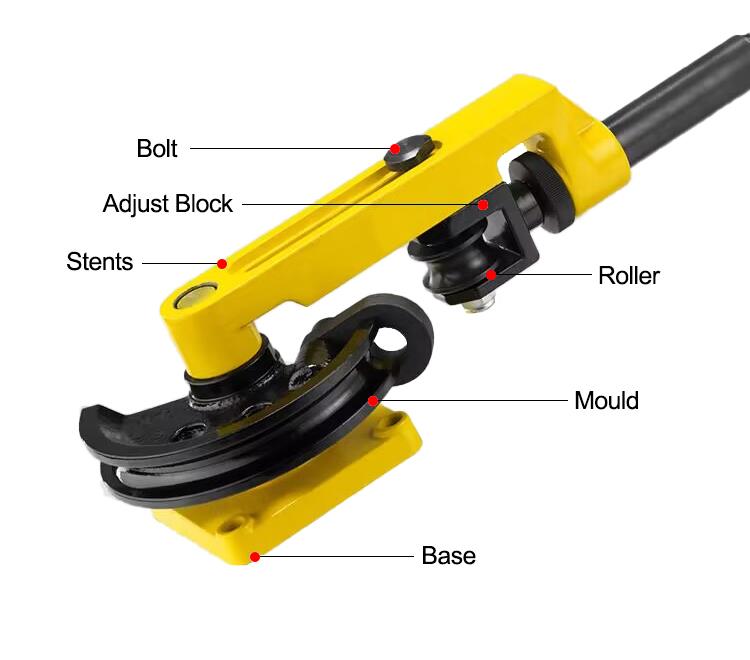
Portable 3/4 inch 19mm manual pipe bender features a roller and U-shaped bending die for fast and precise pipe installation and repair.
Specifications
| Model | ATO-HHW-25S |
| Equipped Mold | Bending Rollers and U-Bending Dies |
| Mold Size | φ19mm (3/4 inch) |
| Bending Angle | 0~180° |
| Mold Material | Ductile Iron |
| Minimum Bend Radius | 77mm |
| Pipe Diameter | 20mm |
| Standard Steel Pipe/Stainless Steel Pipe Wall Thickness | 1.0mm |
| Standard Copper Pipe Wall Thickness | 1.2mm |
| Weight | 14.1kg |
| Packaging and Dimensions | Wooden Box Packing (670x215x170mm) |
| Suitable Pipe Material | Stainless Steel, Copper, etc. |
Note
- The manual pipe bender is only suitable for round pipes, not for square pipes.
- For stainless steel/iron pipes with an outer diameter of 19mm or more, it is recommended to use a tube bender with a wall thickness of 1.2~1.5mm.
Details
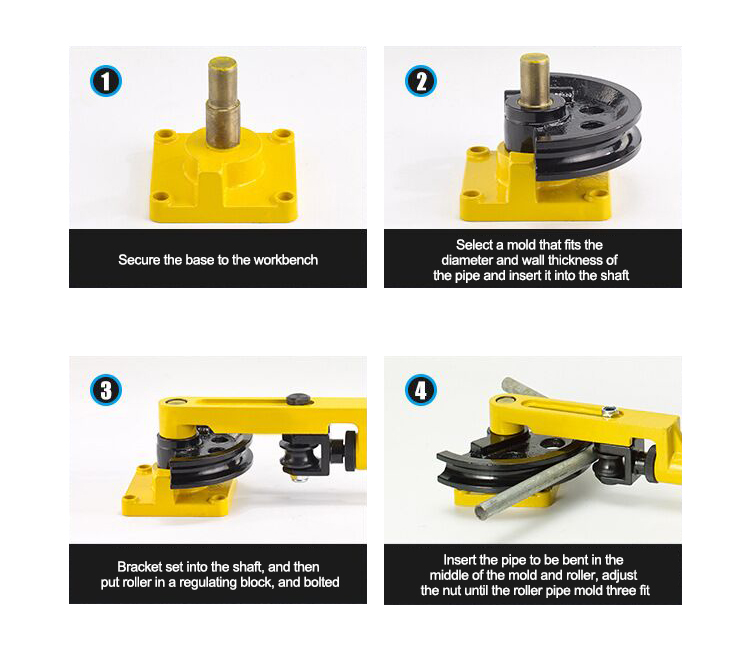
Installation Steps
Pipe Bender Applications

Tips: How to choose a manual pipe bender?
- Pipe Size and Material: Determine the range of pipe sizes and materials you will be working with. Different manual pipe benders have varying capacities and compatibility. Ensure that the bender you choose can accommodate the pipe sizes and materials you plan to bend.
- Bend Radius and Angle: Consider the specific bend radius and angle requirements of your project. Some manual pipe benders have adjustable bending dies or shoes that allow for different bend radii and angles. Ensure that the bender can achieve the desired bends for your application.
- Durability and Construction: Look for a manual pipe bender that is well-built and durable. Consider the materials used in its construction, such as heavy-duty steel or cast iron, which can withstand repeated use and provide stability during bending operations.
- Bending Accuracy and Precision: Check the precision and accuracy of the bending results produced by the manual pipe bender. Look for user reviews or product specifications that indicate the bender's ability to consistently create precise bends without distortion or kinking.
- Portability and Storage: Consider the portability and storage requirements of the manual pipe bender. If you need to move the bender frequently or transport it to different job sites, look for a lightweight and compact model that is easy to carry. Additionally, consider whether the bender can be disassembled or folded for more convenient storage.
- Ease of Use: Look for a manual pipe bender that is user-friendly and easy to operate. Consider features such as ergonomic handles, clear instructions, and smooth operation. Ensure that the bender provides sufficient leverage for bending pipes without excessive effort.
Only registered users can write reviews
Related products

1" (25mm) Manual Pipe Bender
ATO-PB-25
$395.36
Great 1 inch 25mm manual pipe bender has a 0~180°bending angle, a roller and U-shaped bending die, suitable for tube bending processing. The tube bender can achieve precise pipe bending requirements.

3/8" (10mm) Manual Pipe Bender
ATO-PB-10
$339.23
3/8 inch pipe bender for sale online, This manual pipe bender is a mechanical device used to bend pipes or metal rods, equipped with a φ10mm ductile iron mold, and can be bent at 180°.

5/8" (16mm) Manual Pipe Bender
ATO-PB-16
$360.76
Factory price 5/8 inch pipe bender features a bending roller andφ16mm U-bending die, which can be used for home improvement projects, such as making furniture, lamps, railings, stair handrails and other parts that need to bend metal pipes.

7/8" (22mm) Manual Pipe Bender
ATO-PB-22
$390.33
Portable 7/8 inch 22mm manual pipe bender features a roller and U-shaped bending die, suitable for fast and precise pipe installation and repair, and can be used for home improvement projects.