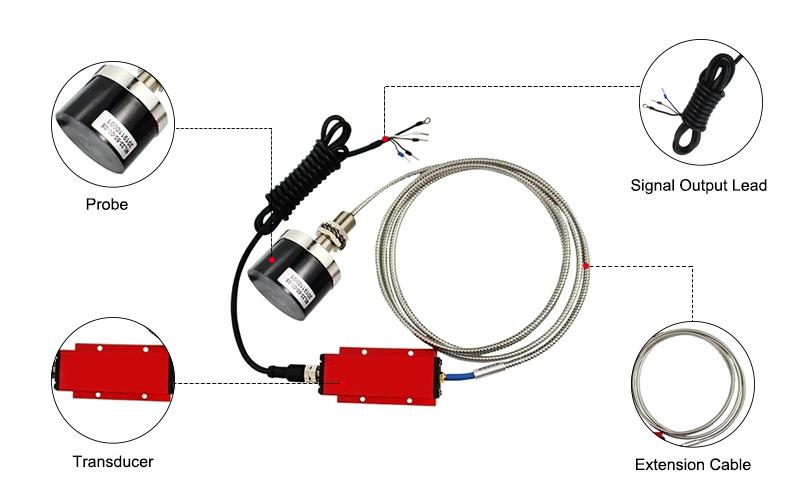
12.5mm Eddy Current Displacement Sensor, Φ 30mm Probe

$624.46
Economical price Eddy current sensor from professional manufacturer, linear displacement measurement. Measuring range 12.5mm, probe diameter 30mm, output signal supports 0-5V/10V voltage, 4-20mA current and RS485, corresponding max working current 45/25/40mA, DC power supply, linear error ≤±1 %. Eddy current displacement transducer, inductive type, non-contact measurement, easy use.
SKU: ATO-ECDS-12525
*
*
*
*
*
Free Shipping
Delivery date: 6-12 days

Eddy current displacement sensor working at 12.5mm measurement range. Probe diameter 30mm, available output signal 0~5V/10V voltage, 4~20mA current or RS485, corresponding max operation current 45/25/40mA. Eddy current transducer is based on inductive principle, non-contact measuring for linear displacement and vibration.

Applications: By measuring the relative position of the measured metal object and the probe end, eddy current displacement sensor senses and processes it into corresponding electrical signal output. Eddy current displacement transducer adopts non-contact measurement, which can work reliably for a long time, has high sensitivity, strong anti-interference ability, fast response speed, and is not affected by media such as oil and water. Eddy current displacement sensors are widely used in long-term real-time monitoring of shaft displacement, shaft vibration, shaft speed and other specifications of large rotating machinery, and are extended to satellite launch, material identification, weighing measurement, metal plate thickness measurement, material deformation and other application fields.

Specification

ModelATO-ML33-12
Measurement Range12.5mm
Probe Diameter30mm
Linear Error≤ ±1 % F.S.
Resolution0.625 um
Repeatability2 um
Frequency Response (-3dB)0~2 kHz
Output Signal (optional)Voltage 0-5V (4-wire)
Voltage 0-10V (4-wire)
Current 4-20mA (2-wire)
RS485 (4-wire)
Power Supply (optional)Voltage type: +9~18V DC, +18~36V DC, ± 15V~± 18V DC
Current type: +22~30V DC
RS485 type: +12V DC
Working CurrentVoltage type: < 45mA
Current type: < 25mA
RS485 type: < 40mA
Ripple≤ 20mV
System Temperature Drift≤ 0.05% / ℃
Static SensitivityDepending on output signal and the corresponding range
Output LoadVoltage output: Load capacity < 10 kΩ
Current output: Load capacity < 500 Ω
Calibration Ambient Temperature(20 ± 5) ℃
Working TemperatureProbe -30℃ ~ +150℃, Proximitor -30℃ ~ +85℃
Protection GradeProbe IP67, Proximitor IP65
Probe ThreadM8X1.0
Probe CableDefault 2m, customizable
Power CableDefault 1m, customizable

Eddy Current Action Principle Diagram (Unit: mm)
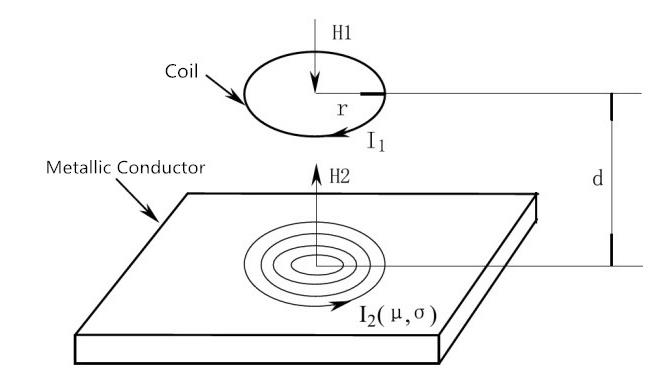
Eddy current action principle diagram

Eddy Current Displacement Sensor Probe Structure & Dimension Diagram (Unit: mm)
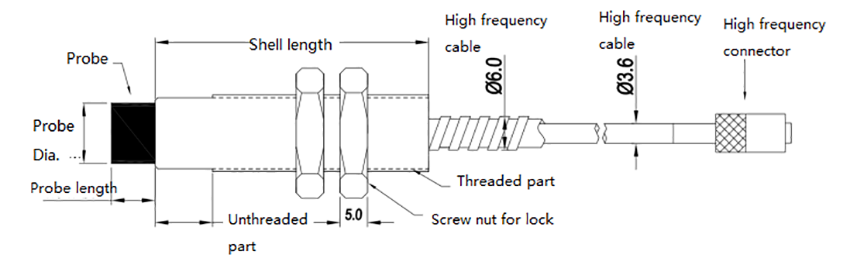
Eddy Current Displacement Sensor Probe Structure & Dimension Diagram

Note: The shell of the eddy current displacement sensor probe is used to connect and fix the probe head, and is used as a clamping structure when installing the probe. In order to adapt to different applications and mounting occasions, the probe shell has different types and different threads and size specifications.

Eddy Current Displacement Sensor Proximitor Shell Dimension Diagram (Unit: mm)

The proximitor is the signal processing center of the entire eddy current sensor system. On the one hand, the proximitor provides high-frequency AC excitation current for the probe coil to make the probe work. On the other hand, through a special circuit, the proximitor senses the change in the gap between the probe head and the metal conductor. After being processed by the proximitor, a voltage or current output signal that changes with the linear change of the gap is generated.
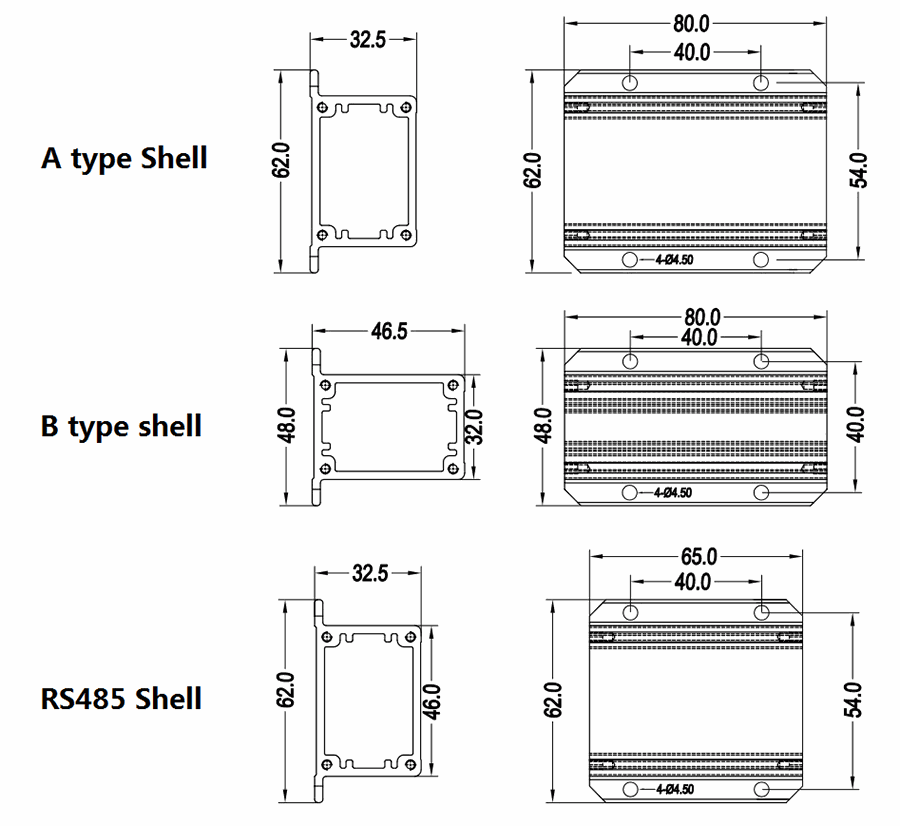
Eddy Current Displacement Sensor Proximitor Shell Dimension Diagram

Details

12.5mm Eddy Current Displacement Sensor Details

Tips: Influence of the measured material on eddy current displacement sensor measurement results.

Characteristics of the eddy current displacement sensor are related to electrical conductivity and magnetic permeability of the measured materials. When the measured object is magnetic material (such as ordinary steel, structural steel, etc.), the eddy current effect and the magnetic effect exist at the same time, and the magnetic effect reacts to the eddy current effect, which weakens the eddy current effect. At this time, sensitivity of the eddy current displacement sensor is reduced. When the measured object is a weak magnetic material (such as copper, aluminum, alloy steel, etc.), due to the weak magnetic effect, the eddy current effect is relatively stronger, so the eddy current displacement sensor has a higher induction sensitivity.

In this video, ATO will simply show you how to connect linear displacement sensor and digital panel meter.

Product reviews
It’s accurate, reliable, and totally worth the purchase
5
Mason
Avatar
11/9/2025 10:58 PM
Easy to set up with multiple output options. Handles tough environments while maintaining precise measurements. Well worth the purchase.
Was this review helpful? Yes No (0/0)
Write your review
  • Only registered users can write reviews
*
*
  • Bad
  • Excellent
*
*
*
*

Eddy current displacement sensor working at 12.5mm measurement range. Probe diameter 30mm, available output signal 0~5V/10V voltage, 4~20mA current or RS485, corresponding max operation current 45/25/40mA. Eddy current transducer is based on inductive principle, non-contact measuring for linear displacement and vibration.

Applications: By measuring the relative position of the measured metal object and the probe end, eddy current displacement sensor senses and processes it into corresponding electrical signal output. Eddy current displacement transducer adopts non-contact measurement, which can work reliably for a long time, has high sensitivity, strong anti-interference ability, fast response speed, and is not affected by media such as oil and water. Eddy current displacement sensors are widely used in long-term real-time monitoring of shaft displacement, shaft vibration, shaft speed and other specifications of large rotating machinery, and are extended to satellite launch, material identification, weighing measurement, metal plate thickness measurement, material deformation and other application fields.

Specification

ModelATO-ML33-12
Measurement Range12.5mm
Probe Diameter30mm
Linear Error≤ ±1 % F.S.
Resolution0.625 um
Repeatability2 um
Frequency Response (-3dB)0~2 kHz
Output Signal (optional)Voltage 0-5V (4-wire)
Voltage 0-10V (4-wire)
Current 4-20mA (2-wire)
RS485 (4-wire)
Power Supply (optional)Voltage type: +9~18V DC, +18~36V DC, ± 15V~± 18V DC
Current type: +22~30V DC
RS485 type: +12V DC
Working CurrentVoltage type: < 45mA
Current type: < 25mA
RS485 type: < 40mA
Ripple≤ 20mV
System Temperature Drift≤ 0.05% / ℃
Static SensitivityDepending on output signal and the corresponding range
Output LoadVoltage output: Load capacity < 10 kΩ
Current output: Load capacity < 500 Ω
Calibration Ambient Temperature(20 ± 5) ℃
Working TemperatureProbe -30℃ ~ +150℃, Proximitor -30℃ ~ +85℃
Protection GradeProbe IP67, Proximitor IP65
Probe ThreadM8X1.0
Probe CableDefault 2m, customizable
Power CableDefault 1m, customizable

Eddy Current Action Principle Diagram (Unit: mm)

Eddy current action principle diagram

Eddy Current Displacement Sensor Probe Structure & Dimension Diagram (Unit: mm)

Eddy Current Displacement Sensor Probe Structure & Dimension Diagram

Note: The shell of the eddy current displacement sensor probe is used to connect and fix the probe head, and is used as a clamping structure when installing the probe. In order to adapt to different applications and mounting occasions, the probe shell has different types and different threads and size specifications.

Eddy Current Displacement Sensor Proximitor Shell Dimension Diagram (Unit: mm)

The proximitor is the signal processing center of the entire eddy current sensor system. On the one hand, the proximitor provides high-frequency AC excitation current for the probe coil to make the probe work. On the other hand, through a special circuit, the proximitor senses the change in the gap between the probe head and the metal conductor. After being processed by the proximitor, a voltage or current output signal that changes with the linear change of the gap is generated.

Eddy Current Displacement Sensor Proximitor Shell Dimension Diagram

Details

12.5mm Eddy Current Displacement Sensor Details

Tips: Influence of the measured material on eddy current displacement sensor measurement results.

Characteristics of the eddy current displacement sensor are related to electrical conductivity and magnetic permeability of the measured materials. When the measured object is magnetic material (such as ordinary steel, structural steel, etc.), the eddy current effect and the magnetic effect exist at the same time, and the magnetic effect reacts to the eddy current effect, which weakens the eddy current effect. At this time, sensitivity of the eddy current displacement sensor is reduced. When the measured object is a weak magnetic material (such as copper, aluminum, alloy steel, etc.), due to the weak magnetic effect, the eddy current effect is relatively stronger, so the eddy current displacement sensor has a higher induction sensitivity.

Product reviews
It’s accurate, reliable, and totally worth the purchase
5
Mason
Avatar
11/9/2025 10:58 PM
Easy to set up with multiple output options. Handles tough environments while maintaining precise measurements. Well worth the purchase.
Was this review helpful? Yes No (0/0)
Only registered users can write reviews