
The key characteristic of 10 hp hot oil pumps is their ability to maintain the desired temperature while efficiently circulating the thermal fluid through a closed-loop system. Thermal oil pump ensure the efficient and safe transfer of heat, maintaining the desired temperature levels throughout the system, thereby optimizing the process and energy consumption.
Features:
- Corrosion Resistance. Pumps used for hot oil applications are typically made from materials that resist corrosion, ensuring the longevity of the pump in harsh operating conditions.
- Robust Construction. Hot oil pumps are built to be robust and durable, with materials chosen to withstand the thermal stresses associated with high-temperature operations.
- Efficiency. Hot oil pumps are engineered for high efficiency to minimize energy consumption while effectively circulating the heat transfer fluid through the system.
Specification:
- Model: ATO-RY65-40-200
- Voltage: 380V
- Power: 10 HP (7.5 kW)
- Material: cast iron
- Head: 48m
- Flow Rate: 30 m3/h
- Speed: 2900 r/min
- Efficiency: 62%
- Motor: 132S2
- Seal Method: packing seal
- Working Temperature: -20 ℃ ~ 350℃
Structure:
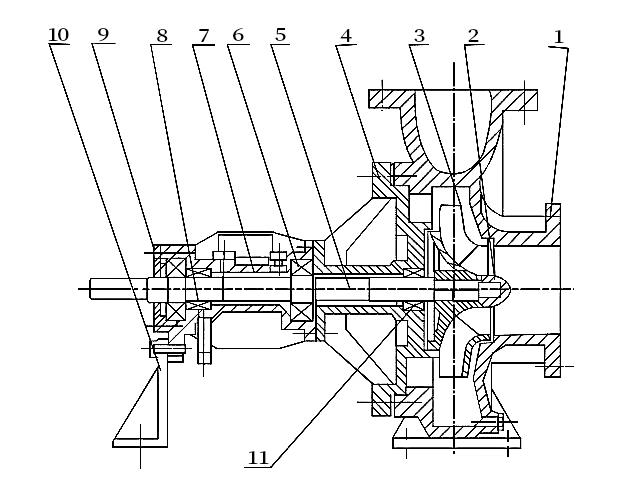
| 1. Pump Casing | 2. Impeller Nut | 3. Impeller | 4. Pump Cover |
| 5. Pump Shaft | 6. Bearing | 7. Bearing Casing | 8. Oil-conducting Pipe |
| 9. Bearing's Press Cover | 10. Bear Frame | 11. Packing Seal |
Application:

Tips: What are the advantages of hot oil pump?
- High Temperature Handling. Hot oil pumps are designed to handle very high temperatures, often up to 350℃ (662℉) or higher. This makes them ideal for processes requiring significant heat, such as in chemical processing, oil refineries, and food manufacturing.
- Thermal Stability. These pumps maintain thermal stability under continuous operation, ensuring consistent performance and reliability even in demanding conditions. This stability is crucial for maintaining the integrity and efficiency of thermal systems.
- Energy Efficiency. Hot oil pumps are engineered for energy efficiency, reducing operational costs over time. They often feature designs that minimize heat loss and improve the overall efficiency of heat transfer systems.
- Reduced Corrosion and Fouling. Compared to steam systems, hot oil systems using these pumps typically experience less corrosion and fouling, leading to longer equipment lifespan and reduced maintenance needs.
- Safety. They eliminate the need for pressurized systems required by steam, reducing the risk of explosions and enhancing workplace safety. The non-pressurized nature of hot oil systems also simplifies installation and operation.
Only registered users can write reviews
Related products

15 HP (11kW) Hot Oil Pump
ATO-HOP-15HP
$5,623.41
Good price thermal oil transfer pump with 15 hp (11 kW) power and 80m head for sale online. Thermal oil pump is used to handle high temperatures, circulating hot oil to facilitate heat exchange in various applications such as manufacturing, chemical processing, and food production.

2 HP (1.5kW) Hot Oil Pump
ATO-HOP-2HP
$2,103.97
Hot oil transfer pump with 2 hp power and pure copper motor. The pump head of the hot oil centrifugal pump is made of cast iron. Working temperature of oil pump between -20 ℃ to 350 ℃. The entrance of this pump is axial absorbing. 2 hp thermic oil pump is a vital component in industries requiring efficient and reliable high-temperature fluid circulation.

3 HP (2.2kW) Hot Oil Pump
ATO-HOP-3HP
$2,250.32
3 hp oil pump price is affordable, adopts with cast iron material, its excellent thermal conductivity and heat retention, ensuring efficient heat transfer. The outlet diameter of hot oil centrifugal pump case is 25 mm. Thermal oil pump with heat transfer pump head and belt coupling. The speed of oil transfer pump is 2900 r/min.

4 HP (3kW) Hot Oil Pump
ATO-HOP-4HP
$2,718.97
Economical price centrifugal hot oil pump for sale online. The motor of the hot oil pump has a pure copper wire rotor. The efficiency of 4 hp centrifugal hot oil pump is 57%. Thermal oil pump often used in synthetic fiber industry, textile dyeing industry and construction industry.

7.5 HP (5.5kW) Hot Oil Pump
ATO-HOP-075HP
$3,535.71
Oil transfer pump with affordable price for sale online. Hot oil pump with 7.5 hp (5.5 kW) power, adopts with pure copper motor. The head of thermal oil pump can reach 40m. Hot oil centrifugal pump is constructed with materials that can withstand high temperatures and thermal expansion. This hot oil circulation pump is typically used in thermal oil circulation and heat retention reflux systems.